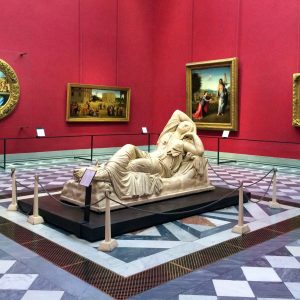
As Simone Verde’s ambitious redesign of the Botticelli rooms at the Uffizi draws international praise, Florence’s licensed tour guides are raising pointed questions about who the changes are actually for. Perhaps the real question is whether a museum generating nearly €62 million a year in revenue can afford to ignore its customers’ experiences.
When the Uffizi Galleries unveiled their redesigned Botticelli rooms on 16 June 2026, the international press responded with enthusiasm. The Birth of Venus and Primavera had been repositioned so that visitors standing in one room could turn to see the second masterpiece in an adjoining space on the opposite wall. This was a long-anticipated curatorial gesture placing two of the greatest paintings in Western art in direct visual dialogue (in the same space) for the first time. Also, both works are now housed for the first time in sealed protective cases, allowing the removal of the large external glass barriers that previously stood between visitors and the canvases.
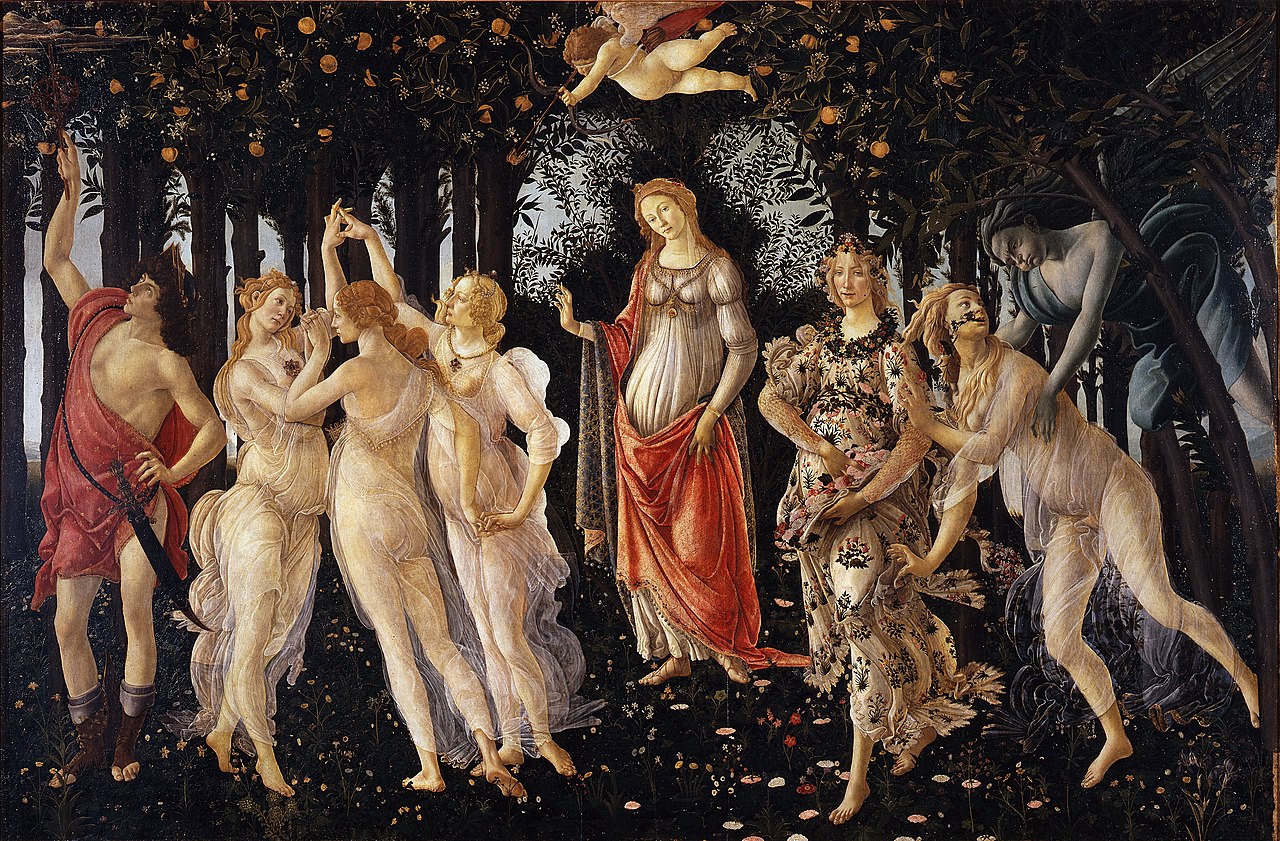
Director Simone Verde, who took over in January 2024, framed the project as part of a comprehensive reinvention of the museum’s identity. The rooms have been repainted in what the museum calls a pale “Renaissance grey,” chosen to recall the chromatic tradition of Florentine architecture, with a new lighting system using alternating warm and cool tones intended to bring out the softer colours of Botticelli’s paintings.
On paper, it is a compelling vision. On the ground, according to the people who spend their working lives in the gallery, it is something rather different.
“Lovely but Impractical”
Sarah Cater, a licensed Florence tour guide with extensive experience at the Uffizi, speaking to INO, welcomed the aesthetic improvements while raising concerns that point to a deeper tension at the heart of Verde’s project. There is a gap between a director’s curatorial ambition and the reality of a museum receiving millions of visitors a year.
“The Botticelli rooms are lovely,” Sarah said. “The walls have been repainted and the colour is certainly in keeping with Renaissance Florence, and there is some nice mood lighting. But they are impractical, especially when there are large groups of people, as there so very often are.”
Her central criticism concerns Primavera. Previously positioned on the far wall of the first room, it allowed guides with groups to enter and assess their surroundings before engaging with the painting. It is now immediately to the left as you enter. “You are greeted with a wall of people,” she said. “Before, there was enough space as you entered the room, and time to assess the situation and position yourself.”
More pointedly, she noted that the principal curatorial achievement being celebrated — the ability to compare Primavera and The Birth of Venus — was already standard practice for experienced guides. “Many guides would stop in the middle of the first room so that they could compare and contrast the two paintings. If the reason for the disruption we have experienced this year was solely to achieve this, well, we were doing it already.”
The Tribuna Problem
The concerns extend beyond the Botticelli rooms. Sarah describes a serious congestion problem at the Tribuna, the celebrated octagonal Wunderkammer designed by Bernardo Buontalenti for Francesco I de’ Medici in the 1580s. It is one of the most significant rooms in the history of European museology.
“Verde needs to make the Tribuna more visible again to the paying public without having to join a massive queue, which also blocks the corridor,” she said. “Previously we were able to view the Tribuna from three sides. Now there is only one door through which we can view it, which has created huge congestion and a massive queue in the corridor, making it impossible to stop and look at other portraits along the same corridor, for example the two Medici Queens.”
The complaint is not trivial. The Tribuna was historically one of the most revered spaces in the museum, and its accessibility directly affects the flow of visitors through a significant section of the gallery.
A Director who doesn’t appear to walk the floor
What emerges from Sarah Cater’s account is not simply a disagreement about hanging positions. It is a critique of a management style that, she suggests, is insufficiently grounded in the lived experience of the museum.
“I have never seen this director in the Uffizi,” she said. “I think you have to wander the corridors when it is busy and take note. Where do people tend to congregate? Which paintings do visitors stop at the most? How long do they stay? I always saw the previous director Eike Schmidt on the floor of the museum, and I believe he improved the Uffizi exponentially because he witnessed a living museum.”
The comparison with Schmidt — Verde’s predecessor, whose tenure saw visitor numbers climb and revenues surge — is pointed. Under Schmidt’s direction, the Uffizi achieved an overall revenue increase of 70% in 2024 compared with 2022, with ticketing revenue alone reaching €40 million.
She was equally direct about the absence of meaningful consultation with guides. “I wish the current director would collaborate with the guides, communicate his ideas and also listen to advice. On several occasions we have asked to meet and discuss with him the changes he wishes to implement. He has attended only one meeting, as far as I am aware. Bearing in mind that we spend most of our working lives in the Uffizi, we know how it functions, what and how we could improve the experience for all.”
Shouldn’t a museum generating millions serve the people who pay?
The question of who the Uffizi’s changes serve is not merely artistic. It is financial and civic. In 2024, the Uffizi Galleries welcomed nearly 5.3 million visitors, generating gross revenues of €61.9 million, making it Italy’s second most visited cultural site. A standard ticket today costs €25 at the door, or €29 when booked in advance online. Furthermore, since October 2025, all tickets are nominative, requiring visitors to present a matching photo ID at entry.
These are not the economics of a private institution catering to a discerning few. They are the numbers of a mass cultural destination, and they carry with them a responsibility to the millions of ordinary visitors who pay to enter. And many will have planned a trip to Florence specifically to see Primavera and The Birth of Venus, as well as Michaelangelo’s David in the Accademia.
Sarah Cater put it plainly, “The changes are great if you have the privilege of viewing them on your own.”
Wonderfully curated, ill-suited for large numbers
It would be unfair to dismiss Verde’s project as mere vanity. The redesigned rooms reorganise Botticelli’s works into a coherent historical and artistic route, helping visitors follow the painter’s development from the Florence of the Medici to the troubled years of Savonarola, a genuinely illuminating curatorial decision. The conservation improvements, particularly the sealed protective cases for the two masterpieces, are welcome. And Verde has spoken compellingly about his ambition to give the Uffizi a stronger international identity.
However, Sarah Cater’s verdict — shared, she suggested, by many of her colleagues — is that good intentions and operational reality are not yet aligned. When the consolidation of Botticelli’s mythological and devotional paintings in a single area creates bottlenecks rather than contemplation; when the Tribuna can now only be glimpsed through a single door; when the two paintings flanking the passage between rooms will simply not be seen because visitors cannot stop without blocking the flow, something has gone wrong in the translation from vision to practice.
The Uffizi is, as Verde himself has noted, “the museum of tourism.” He’s not wrong; it’s a place where millions of people from around the world come to encounter some of the greatest art ever made. But if he has the wherewithal to recognise this, why do his curatorial decisions not take it into account?
The question Verde’s critics are asking is whether his renovations serve those tourist millions, or whether they are only appreciated in the tranquil hours before the doors open each morning, when the director can stroll through his redesigned rooms alone, with no one to interrupt the view.