The fallout from a culture ministry funding panel’s decision to deny support to the Regeni documentary – insight into Italy’s most prominent human rights case – continues to deepen. A third member has now resigned and the minister is himself declaring his personal opposition to the decision.
Ginella Vocca, founder and director of the MedFilm Festival, became the third member of the culture ministry‘s cinema funding selection committee to resign on Thursday. She told ANSA that her letter of resignation had made clear she had been firmly opposed to the documentary’s rejection. Her departure follows those of two senior committee members on Tuesday: Paolo Mereghetti, widely regarded as Italy’s foremost film critic, and noted university cinema lecturer Massimo Galimberti. Neither Mereghetti nor Galimberti cited the Regeni decision explicitly, saying only that they no longer felt at home on the panel.
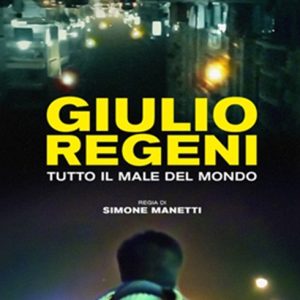
The documentary at the centre of the controversy is Giulio Regeni — All The Evil In The World, directed by Simone Manetti. The title is drawn from the words of Regeni’s mother, Paola Deffendi, when she first saw her son’s body in a Cairo morgue in February 2016. The film recounts the decade-long struggle of Regeni’s parents, Claudio Regeni and Paola Deffendi, to obtain justice for their son’s murder despite repeated false promises of cooperation from Egyptian authorities. It received none of the 14 million euros up for allocation by the ministerial panel, having been judged not to be of sufficient public interest.
The opposition has said other projects by filmmakers close to the right-wing government — as well as a film about Neapolitan crooner Gigi D’Alessio — were deemed worthy of funding in its place.
The Minister’s position
Culture Minister Alessandro Giuli found himself in the politically uncomfortable position of distancing himself from a decision made by his own ministry’s committee. Addressing a question from the Democratic Party in the Chamber of Deputies on Wednesday, he said he personally disagreed with the panel’s ruling. However, he insisted the government had played no role in it. “I disagree with the Selection Committee’s decision on the documentary film about Regeni, both morally and ideally,” Giuli said. He added, “Attributing a ministry intent to censor is a baseless representation. The tragic case of Giulio Regeni has political, social and cultural significance that is independent of any audiovisual product involving him.”
Culture Undersecretary Lucia Borgonzoni went further, saying the ministry expected those responsible for denying funding to the film to step down. In the context of three committee resignations that have happened, the statement seems somewhat circular.
Who was Giulio Regeni?
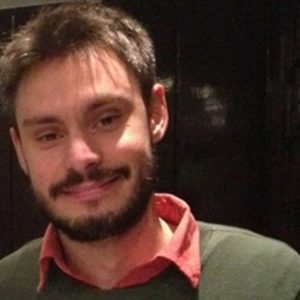
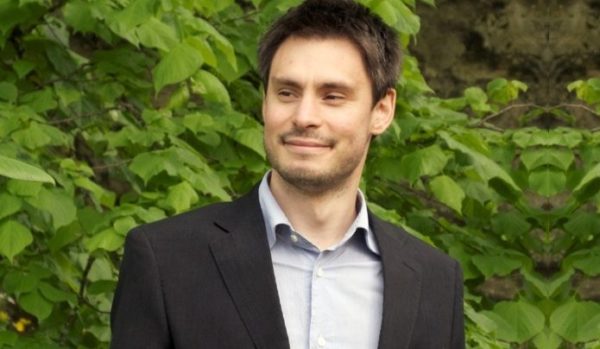
Giulio Regeni was a 28-year-old Cambridge University doctoral researcher studying independent trade unions in Cairo when he disappeared from the Cairo metro on 25 January 2016. The date was the fifth anniversary of the Egyptian revolution. His half-naked body was found in a ditch on the Cairo-Alexandria highway nine days later, on 3 February.
The Italian autopsy findings were among the most disturbing in recent memory. Regeni’s body showed evidence of contusions and abrasions from a severe beating; extensive bruising from kicks, punches and assault with a blunt instrument; more than two dozen bone fractures, including seven broken ribs, and fractures to all fingers and toes as well as both legs, arms and shoulder blades. He also suffered from multiple stab wounds including to the soles of his feet, possibly from an awl-like instrument; numerous razor cuts across his entire body; extensive cigarette burns; a larger burn mark between the shoulder blades made with a hard, hot object; a brain haemorrhage; and a broken cervical vertebra that ultimately caused his death. He had been tortured over a period of nine days. His mother said she could only recognise him “from the tip of his nose.”
Regeni is believed to have been denounced to Egyptian security forces as a spy by the head of one of the street unions he was researching.
No cooperation from Egyptian authorities
Four Egyptian security officers — National Security General Tariq Sabir and his subordinates, Colonels Athar Kamel Mohamed Ibrahim and Helmi, and Major Magdi Ibrahim Abdelal Sharif — are currently on trial in absentia in Rome.
Egypt refused to notify the defendants of the proceedings, despite repeated assurances of cooperation from President Abdel Fattah el-Sisi. Egypt has cleared all four officers domestically and at various points offered conflicting explanations for Regeni’s death, including a car accident, a violent encounter with a criminal gang (whose members were subsequently killed and found to have Regeni’s documents in their possession), and a dispute between gay lovers.