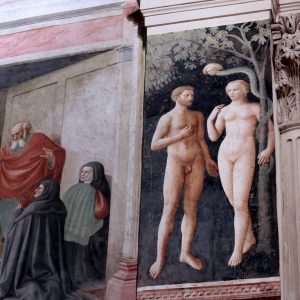
The city council of Florence has approved a project to upgrade the visitor access route to the Brancacci Chapel, one of the most important landmarks of Renaissance art.
The chapel is located inside the Santa Maria del Carmine in the Oltrarno district of the Tuscan capital.
The project will be financed through the European AccesS Programme, in which the Municipality of Florence participates as a partner. The plan was developed by the city’s Fine Arts and Palazzo Vecchio workshops service and involves an investment of about €40,000 aimed at improving the experience for visitors.
The works will focus primarily on reorganising the entrance route to the chapel, which houses the celebrated fresco cycle by Masolino da Panicale, Masaccio and Filippino Lippi.
Painted mainly in the early 15th century, the frescoes are widely considered one of the foundations of Renaissance painting due to their innovative use of perspective, realism and human expression.
What are the Brancacci Chapel access improvements?
The project also includes improvements to the reception area for visitors. The left transept of the Carmine church, which is currently used as a waiting space for tour groups, will be redesigned and fitted with new seating.
Additional measures will address security and visitor flow management, with the aim of making access clearer and more comfortable for the large number of people who visit the chapel each year.
According to the municipality, the works are expected to be completed by summer 2026.
City officials say the intervention is designed not only to preserve the historic site but also to make it easier to access, including for visitors with mobility needs. The broader goal of the European programme is to combine heritage conservation with new technologies and improved visitor services at cultural sites.
The Brancacci Chapel has long been regarded as a key site in the development of Renaissance art. Its fresco cycle, particularly Masaccio’s scenes from the life of St Peter, transformed the depiction of space, light and the human figure in painting. The frescoes underwent restoration in 2022.
The chapel also played an important role in the training of later masters. The Renaissance artist Michelangelo is believed to have studied the frescoes there while learning his craft in Florence.