The Italian Renaissance is often remembered for its celestial art and high-minded humanism, yet on 20 April 1492, a man was born in Arezzo who would spend his life exposing the grit, greed, and lust beneath that polished surface.
Pietro Aretino, the son of a humble shoemaker, rose to become the most feared and influential writer of the sixteenth century through sheer wit and a refusal to be silenced by the traditional hierarchies of power. Lacking the formal, classical education of his contemporaries, he leaned instead into the vernacular, using the common tongue to launch razor-sharp critiques that effectively invented the concept of modern celebrity journalism.
Pietro Aretino in Rome
Aretino’s ascent began in the high-stakes environment of papal Rome. Under the patronage of the wealthy banker Agostino Chigi, he discovered that the elite were more afraid of public ridicule than divine judgment.
He famously solidified his reputation following the death of Hanno, the beloved white elephant of Pope Leo X. Rather than penning a somber eulogy, Aretino crafted a satirical “last will and testament” for the beast, using the elephant’s various “bequests” to mock the vanities and vices of the Roman cardinals. This audacity earned him the favor of the future Pope Clement VII, but his trajectory in the Eternal City was cut short by his penchant for the profane.
The year 1524 marked a turning point in his career and the history of censorship. Aretino collaborated with the artist Giulio Romano to produce the Sonetti Lussuriosi, or “Lustful Sonnets.” These were a series of sixteen highly explicit poems written to accompany Romano’s engravings of various sexual positions. The work was so scandalous that it drew the direct ire of the Vatican, forcing Aretino to flee for his life.
This exile, however, proved to be his making. By 1527, he had settled in Venice, a city-state that prided itself on independence from papal authority and served as the printing capital of the world. In the lagoon city, Aretino achieved a level of literary autonomy that was unheard of for his time.
Settled in Venice
Aretino travelled through northern Italy before settling in Venice in 1527. In Venice, Aretino refined his craft as the “Scourge of Princes.” He mastered the art of the literary “shakedown,” where monarchs and nobles from Francis I of France to the Holy Roman Emperor Charles V sent him lavish gifts and pensions, essentially paying him not to write about them.
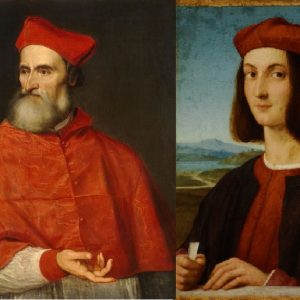
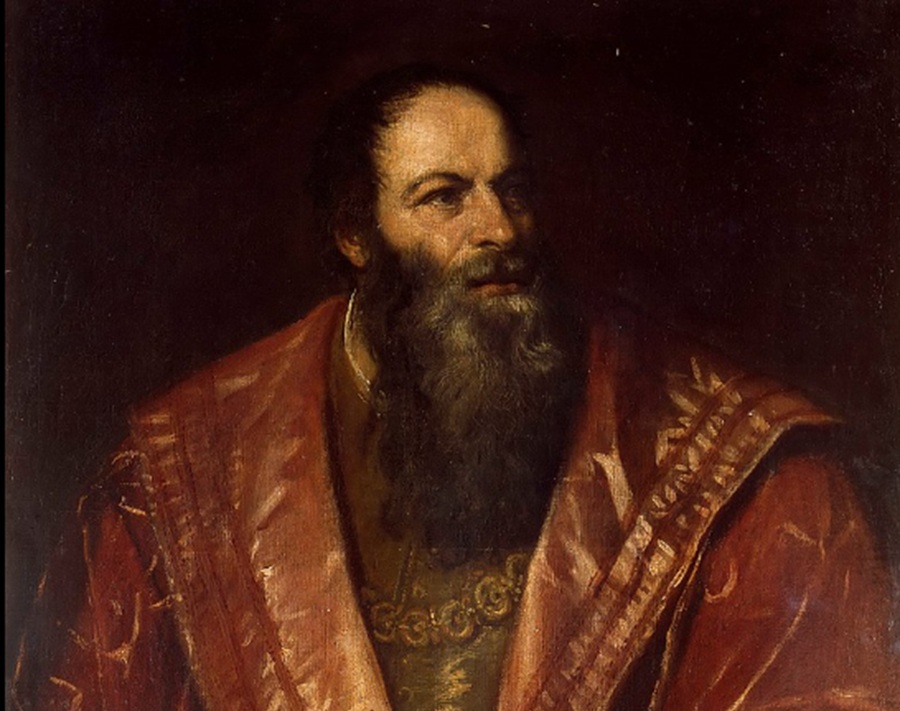
He lived like a prince himself, surrounded by art and intellect, forming a legendary “triumvirate” of friendship with the painter Titian and the architect Jacopo Sansovino. Titian, in particular, painted several portraits of Aretino, capturing the writer’s robust, bearded presence and the shrewd, uncompromising gaze that kept the powerful in a state of constant anxiety.
Beyond his reputation for blackmail and eroticism, Aretino was a playwright of immense talent. His comedies, such as La Cortigiana and Il Marescalco, stripped away the artifice of courtly life, while his tragedy Orazia is still regarded as one of the finest of the century. His most enduring contribution, however, may be his six volumes of letters. By publishing his correspondence, he turned private life into public spectacle, creating a blueprint for the modern public intellectual.
Death from laughing
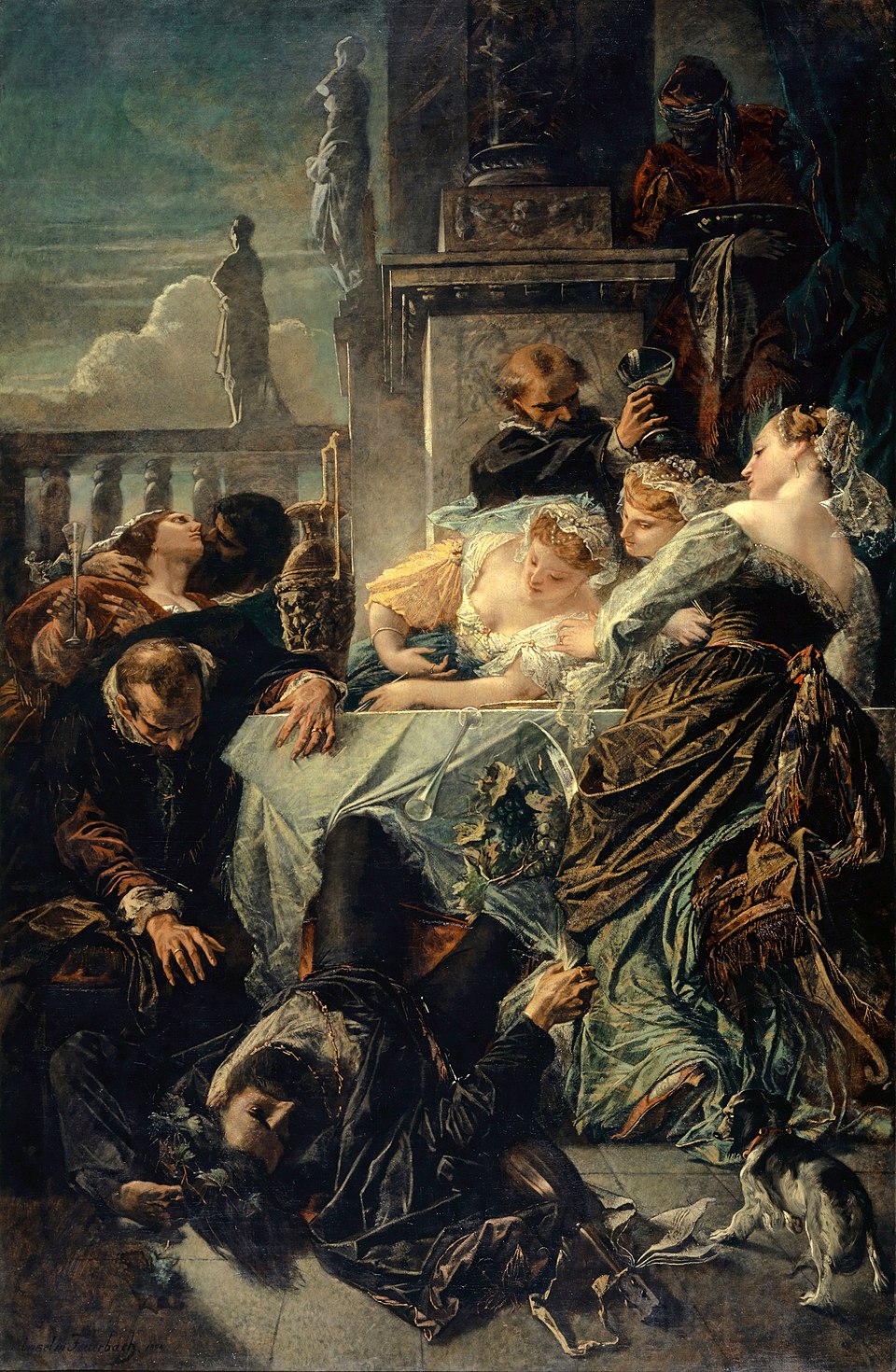
Even his death in 1556 remained true to his flamboyant character; legend insists he died of an apoplexy caused by laughing too uncontrollably at a ribald joke during a dinner party.
He was buried in the Church of San Luca, where his epitaph reportedly read: “Here lies Aretino, the Tuscan poet, who spoke evil of everyone except Christ, saying: ‘I do not know him’.”