Ferrara is one of Italy’s most complete Renaissance cities, its centre largely intact and shaped by human-scale design rather than modern redevelopment. Inscribed as a UNESCO World Heritage Site for its urban layout and historic core, the city offers a blend of architecture, culture, green space and slow-paced Italian life. Our quick guide to Ferrara gives you an insight into this pretty city.
Ferrara rose to prominence under the Este family, who transformed it into a Renaissance capital in the 15th century. Its distinctive grid plan and elegant palaces reflected advances in urban design that remain influential. The city’s heritage was recognised in 1995, later extended in 1999 to include the Po Delta landscape and network of Este villas.
Our quick guide to Ferrara provides you with the key sites within the city.
What to see in Ferrara
Castello Estense
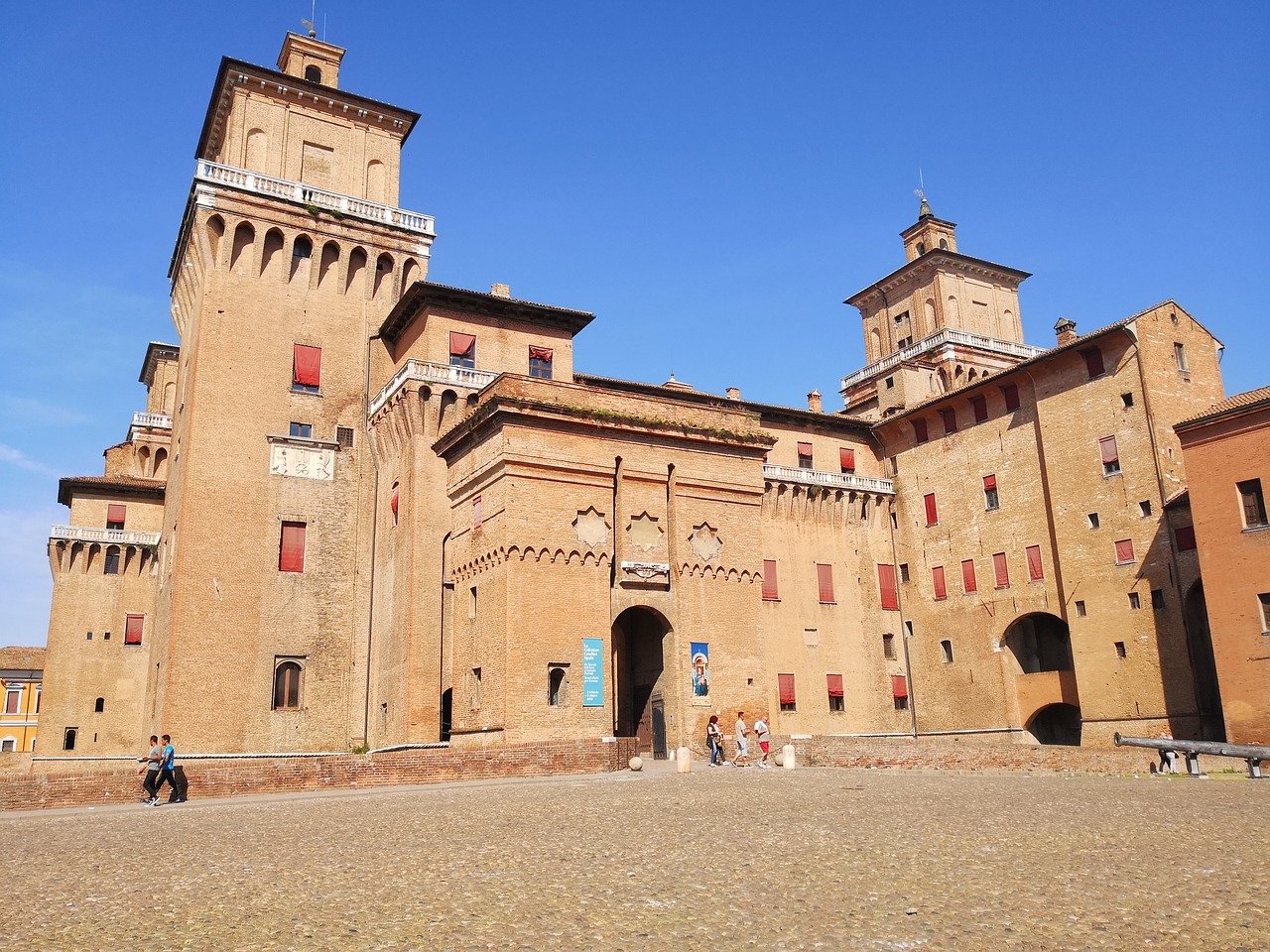
Dominating the historic centre, the Este Castle is a striking moated fortress turned palace. Its towers and drawbridge offer insight into Ferrara’s ducal past, while its internal chambers and courtyards host exhibitions and events.
Statue of Girolamo Savonarola

The statue of Girolamo Savonarola stands in Piazza Savonarola, near the Castello Estense. Born in Ferrara in 1452, the Dominican friar became one of the Renaissance’s most divisive figures. His legacy links the city to Florence’s religious and political upheavals of the late 15th century.
Ferrara Cathedral

The Cathedral of Saint George combines Romanesque and Gothic elements in a grand façade and interior. Begun in the 12th century, it remains the city’s main religious building and a testament to Ferrara’s medieval and Renaissance evolution. Along the side of the building are the loggia dei mercanti, where markets are still held today.
Santa Maria in Vado
This historic church is famed for a 12th-century eucharistic miracle and houses significant Renaissance artwork. Its layered history makes it a rewarding stop for visitors exploring Ferrara’s sacred heritage.
Palazzo Paradiso
A Renaissance palace near the old Jewish ghetto, Palazzo Paradiso houses the Biblioteca Ariostea and the historic Anatomical Theatre. The building highlights Ferrara’s cultural depth beyond its ducal monuments.
Corpus Domini Monastery
Founded in the early 15th century and still home to cloistered Poor Clare nuns, this monastery reflects spiritual life in Renaissance Ferrara and offers a quieter historic encounter.
Countryside within the walls

Ferrara’s unique campagna dentro le mura blends urban and rural landscapes. This green patchwork of fields and gardens lies within the ancient city limits, perfect for a leisurely stroll or picnic.
Things to do in Ferrara
Ferrara invites slow exploration. Its compact centre rewards walking tours, and cycling is especially popular thanks to flat terrain and well-preserved city walls. Guided tours of the historic core and museums can be booked through the tourist information office at Castello Estense.
Events punctuate the city calendar. The Ferrara Balloon Festival, for example, draws international visitors with mass balloon ascents and cultural programming.
Where to eat and drink

Emilia-Romagna’s fertile plains fuel Ferrara’s cuisine. Local specialities include cappellacci di zucca (pumpkin-filled pasta), salama da sugo (spiced salami), and coppia ferrarese bread. Dining in trattorie and osterie of the historic centre offers an authentic taste of Ferrarese tradition.
Practical info
Tourist maps and themed guides are available to download from the official site, covering routes such as the medieval centre, Renaissance additions, and Ferrara’s walls.
The MyFE Card is as a convenient tourist pass, offering access to attractions and exemptions from the local tourist tax with overnight stays.
The tourism office is located at the Castello Estense inner courtyard. Opening hours vary by season; it is only closed on Christmas Day.
Quick guide to Ferrara – One-day Itinerary

Start the day in the historic centre at Castello Estense, Ferrara’s most recognisable landmark. Walk the perimeter, then cross into Piazza Savonarola to see the statue of the city’s most famous son.
Continue towards Ferrara Cathedral, stopping to explore the surrounding medieval streets. Spend time on the square to observe the Romanesque façade and the pace of daily life.
Late morning suits a walk along the city walls, one of Ferrara’s defining features. The flat route offers views over gardens and fields within the historic perimeter.
For lunch, return to the centre and choose a traditional trattoria. Order cappellacci di zucca or another local pasta.
In the afternoon, visit Palazzo Paradiso and the former Jewish ghetto nearby. This area reflects Ferrara’s cultural and intellectual history.
Finish the day with a slow walk or cycle through the campagna dentro le mura. Enjoy an aperitivo in a central piazza before dinner.