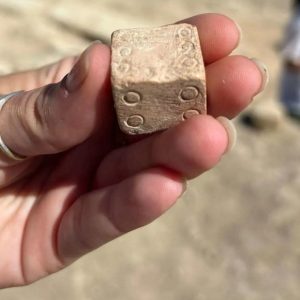
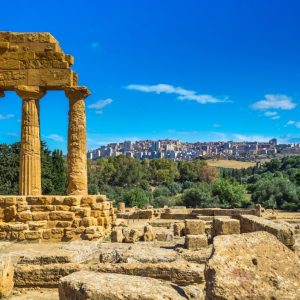
The archaeological landscape known as the Valley of the Temples, located near Agrigento on the southern coast of Sicily, is one of the most important surviving testimonies of ancient Greek civilisation outside Greece. Spread across a ridge overlooking the Mediterranean, the site contains some of the best-preserved Doric temples in the world and offers a remarkable window into the political, religious and cultural life of antiquity.
Today the area forms the Archaeological and Landscape Park of the Valley of the Temples, covering about 1,300 hectares and recognised as one of the largest archaeological parks in Europe. In 1997 it was inscribed on the UNESCO World Heritage List because of its exceptional state of preservation and its outstanding representation of Greek architecture and urban planning.
The Rise of Akragas: A powerful Greek colony
The story of the Valley of the Temples begins with the founding of the Greek colony of Akragas around 580 BC by settlers from Gela, themselves descendants of colonists from Rhodes and Crete. The city quickly became one of the most prosperous centres of the Greek world in the western Mediterranean.
Strategically positioned between two rivers and protected by natural hills, Akragas developed into a flourishing urban centre covering roughly 450 hectares. Within a few decades of its foundation, ambitious building programmes began, including fortifications and monumental temples dedicated to the Greek gods.
Ancient writers described Akragas as one of the richest cities of Magna Graecia. The philosopher Empedocles was born there in the 5th century BC, and the poet Pindar famously described the city as “the most beautiful of mortal cities.”
The Temples and the Sacred Landscape
Between the late 6th and early 5th centuries BC, Akragas built a sequence of monumental temples along a ridge south of the city. These structures formed a sacred landscape visible from the sea, projecting the power and religious devotion of the city.
Among the most significant temples are:
- Temple of Concordia (5th century BC) – one of the best-preserved Doric temples in the world.
- Temple of Hera (Juno) – positioned on the highest point of the ridge and associated in antiquity with marriage rituals.
- Temple of Heracles (Hercules) – the oldest temple on the site, originally supported by 38 columns.
- Temple of Olympian Zeus – once among the largest Doric temples ever built, notable for colossal stone figures known as telamons.
- Temple of Castor and Pollux (Dioscuri) – now symbolised by four reconstructed columns.
- Temple of Asclepius – located outside the city walls and connected with healing rituals.
These temples are in the Doric style, characterised by massive columns, simple capitals and harmonious proportions. They were not isolated monuments but part of a broader urban system that included sanctuaries, necropolises, residential quarters and hydraulic infrastructure.
Conquest, decline and Roman transformation
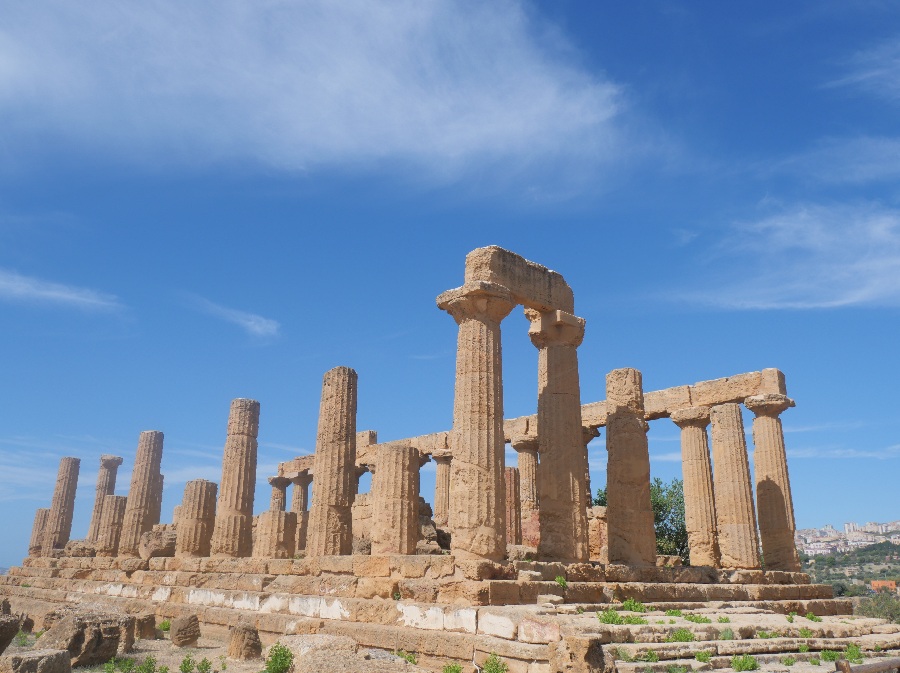
The golden age of Akragas ended abruptly in 406 BC when the Carthaginians captured and devastated the city during the Sicilian Wars. Much of the urban fabric was destroyed, although the temples remained prominent landmarks in the landscape.
In 210 BC the Romans conquered the city and renamed it Agrigentum. Under Roman rule the settlement regained prosperity. Many areas were rebuilt or adapted. Archaeological remains from the Hellenistic and Roman periods – including residential quarters, burial grounds and public spaces – demonstrate how the Greek city evolved over time.
Later, during the early Christian period, The Romans converted some of the temples into churches. This transformation helped preserve structures such as the Temple of Concordia, which remained largely intact thanks to its adaptation as a Christian basilica in the 6th century AD.
Rediscovery and modern preservation
After the decline of the ancient city, the temples gradually fell into ruin, their stones reused for later buildings. Interest in the site revived during the 18th and 19th centuries, when travellers and scholars began to document the remains as part of the Grand Tour.
Modern archaeological research and conservation have transformed the area into a protected cultural landscape. The site is protected under Italian heritage law and managed as an archaeological park dedicated to preserving the monuments and the surrounding rural scenery of olive groves and almond trees.
Visiting the Valley of the Temples today
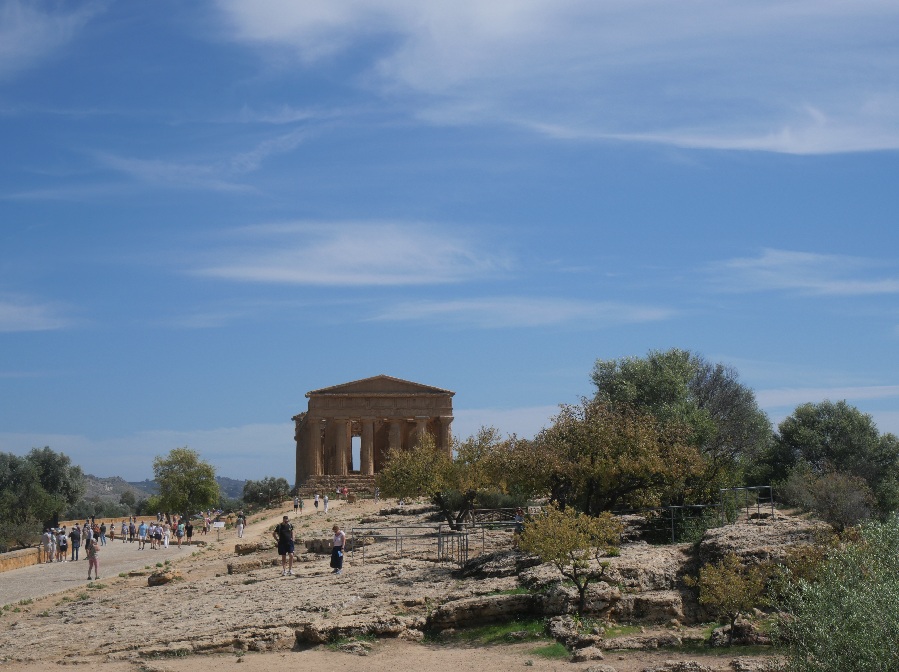
Today the Valley of the Temples is one of the most visited archaeological attractions in Italy. The site lies about three kilometres from the centre of Agrigento and has a network of walking paths that run along the ancient ridge.
Visitors typically enter the park through the main archaeological area and follow the so-called “Sacred Way,” passing the temples of Hera, Concordia and Heracles before reaching the remains of the Temple of Zeus. The park also includes the Kolymbethra Garden, a historic valley garden restored by the FAI – Fondo Ambiente Italiano.
Because the archaeological zone covers a vast area, a full visit often takes several hours. Guided tours, audio guides and museum exhibitions help explain the history of the ancient city and the meaning of its monuments. The temples are also illuminated at night during certain periods of the year, offering visitors a different perspective on one of the most iconic archaeological landscapes in the Mediterranean.