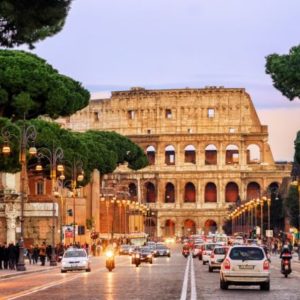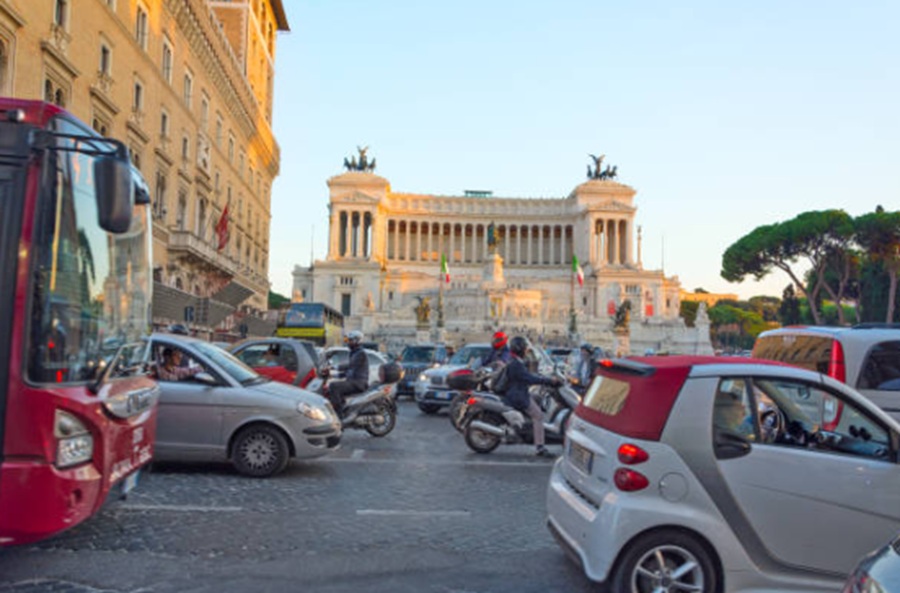
From January 2026, all streets in Rome’s historic centre are subject to a 30 km/h speed limit.
The measure applies to cars, scooters and motorcycles.
The Rome city council approved the change late last year. It extends the so-called Zona 30 to the entire central area.
The zone largely overlaps with the existing limited traffic zone, or ZTL. It represents one of the most significant traffic changes in Rome in recent years. City officials say the move aligns Rome with broader European mobility trends. Many cities now prioritise safety, walkability and quality of life over speed.
What the new rule means in practice
The 30 km/h limit applies uniformly across the historic centre. It replaces a patchwork of streets with varying speed limits. Drivers can no longer exceed 30 km/h anywhere within the zone. The rule applies regardless of street size or traffic volume.
The city has updated road signage and markings. Traffic layouts have also changed to reinforce the lower speed. Officials stress that signage alone is not the goal. The aim is to make the limit intuitive and self-enforcing.
Why Rome lowered the speed limit
The city’s mobility department cites road safety as the main reason. Lower speeds significantly reduce accident severity. Studies show that pedestrian survival rates increase sharply at 30 km/h. The risk of fatal injury rises steeply at higher speeds.
Rome’s historic centre has high pedestrian density. Cyclists and tourists share space with local traffic.
Officials also highlight environmental benefits. Lower speeds reduce noise and emissions.
The city argues that journey times will change little. Traffic already moves slowly due to congestion and crossings.
Debate among residents and commuters
The new limit has sparked debate in the capital. Supporters see it as long overdue. They argue the historic centre should prioritise people over vehicles, pointing to safety concerns for pedestrians and cyclists.
Critics, however, question enforcement and consistency. Some fear an increase in fines rather than safer streets. Others worry about the impact on residents and workers as Rome already has extensive traffic restrictions.
Similar debates have played out elsewhere. Several Italian and European cities now operate widespread Zona 30 schemes.