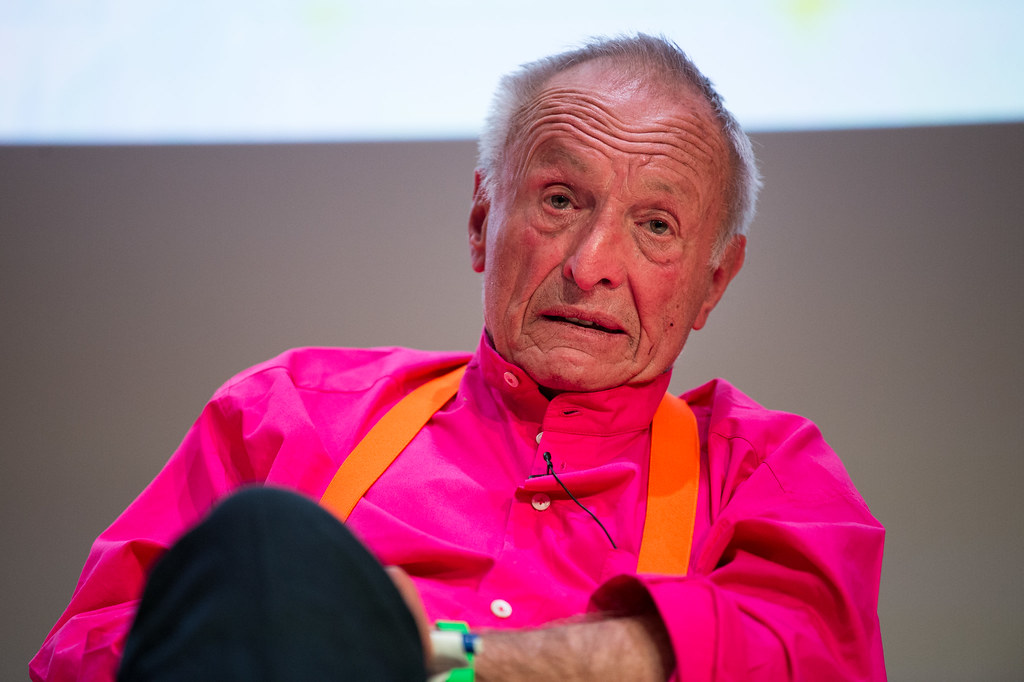
The Italian-British architect Richard Rogers died on Saturday aged 88. He changed the London skyline with creations such as the Millennium Dome and the Cheesegrater.
Richard Rogers worked alongside Renzo Piano on the French cultural centre “Georges Pompidou”. He died on Saturday aged 88.
Rogers, who changed the London skyline with distinctive creations such as the Millennium Dome and the ‘Cheesegrater’, “passed away quietly” Saturday night. His son Roo Rogers confirmed his death to the New York Times, but did not give the cause.
Italian born architect
The Italian-born architect won a series of awards for his designs, including the 2007 Pritzker Prize. He was one of the pioneers of the “high-tech” architecture movement, which incorporated industrial materials such as glass and steel into structures.
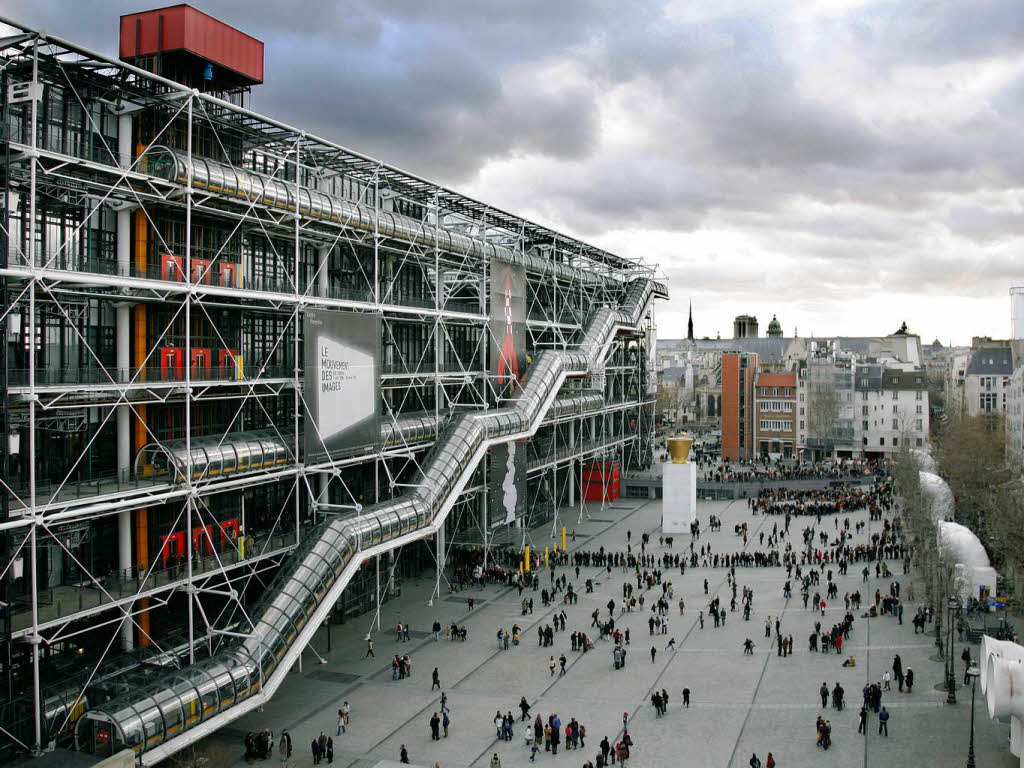
Alongside, Renzo Piano, he created France’s Pompidou Centre. Famed for its multi-coloured, pipe-covered façade, Rogers later said he couldn’t dream of designing it now.
Born in Florence in 1933, his father was a doctor, his mother a former pupil of Irish writer James Joyce. The family fled the dictatorship of Mussolini, settling in England in 1938. London was miserable. The family had been comfortably middle-class in Italy, but the relocation reduced them to a single-room flat.
“Life had switched from colour to black-and-white,” Rogers recalled in his 2017 autobiography A Place for all People.
Rogers was dyslexic and he left school in 1951 with no qualifications. However, he managed to gain entry into London’s Architectural Association School. He completed his architecture studies at Yale in the United States in 1962, where he met fellow British architect Norman Foster.
Having become Lord Rogers of Riverside, the architect sat in the House of Lords, as a Labour peer.
Richard Rogers’ designs
Rogers’ other well-known designs include Strasbourg’s European court of human rights and the Three World Trade Center in New York, as well as international airport terminals in Madrid and London’s Heathrow.
Rogers insisted it was the space around buildings that was key in defining those that worked. “The two can’t be judged apart,” he told the Guardian in 2017. “The Twin Towers in New York, for instance. They weren’t great buildings, but the space between them was.”