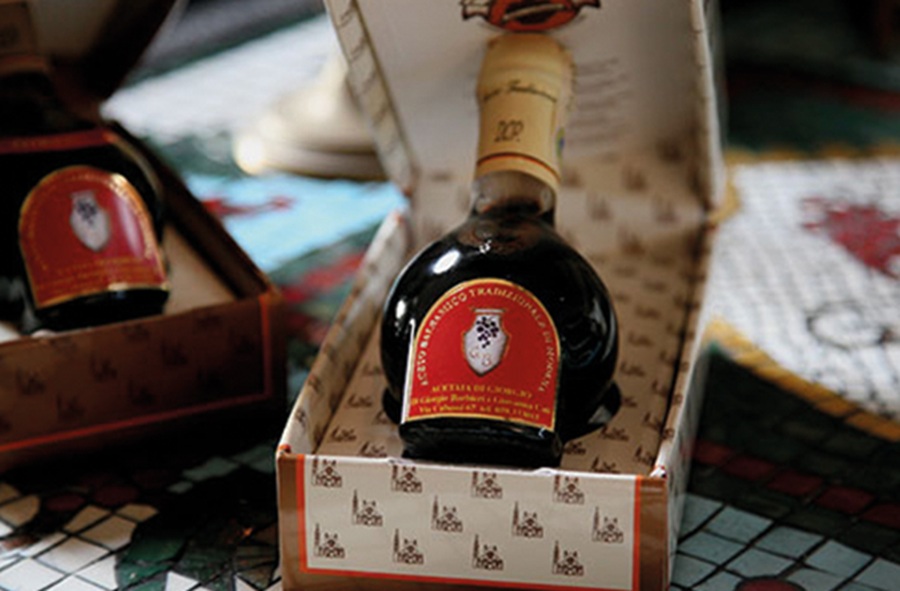
We look at the history of balsamic vinegar and how a centuries-old Este court tradition became one of Italy’s most fiercely protected culinary exports.
Few Italian products carry as much history, or attract as much confusion, as balsamic vinegar of Modena. The dark, syrupy condiment sold in delicatessens and supermarkets worldwide ranges from an inexpensive everyday seasoning to a rare, decades-aged delicacy that can command hundreds of euros for a few drops. Understanding the difference comes down to methodology, geography and a strict system of European protection built up over the past 25 years.
Origins at the court of the Este family
The roots of balsamic vinegar reach back to Roman times, when cooking down grape must to preserve it was already common practice. But the product as it is understood today took shape at the court of the Este family, the dynasty that ruled Modena from the Middle Ages onwards. Historical accounts describe balsamic vinegar being kept and matured in the ducal cellars, treated as a prized possession to be given as a gift to visiting dignitaries rather than sold as a commodity.
That tradition of careful, small-batch production in wooden barrels, handed down through families and passed between generations, survives largely unchanged in Modena’s traditional vinegar lofts, or acetaie, today.
What’s the difference between balsamic vinegars?
A great deal of the confusion around balsamic vinegar stems from the fact that two distinct, separately regulated products share the “balsamic vinegar of Modena” name.
Aceto Balsamico Tradizionale di Modena DOP (Traditional Balsamic Vinegar of Modena, Protected Designation of Origin) is the authentic, historic product: made purely from cooked grape must, with no wine vinegar, caramel or other additives, and aged for a minimum of 12 years.
Aceto Balsamico di Modena IGP (Protected Geographical Indication) is the far more widely available commercial product found in most supermarkets. It is a blend of at least 20% cooked, partially fermented or concentrated grape must, at least 10% wine vinegar, and a smaller proportion of vinegar aged for at least ten years. IGP can also legally include caramel colouring. It is aged for a far shorter period than its DOP counterpart, and sold in much larger, everyday quantities.
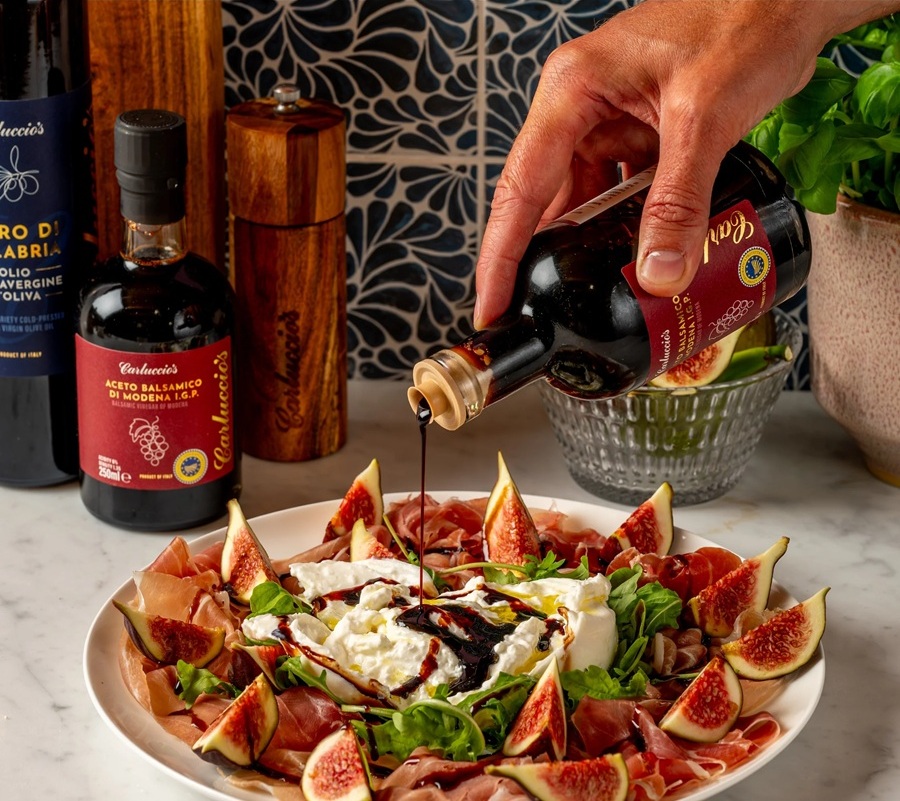
Both products are protected by name under EU law, meaning producers outside the designated zones cannot legally call their vinegar “Aceto Balsamico di Modena”. However, the gulf in method, cost and character between the two is enormous.
How the traditional balsamic vinegar is made
Aceto Balsamico Tradizionale di Modena DOP can only be produced using grapes grown within the province of Modena, from a defined list of traditional varieties including Lambrusco, Trebbiano, Ancellotta and Sgavetta.
After pressing, the fresh must is cooked slowly outdoors over an open flame, typically at around 80°C, to concentrate its sugars without caramelising them. The cooked must then undergoes a slow, natural double fermentation — first alcoholic, then acetic — helped along by a portion of older, bacteria-rich vinegar drawn from an existing batch.
Once fermentation is complete, the vinegar begins its long maturation in a batteria, a graduated series of barrels of decreasing size, each crafted from a different type of wood — chestnut, cherry, oak, mulberry and juniper among them — which each contribute their own subtle notes to the finished product.
Each year, a portion of the most concentrated vinegar is drawn off from the smallest barrel for bottling, and the resulting gap is topped up from the next barrel in the sequence, which is in turn topped up from the barrel before it, all the way back to the largest. This annual “topping up” process, combined with natural evaporation through the porous wood, gradually concentrates the vinegar over years and even decades, deepening its colour, thickening its texture and intensifying its sweet-sour flavour.
No other ingredients — no wine vinegar, no colouring, no sweeteners — may be added at any stage.
Ageing and grading
To be sold as DOP, the finished vinegar must be aged for a minimum of 12 years, at which point it qualifies for the Affinato designation. A longer-aged version, Extravecchio (Extra-aged), must be matured for at least 25 years, and typically commands a significantly higher price.
Before release, every batch must pass inspection by a dedicated tasting panel appointed by the producers’ consortium, which assesses colour, density, aroma and flavour against the strict production regulations. Only vinegar that passes this sensory and chemical evaluation may carry the DOP mark.
A protected bottle as well as a protected name
Perhaps uniquely among Italian foodstuffs, Aceto Balsamico Tradizionale di Modena DOP is also protected in the shape of its bottle. Since 1988, genuine DOP vinegar has been sold exclusively in a distinctive 100ml bottle with a squat, drop-like form and square base, designed by the car designer Giorgetto Giugiaro.
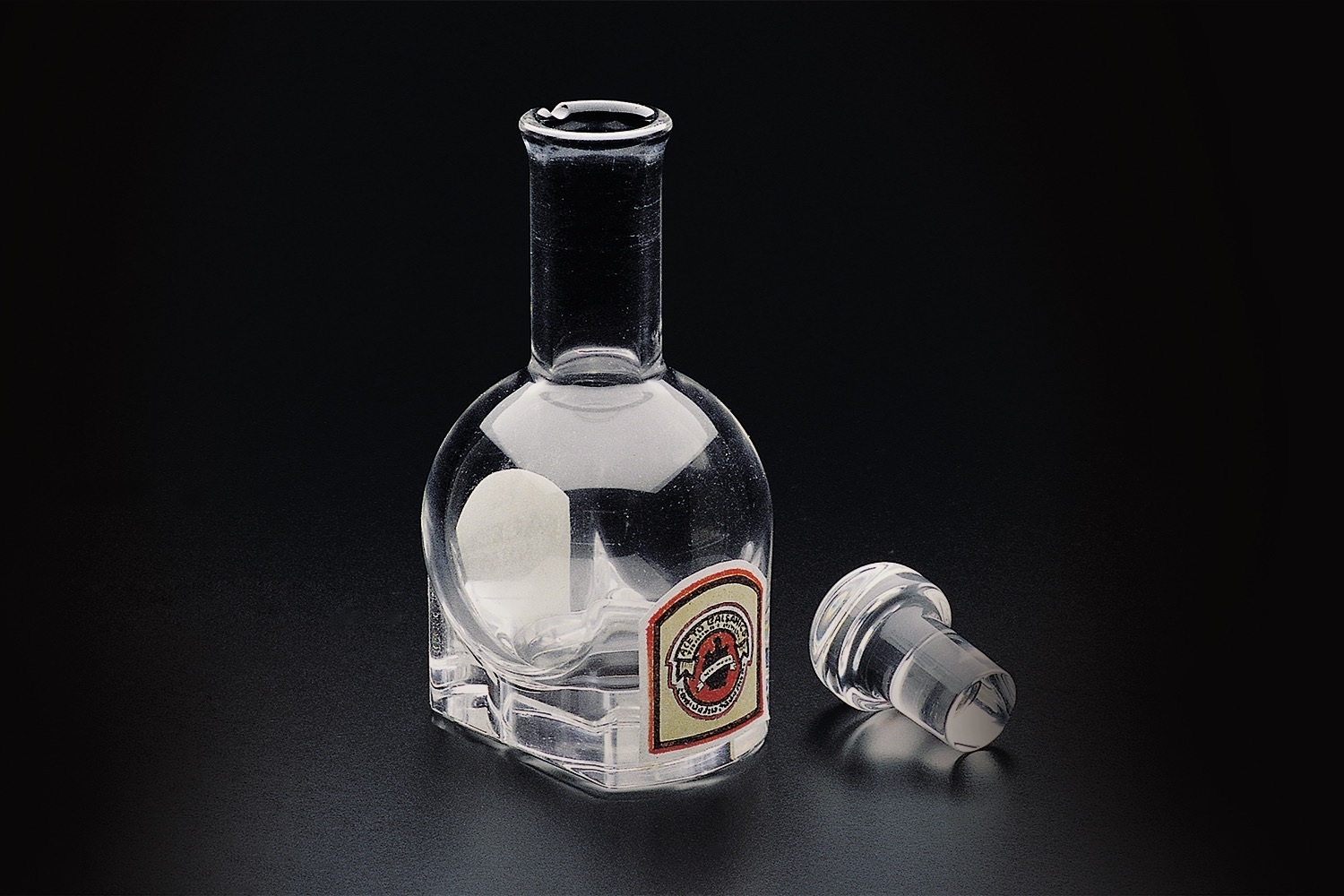
The shape, along with the maximum bottle size, is written into the product’s legal specification, making it instantly recognisable and difficult to counterfeit convincingly.
Protected status
Aceto Balsamico Tradizionale di Modena received its DOP status from the European Union on 17 April 2000, cementing legal protection for a method of production that Modenese families had followed, largely informally, for generations. A closely related but separately certified product, Aceto Balsamico Tradizionale di Reggio Emilia, produced in the neighbouring province, received its own DOP status around the same time.
The more commercial Aceto Balsamico di Modena IGP was granted its protected status later, formalising the wider blended product that accounts for the vast majority of balsamic vinegar sold around the world.
These designations are policed by two separate producers’ consortia — the Consorzio Tutela Aceto Balsamico Tradizionale di Modena DOP and the Consorzio Tutela Aceto Balsamico di Modena IGP — which oversee production standards, certify individual batches and take action against products that misuse the protected names.
Tasting the difference
The practical difference between the two products could hardly be greater. A 100ml bottle of genuine 12-year Aceto Balsamico Tradizionale di Modena DOP typically costs somewhere between €40 and €80 at the producer, rising well beyond that for Extravecchio. Commercial IGP balsamic, by contrast, is sold by the litre for only a few euros.
Traditional DOP balsamic is thick, dark and intensely complex, layering fruit, wood and acidity built up over more than a decade in the barrel. It is used sparingly, in drops, over dishes such as Parmigiano Reggiano, cured meats or even fresh strawberries, rather than poured as a dressing. Commercial balsamic varies hugely in quality but rarely approaches this depth of flavour.
Visiting an acetaia
Modena and its surrounding province remain the heart of traditional balsamic production. Many family-run acetaie — vinegar lofts, often housed in the attics of old farmhouses, where temperature fluctuations between summer and winter are considered essential to proper ageing — welcome visitors for tours and tastings, usually by prior booking.
Several municipalities in the province also maintain their own communal acetaia comunale as a tribute to the tradition, some open to visitors year-round and others only on special occasions.
For anyone travelling to Emilia-Romagna, a visit to a working acetaia offers a rare chance to see barrels that, in some of the oldest family cellars, have been quietly maturing their contents for well over a century. My personal favourite is Acetaia di Giorgio.