Francesco 1 d’Este was a warrior-duke who survived plague, played both sides of the Thirty Years’ War, and left Modena one of Italy’s finest baroque palaces.
Francesco I d’Este, Duke of Modena and Reggio, was born on 6 September 1610 in Modena, in what is now Emilia-Romagna. Over a reign of nearly three decades he would be remembered both as a shrewd and occasionally ruthless military commander and as the man who gave Modena its magnificent Ducal Palace. He would later be immortalised in one of the most celebrated portrait busts of the Italian Baroque.
Early life and accession
Francesco was the eldest son of Alfonso III d’Este and Isabella of Savoy. When his mother died, his grief-stricken father chose to abdicate the dukedom rather than continue to rule. He took religious vows as a Capuchin friar under the name Fra’ Giambattista da Modena and retreated to a life of prayer in Merano. Francesco succeeded him as reigning duke on 11 July 1629, at the age of just eighteen.
His accession coincided almost immediately with catastrophe. Within two years of Francesco taking the throne, plague swept through Modena, killing an estimated seven in every ten inhabitants of the city. His father, even in retirement, tried to minister to the dying and preached through the worst of the outbreak. Francesco built convent for him at Castelnuovo in Garfagnana, in the Tuscan Apennines, where the old duke could live out his final years.
A small state in a continental war
Francesco’s reign fell squarely within the Thirty Years’ War (1618–1648), the sprawling conflict that engulfed much of Europe and repeatedly drew in the fractured states of northern Italy. As ruler of a comparatively small and vulnerable duchy sandwiched between the great powers of Spain and France, Francesco spent much of his rule trying to navigate Modena safely between the two. It was a balancing act that saw him repeatedly change allegiance as the political winds shifted.
He first sided with Spain, using the opportunity to invade the neighbouring Duchy of Parma. When he travelled to the Spanish court to claim the reward he felt he was owed, however, he came away with comparatively little: the town of Correggio. Even then, he had to pay the Spanish crown 230,000 florins for the privilege.
Shifting alliances
Stung by this, Francesco realigned himself with Venice, Florence and Parma in a coalition against Pope Urban VIII. He attempted to seize Ferrara, the city his own Este ancestors had ruled for centuries before losing it to the Papal States.
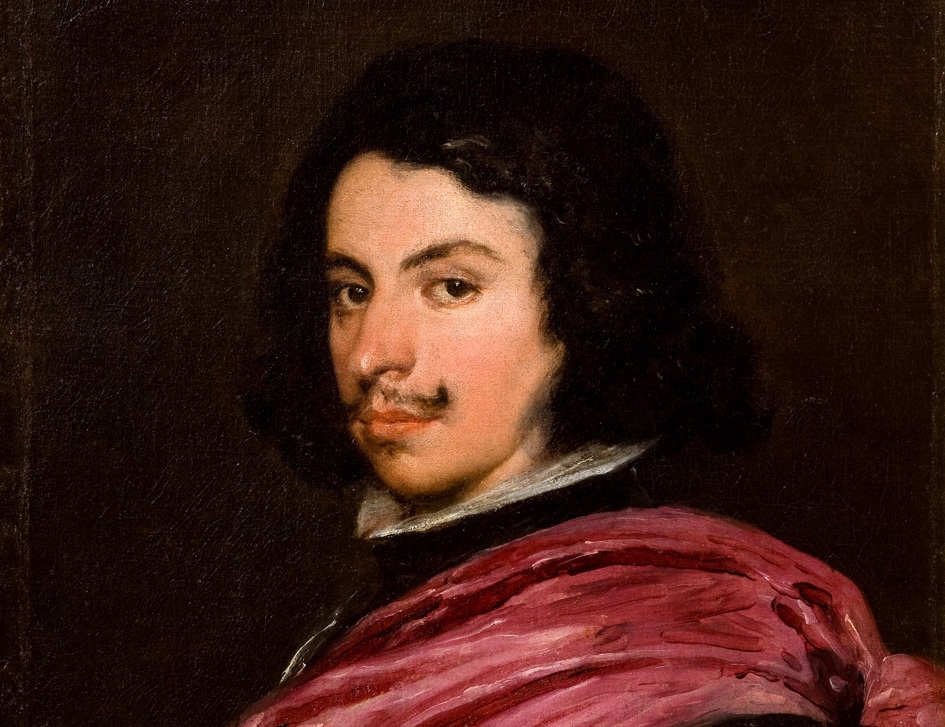
It was in this period, in 1638, that Francesco travelled to Madrid seeking a firmer alliance with, and financial backing from, King Philip IV of Spain. It was during this visit that the Spanish court painter Diego Velázquez produced his celebrated portrait of the duke — a work now considered one of the high points of Baroque portraiture. The portrait remains in the Galleria Estense in Modena.

Modena’s allegiances shifted again when the duchy became an ally of France, brokered through the influence of Cardinal Mazarin. Francesco later reached his own separate accommodation with Spain, judging that Spain looked the likelier side to prevail in the wider war. He nonetheless continued to fight alongside France and Savoy later in his reign, capturing Alessandria and Valenza in 1656 and Mortara in 1658.
Marriages and children
Francesco married three times. His first wife, Maria Caterina Farnese, whom he wed in 1631, died in 1646. He then married her sister, Vittoria Farnese, who died only three years later, in 1649. His third and final marriage, in 1654, was to Lucrezia Barberini — daughter of Taddeo Barberini, a member of the very family whose troops Francesco’s own forces had fought against during the Thirty Years’ War.
Across his three marriages Francesco had eleven children in total. Two of his sons went on to rule Modena in turn: Alfonso, his heir, married Laura Martinozzi and succeeded his father as Alfonso IV. A younger son, Rinaldo, later also became Duke of Modena.
Death and legacy
Francesco I died on 14 October 1658 in Santhià, in Vercelli in the Piedmont region, having fallen ill with malaria, aged 48. His son, Alfonso IV, succeeded him.
History remembers him for his good character and religious devotion as much as for his generalship, and above all for the architectural legacy he left Modena. In 1635 he commissioned his architect, Bartolomeo Avanzini, to build a grand new Ducal Palace on the site of an older castle — a project so ambitious that few princely residences elsewhere in Europe could rival it at the time. The palace still dominates Modena’s skyline today and now serves as home to the Italian Military Academy.
Francesco’s likeness was also captured for posterity by the great sculptor Gian Lorenzo Bernini, who produced a life-size marble bust of the duke in 1650–51. That bust still stands today in the Galleria Estense, on the upper floor of the Palazzo dei Musei in Modena.

Travel tip
Modena, on the southern edge of the Po Valley in Emilia-Romagna, is as celebrated today for its cars as for its dukes: Ferrari, Maserati, Lamborghini, De Tomaso and Pagani have all been based in or around the city. It is equally renowned for its balsamic vinegar, produced under strict traditional methods in the surrounding countryside.
The city was also the birthplace of the tenor Luciano Pavarotti and the soprano Mirella Freni.
Dates for visiting he Ducal Palace are available on the Emilia Romagna tourism website.