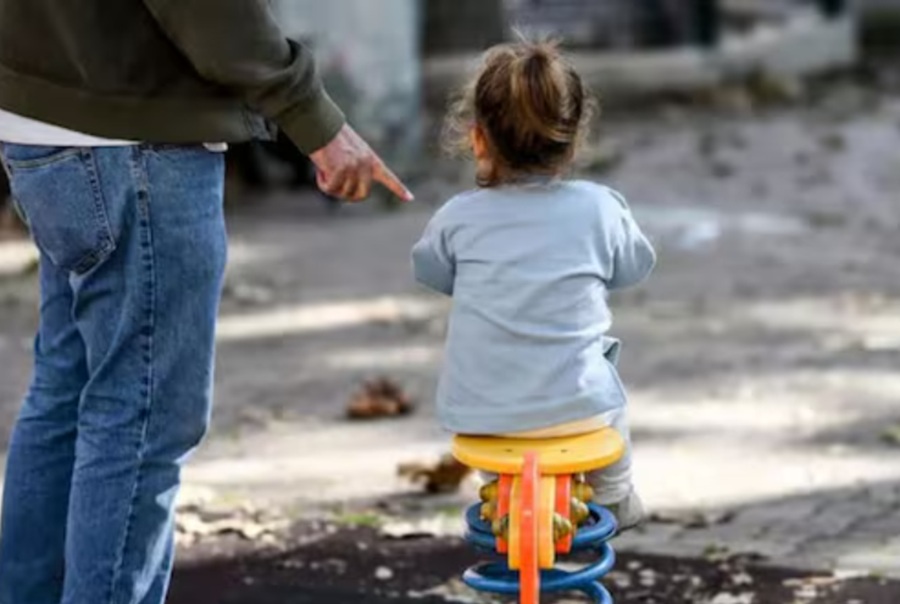
A new UNICEF report on children and economic inequality places Italy in the middle tier of wealthy nations. However, it flags serious concerns over child poverty and obesity while also recognising the country’s comparatively low rates of adolescent suicide.
Italy’s children are growing up in a country where economic inequality is shaping their life chances in measurable ways, according to Report Card 20: Unequal Chances — Children and Economic Inequality, published on Tuesday by UNICEF’s Office of Strategy and Evidence. The report, the twentieth in a long-running series benchmarking child wellbeing across the world’s wealthiest nations. It examines the relationship between economic inequalities and children’s wellbeing in 44 OECD and high-income countries, finding that in most of them rates of income inequality and child poverty remain stubbornly high.
Italy’s overall ranking of 12th out of 44 countries places it comfortably in the upper half of the table, a meaningful improvement on previous editions, where Italy regularly appeared in the bottom third. The result reflects a genuinely mixed picture: areas of quiet strength sitting alongside persistent and worrying gaps.
Child Poverty
The most striking finding for Italy is that around 23% of children are living in families with an income below 60% of the national median — the standard definition of relative income poverty used across the EU. That means nearly one in four Italian children may lack access to the resources their peers take for granted, such as adequate nutrition, stable housing, educational materials, and participation in social activities.
Across the 44 countries studied, almost one in five children on average live in income poverty, meaning their basic needs may not be met. Italy’s rate of 23% sits above that average, making child poverty one of the country’s most urgent unresolved challenges. The geographic dimension compounds the concern. Data consistently shows the problem is far more acute in southern Italy and the islands, where child poverty rates are dramatically higher than in the north and centre.
Also read: Calabria ranks as third poorest region in EU
Health – Mental and Physical
The report finds that 27% of Italian children and adolescents between the ages of five and 19 are overweight — a figure that demands attention given its long-term implications for public health. Italy has historically had some of the highest childhood obesity rates in Europe, particularly in the south, where dietary patterns and socioeconomic factors intersect in complex ways.
There is, however, a genuine positive in this data. The previous UNICEF Innocenti Report Card, published in 2025, found that between 2018 and 2022, overweight rates continued to increase in a third of countries covered, but substantially improved in only two — Italy and Portugal.
The report also finds that children living in countries with the highest levels of inequality are 1.7 times more likely to be overweight than those living in the most equal countries. This highlights the connection between economic deprivation and poor physical health outcomes.
One area where Italy performs markedly well is adolescent suicide. Italy’s suicide mortality rate for 15-to-19-year-olds stands at 2.82 per 100,000 — one of the lowest levels in Europe. It is also well below the rates recorded in countries such as Lithuania, New Zealand and Estonia, which have consistently topped the suicide league tables in previous editions.
It is a figure that speaks, at least in part, to the resilience of strong family networks, community bonds and social cohesion that continue to characterise much of Italian life.
The Wider Context
UNICEF Innocenti Director Bo Viktor Nylund said, “Inequality profoundly affects how children learn, what they eat, and how they feel about life.” The report calls on governments to strengthen safety nets, expand family and child benefits, raise minimum wages, and engage directly with children to understand how inequality shapes their daily experience.
For Italy, the 12th-place ranking is a recognition that much is being done right. A country that ranks among Europe’s most protective environments for adolescent mental health, and that has shown genuine progress on childhood obesity, has the foundations to do better on child poverty.
Whether it has the political will to address the structural inequalities — particularly the persistent north-south divide — that keep nearly a quarter of its children in precarious circumstances is a question that goes well beyond any league table.