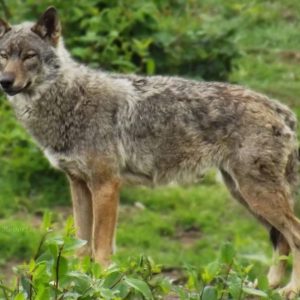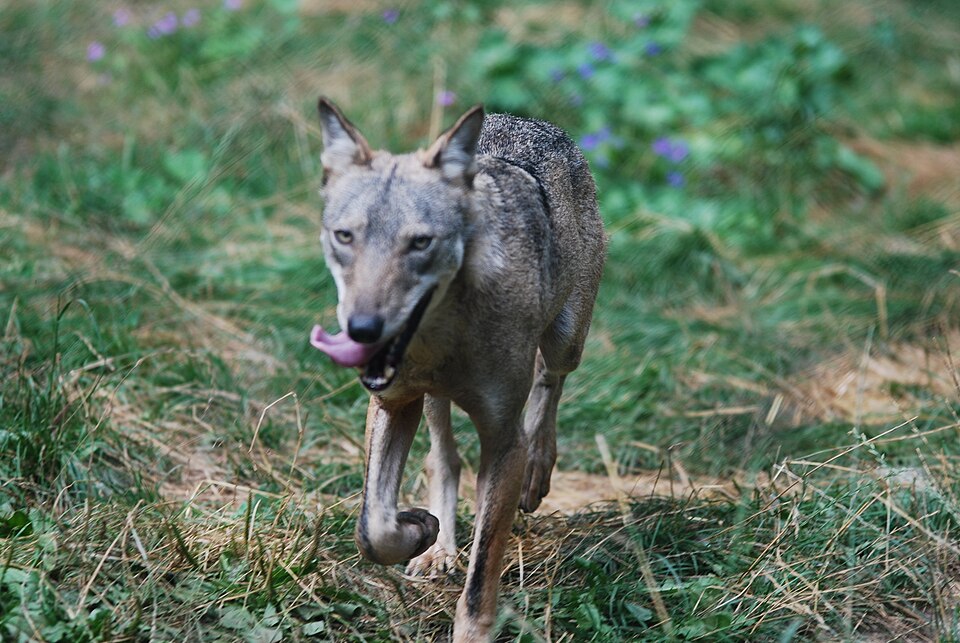
Laboratory tests have confirmed the presence of agricultural pesticides in wolf carcasses recovered from one of Italy’s oldest and most celebrated national parks. Conservationists and opposition politicians demand urgent government action and call for a planned parliamentary bill to cull wolves to be shelved.
The death toll of wolves found in and around the Abruzzo, Lazio and Molise National Park has risen to 18, with three foxes and a buzzard also found dead in the same area. as investigators close in on what is now widely believed to be an organised campaign of illegal poisoning using agricultural pesticides — one of the worst wildlife massacres in Italian history.
As Italy News Online reported last week, the crisis began with the discovery of ten wolf carcasses near the villages of Pescasseroli and Alfedena. When patrols were subsequently stepped up, a further eight carcasses were found across other locations within and around the park, bringing the confirmed death toll to at least 18.
Poison confirmed
The park’s initial suspicions have now been corroborated by laboratory analysis. Thirteen of the dead wolves were taken to the local animal health research institute IZS in Teramo, which identified the presence of agricultural pesticides used in poisoned bait.
The park authority said traces of suspected poisoned bait had been found in an area where five of the wolves had been discovered. The subsequent deaths elsewhere raised what it described as “very strong suspicion” of further poisoning. Park authorities said in a statement that the scale of events was “devastating” and expressed their “deep grief and disbelief.”
Prosecutors in the nearby city of Sulmona have opened a formal investigation, and authorities have urged local communities to report any suspicious activity.
‘An unprecedented attack’
Legambiente, Italy’s foremost environmental campaigning organisation, has issued a blistering statement calling the events a national disgrace and demanding an immediate emergency response from central government.
“This is the ugliest moment in our country’s history,” said Legambiente president Stefano Ciafani. “Do-it-yourself justice and the use of poisoned bait is a vile and cowardly act which harms biodiversity but also the safety of the entire territory and a park that boasts over a hundred years of history in the defence of nature.”
Legambiente has called on the government and the Ministry of the Environment and Energy Security to convene an urgent national meeting in Pescasseroli. They want to bring together the park authority, investigating prosecutors, local municipalities, and the conservation organisations that have worked in the area for decades.
Ciafani warned that other protected species could now be at risk. With around 50 Marsican brown bears remaining, conservationists fear the poisoning campaign could soon claim its next victims. “Today it was the turn of wolves,” Ciafani said. “Tomorrow it could be the turn of the Marsican brown bear.”
Political reactions
Environment Minister Gilberto Pichetto Fratin condemned the killings as “horrendous and serious”. He said he had ordered Italy’s forestry police to intensify inspections in an effort to identify those responsible. Fratin added that the ministry was “particularly attentive and sensitive to the protection of a species that is so important for the balance of our ecosystem.”
However, opposition politicians have pressed for a more robust political reckoning. Angelo Bonelli, a lawmaker with the Greens and Left Alliance, accused the government of failing to stand up to the hunting lobby, which he described as close to right-wing parties in the ruling coalition. He called for swift investigations, tighter controls, and exemplary sanctions.
Legambiente went further still, demanding that the government shelve Bill 1552, currently scheduled for parliamentary discussion, which the organisation says would severely weaken wildlife protection in Italy. “Instead of fuelling anti-wolf sentiment and policies,” the group said, the government should be mobilising to protect the species and to stand alongside the national park.
A recovery now under threat
Italy’s wolf population has rebounded significantly after coming close to extinction in the twentieth century, with a 2020-21 census putting the national figure at around 3,300. The European Union downgraded the wolf’s status from “strictly protected” to merely “protected” following evidence of population recovery across the continent. The change paved the way for a limited cull of up to 160 wolves per year in Italy from 2026. Conservation groups have called for that policy to be urgently reconsidered in light of the suspected poisonings.
The Abruzzo, Lazio and Molise National Park, founded in 1923, is one of Italy’s oldest protected areas. It has been central to the recovery of both the Apennine wolf and the Marsican bear over the past century. The mass poisoning would represent not merely a criminal offence but an assault on one of the country’s most significant conservation achievements.