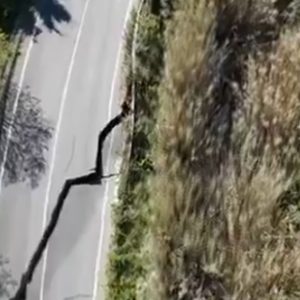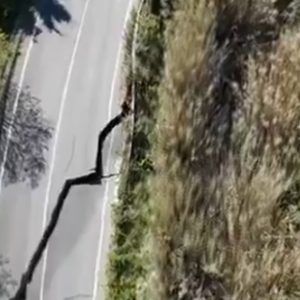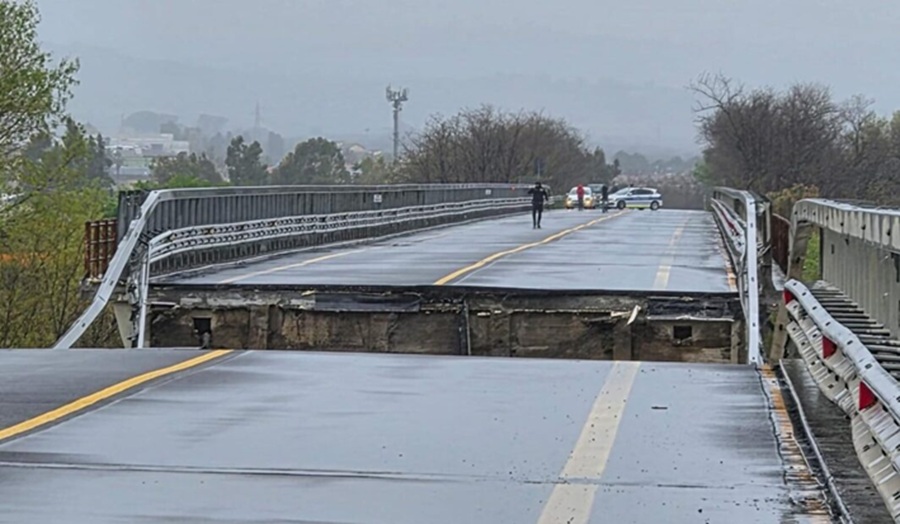
A bridge on the SS16 Adriatica motorway has collapsed in Molise after flooding swept the region. The Adriatic rail corridor remains partially suspended since Wednesday, leaving travellers stranded and communities cut off across Abruzzo and Molise.
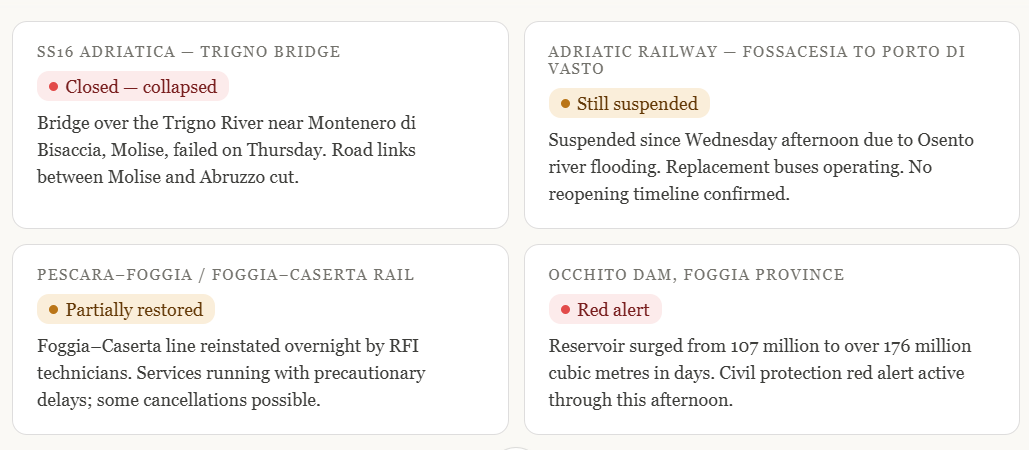
A key bridge on Italy’s Adriatic coastal motorway collapsed on Thursday morning after the Trigno River, swollen by days of torrential rain, burst its banks and undermined the structure. The loss of the bridge on the SS16 ‘Adriatica’ State Highway near Montenero di Bisaccia in Molise has effectively severed road links between Molise and Abruzzo. This is the latest blow to a transport network already under severe strain from one of the worst bouts of extreme weather to hit central and southern Italy in recent years.
The road had already been closed on Wednesday when engineers put the bridge under observation after the Trigno began rising rapidly. Around 500 people were displaced from neighbouring areas as a precautionary measure due to the hydraulic risk. By Thursday morning the bridge had given way entirely, with ANAS and emergency services halting traffic in both directions.
Collapse compounds the rail crisis
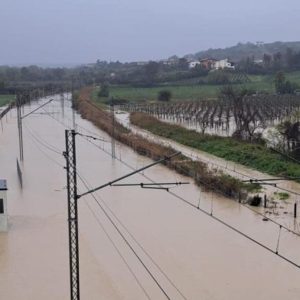
The road disaster compounds a rail crisis that began the previous day. The Adriatic railway, one of Italy’s principal north-south arteries, was cut on Wednesday evening when the Osento River flooded the tracks on the Pescara–Foggia line between Fossacesia and Porto di Vasto in Abruzzo. Both tracks were submerged, and the Ferrovie dello Stato Group suspended all circulation on the section from around 5:15 PM. Initial assessments warned the disruption would not be resolved quickly and as of Thursday that assessment holds: the line remains closed, with RFI engineers monitoring conditions and awaiting an improvement in the weather before restoration work can begin.
The knock-on effects for national services were immediate and severe. Multiple Frecciarossa high-speed trains linking Milan and Lecce, Milan and Taranto, and Venice and Lecce were forced to terminate mid-route. All Intercity services on the affected corridor were cancelled entirely. In Pescara, around 800 passengers were stranded at the city’s railway station before replacement bus services were laid on to maintain connections between Abruzzo and Puglia. Passengers on the Adriatic corridor are being advised to consult Trenitalia’s website and consider rerouting via the Tyrrhenian line on Italy’s west coast.
One partial piece of good news: the Foggia–Caserta line was reinstated in the late evening on Wednesday after RFI technicians completed emergency repairs following flooding by the Cervaro River near Bovino. Services are running again, though with precautionary slowdowns and potential further cancellations.
Agricultural losses mounting
Emergency response has been significantly scaled up across the affected regions, with firefighting teams operating amphibious vehicles, rafting dinghies and specialist flood-rescue equipment. Agricultural losses are also mounting: Coldiretti has warned of thousands of hectares of flooded fields, with vegetable, cereal and forage crops severely damaged across the regions under red alert – Puglia, Molise and Abruzzo – and five further regions on orange alert. The farming group notes that 300 extreme weather events have struck the country since the start of the year, the majority in the south.
With river levels still elevated and the storm system not yet fully passed, engineers have been unable to begin full restoration work on either the rail or road infrastructure. Authorities have warned that conditions remain unpredictable and that further deterioration cannot be ruled out.