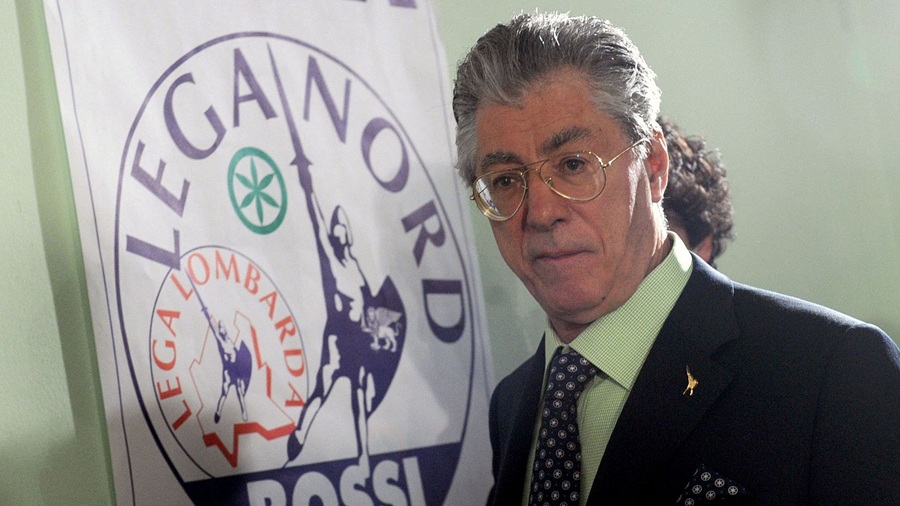
Umberto Bossi, founder of the Northern League and one of the most influential and divisive figures in modern Italian politics, has died aged 84.
Bossi died on the evening of 19 March 2026 at the Ospedale di Circolo in Varese, the Lombard city he long called home. The news was confirmed by parliamentary sources and reported by the AGI news agency.
Matteo Salvini, writing on X said, “Courage, genius, passion, hard work, love, revolution, roots, freedom. I was 17 when I met you, and you changed my life. Today I’m 53, and I bid you farewell, on Father’s Day, with a tear but with the same gratitude, the same pride, and the determination to never give up, as you taught us.”
“Your immense people pay homage to you and will continue to walk the path you have paved: that of Freedom. Goodbye, Chief. To God.”
Key dates and facts
- Founder of the Lega Nord, later known as the Lega
- Built a mass movement centred on northern autonomy and anti-central government sentiment
- Popularised the slogan “Roma ladrona” and brought regional grievances into national politics
- Served in government with Silvio Berlusconi but maintained an unstable alliance
- Suffered a major stroke in 2004 and resigned as party leader in 2012
- Opposed the transformation of the Lega under Matteo Salvini
Key dates
- 19 September 1941 — Born in Cassano Magnago, Varese, Lombardy
- 12 April 1984 — Founds Lega Autonomista Lombarda
- 1987 — Elected to Senate, earning nickname “il Senatùr”
- 1992 — Lega Nord wins 8.2% nationally
- 1994 — Enters government, later withdraws
- 1996 — Declares “Padanian independence”
- 11 March 2004 — Suffers stroke
- 5 April 2012 — Resigns as party leader
- 2013 — Defeated by Salvini in leadership vote
- 2022 — Returns to parliament; founds Comitato del Nord
- 19 March 2026 — Dies in Varese
From Lombardy to national prominence
Bossi was born on 19 September 1941 in Cassano Magnago, a manufacturing town in northern Italy. The son of a textile worker and a concierge, he built his political identity around the concerns of small business owners and industrial workers in the north.
His early political activity included brief links to left-wing movements before shifting towards regional autonomy in the late 1970s. A key partnership with Roberto Maroni helped shape what would become a new political force.
In 1984, Bossi founded the Lega Autonomista Lombarda in Varese. Within five years, he had unified several northern movements into the Lega Nord, creating a federation that channelled discontent over taxation, public spending and the perceived imbalance between north and south.
“Roma ladrona” and the rise of the Lega
Bossi’s rhetoric was direct and often provocative. His slogan “Roma ladrona” — “thieving Rome” — became a defining message of the movement, reflecting frustration among voters who believed their taxes were being misused by central government.
The party’s breakthrough came in 1992, when it won 8.2% of the national vote and sent dozens of representatives to parliament. This surge coincided with the collapse of Italy’s post-war political system during the Tangentopoli investigations.
Bossi’s success lay in turning regional identity into a national political issue. His movement combined demands for federalism with strong criticism of established parties, positioning itself as an outsider force.
Power and conflict with Berlusconi
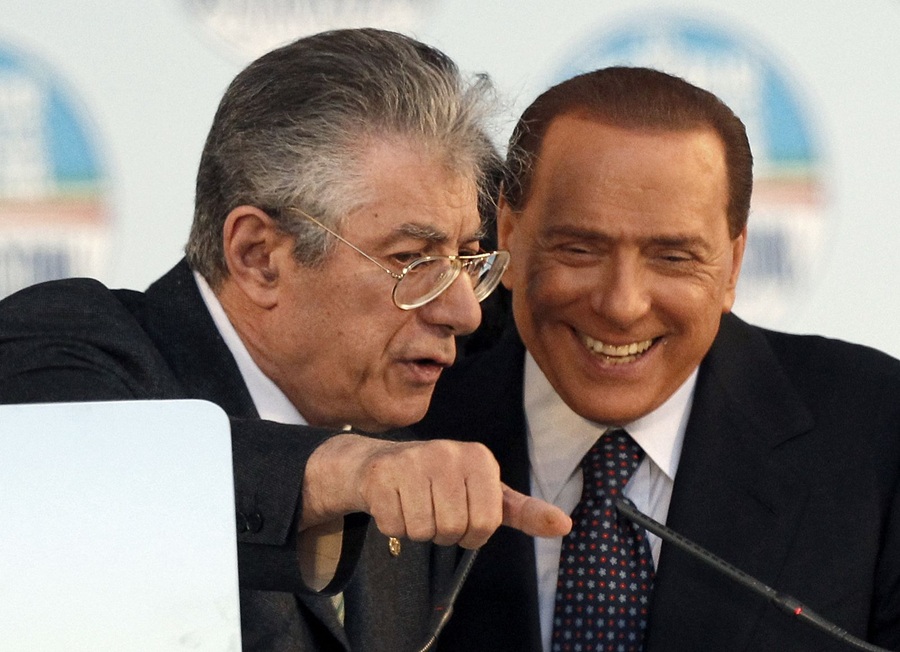
In 1994, the Lega joined a coalition led by Silvio Berlusconi. Bossi became Minister for Institutional Reform, marking the party’s first experience in government.
The alliance collapsed within months when Bossi withdrew support, bringing down the government. The relationship between the two leaders remained central to Italian politics for years, marked by both cooperation and rivalry.
In 1996, Bossi pushed his most radical agenda, symbolically declaring the independence of “Padania”, a proposed northern state. While largely theatrical, the move reinforced the party’s separatist message and helped it secure around 10% of the vote.
Bossi returned to government in the 2000s as part of Berlusconi-led administrations, serving as Minister for Reforms. He promoted constitutional changes aimed at decentralising power, though a key reform approved in 2005 was later rejected in a referendum.
These years represented the closest he came to achieving his long-standing goal of federal restructuring.
Illness and decline
On 11 March 2004, Bossi suffered a severe stroke that significantly affected his speech and mobility. Although he returned to politics, his role became more limited.
In 2012, he resigned as party leader following a scandal involving the alleged misuse of party funds. While legal proceedings did not result in a personal conviction, the episode weakened his position within the movement.
The following year, he was defeated by Matteo Salvini in a leadership contest, marking a turning point for the party.
A party transformed
Under Salvini, the Lega shifted from a regionalist party focused on northern autonomy to a national political force with support across Italy. It abandoned calls for Padanian independence and adopted a broader platform, including strong positions on immigration and national sovereignty.
Bossi publicly criticised this transformation, arguing that it departed from the party’s original purpose. In his later years, he established the Comitato del Nord, a group aimed at reviving the movement’s initial principles.
A lasting political impact
Bossi remained active in parliament, winning election again in 2022. Despite declining health, he continued to speak out on the direction of the party and Italian politics.
His influence on Italy’s political landscape is widely recognised. He brought issues of regional inequality, fiscal federalism and the relationship between citizens and the state into mainstream debate, reshaping political discourse during and after the collapse of the First Republic.
At the same time, his rhetoric often drew criticism for its tone and content, particularly regarding southern Italy and national institutions.