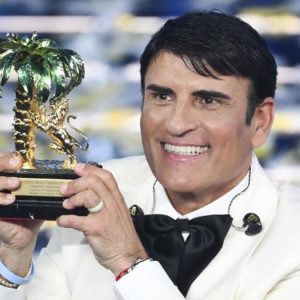
Italy’s Sanremo Music Festival, the country’s most influential annual pop culture event, has been pulled into a growing controversy over Israel’s participation in the Eurovision Song Contest.
Under long-standing convention, the winner of Sanremo is offered the chance to represent Italy at Eurovision, which this year will be held in Vienna from 12 to 16 May. While the invitation is not mandatory, it is traditionally accepted and seen as a natural extension of Sanremo’s role within Italy’s public broadcasting system.
The issue escalated after Sicilian singer-songwriter Levante, one of the 30 artists competing at Sanremo next month, announced that she would refuse to represent Italy at Eurovision even if she were to win the festival. Her decision is based on opposition to Israel’s inclusion in the contest amid the ongoing war in Gaza.
Speaking to news agency Adnkronos, Levante said Eurovision was “much more politicised than people think” and argued that participation implied ignoring the humanitarian crisis. She said it was impossible to “pretend nothing is happening” while a country involved in what she described as an ongoing genocide was allowed to compete.
Levante’s stance is unprecedented in Sanremo’s history, marking the first time a contestant has publicly rejected Eurovision participation on ethical grounds before the festival has even begun. The move has complicated planning for organisers and for state broadcaster RAI, which oversees both Sanremo and Italy’s Eurovision entry.
RAI confirmed Italy’s participation in Eurovision
RAI confirmed in December that Italy would take part in Eurovision and expressed support for Israel’s inclusion following a decision by the European Broadcasting Union’s general assembly. The EBU approved Israel’s participation in the contest’s 70th edition despite calls for exclusion as a form of protest.
The decision triggered withdrawals by several countries, including Iceland, Ireland, the Netherlands, Slovenia and Spain, which cited Israel’s military campaign in Gaza. Former two-time Sanremo winner Marco Mengoni has publicly supported the boycott by those countries.
Italian media report that RAI is anxious to avoid a repeat of recent controversies. In 2025, Sanremo winner Olly declined the Eurovision invitation, while in 2024 rapper Ghali’s on-stage appeal to “stop the genocide” caused diplomatic friction.
To manage the situation, RAI executives are said to be conducting an informal survey among all 30 Sanremo contestants to determine who would be willing to represent Italy in Vienna. The aim is to prepare an alternative plan and avoid delays should the eventual winner refuse the role.
Proposal to EBU to invite Palestinian artist
In parallel, several RAI board members have proposed that the EBU invite a Palestinian artist to perform as a non-competitive guest at Eurovision. The proposal does not call for Israel’s exclusion and has been framed as a cultural initiative promoting dialogue rather than a political statement.
Sanremo 2026 will take place from 24 to 28 February, later than usual to avoid clashing with the Milan Cortina Winter Olympics, scheduled for 6 to 22 February.