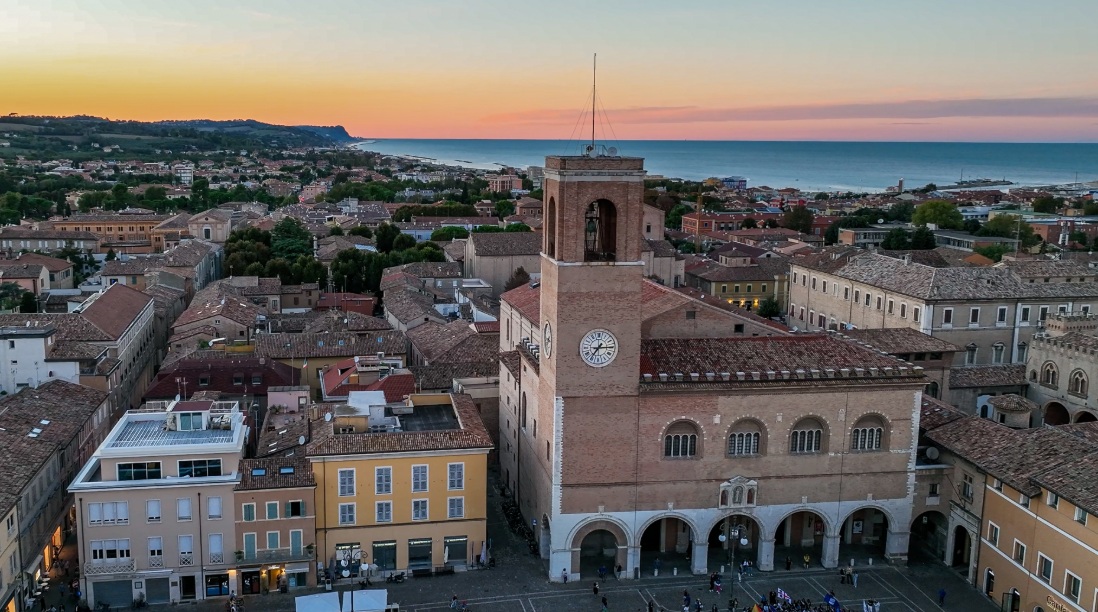
Fano is a coastal city in Italy’s Marche region, where Roman history meets the Adriatic Sea at the end of the Via Flaminia. Located 12 kilometres south-east of Pesaro, it has a population of about 59,000, smaller than nearby Ancona and Pesaro but rich in historical depth.
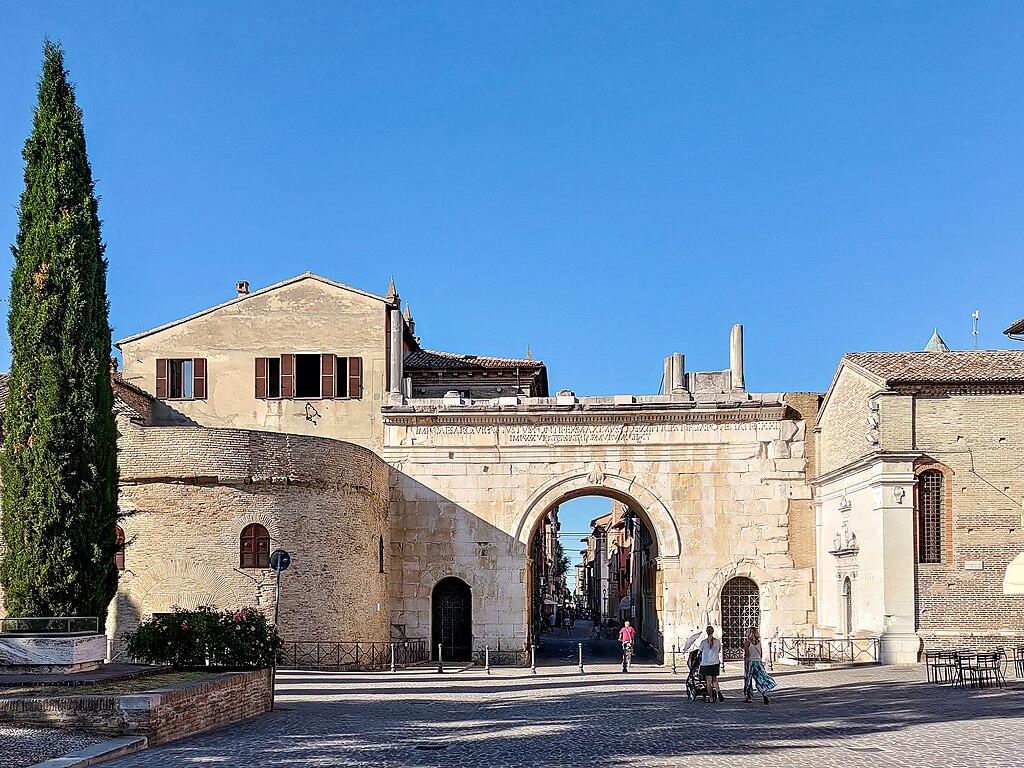
The city was known in antiquity as Fanum Fortunae, or Temple of Fortune, named after a major sanctuary dedicated to the goddess Fortuna. Its first recorded mention dates to 49 BC, when Julius Caesar took control of the settlement during his march through central Italy. Under Augustus, Fano became a Roman colonia, protected by walls, parts of which still survive, and marked by the Arch of Augustus, built in 2 AD and still standing at the entrance to the old town.
Fano’s strategic importance continued through late antiquity. In 271, Roman forces defeated the Alamanni near the Metauro river, just inland from the city. After the Ostrogoths destroyed it in 538, the Byzantines rebuilt Fano. It became the capital of the maritime Pentapolis, alongside Rimini, Pesaro, Senigallia and Ancona. In the eighth century it passed to the Papal States, beginning a long period of ecclesiastical rule.
Adriatic history of Fano
From the 14th century, the city came under the control of the Malatesta family. Galeotto I Malatesta established his rule in 1356, and Fano later became a residence of Pandolfo III Malatesta. Under his son Sigismondo Pandolfo Malatesta, papal forces besieged the city and eventually returned it to papal administration. It later passed briefly under Cesare Borgia before becoming part of the Duchy of Urbino.
Fano suffered heavily in the modern era. During the Napoleonic wars it was looted. It also played an active role in the Risorgimento. Both world wars left deep scars. The city was bombed repeatedly in the First World War and extensively during the Second World War, when Allied forces targeted bridges and rail links over the Metauro. Retreating Nazi troops destroyed all the city’s bell towers.
Among Fano’s most prominent landmarks is the cathedral, rebuilt in the 12th century after a fire, with a façade restored in the 1920s. Other major churches include San Francesco, which houses the tomb of Pandolfo III Malatesta designed by Leon Battista Alberti, and Santa Maria Nuova, home to works by Perugino, with possible contributions by Raphael. The ancient temple of Fortuna lies beneath the former convent of Sant’Agostino.
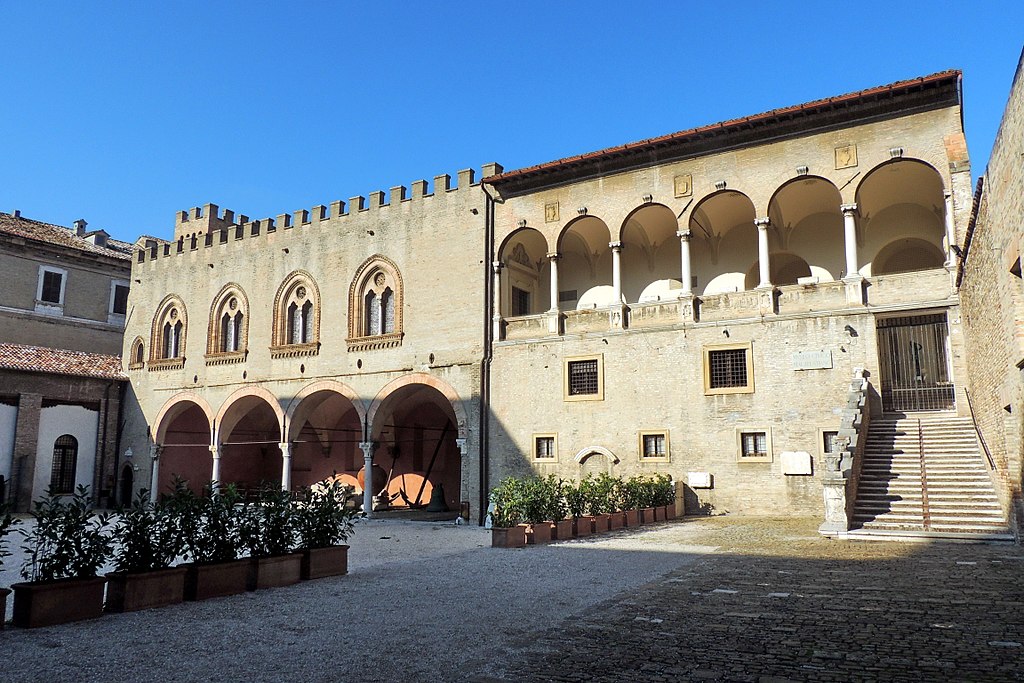
Secular monuments reflect Fano’s medieval and Renaissance past. The Corte Malatestiana and the Rocca Malatestiana dominate the historic centre, while the Palazzo del Podestà houses the Teatro della Fortuna. The city’s Museo Civico contains archaeological material and works by artists including Guido Reni and Giovanni Santi.
Annual festivals
Fano remains a lively cultural centre. Its annual Fano dei Cesari festival recreates Roman traditions with parades and chariot races, while Fano Jazz by The Sea attracts international performers each summer. The Biblioteca Federiciana, founded in 1720, is one of Italy’s oldest public libraries.
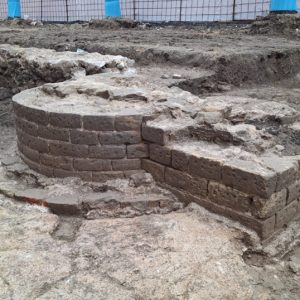
Recent archaeological discoveries, including the unearthing of a Roman basilica attributed to Vitruvius, have renewed attention on the city’s ancient role.