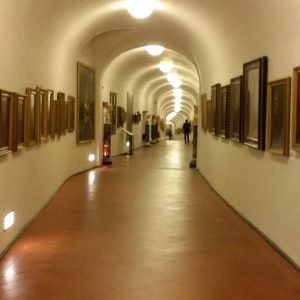
The Vasari Corridor, which links the Palazzo Vecchio to the Palazzo Pitti is to reopen to the public on 21 December following an extensive restoration. The reopening marks the end of an 11-million-euro renovation project, initiated in 2022. The 700-metre stretch from the Uffizi to Boboli Gardens is the section available to the public.
The renovation project was to enhance the safety and accessibility of the historic walkway. The corridor closed in 2016 due to safety concerns, with its last major restoration dating back to the 1990s.
Origins of the Vasari Corridor
Cosimo I de’ Medici, the Grand Duke of Tuscany, commissioned the Vasari Corridor in 1565. Designed by Giorgio Vasari, a prominent Renaissance architect, painter, and writer, the corridor served a dual purpose: as a private passageway and as a symbol of Medici power.
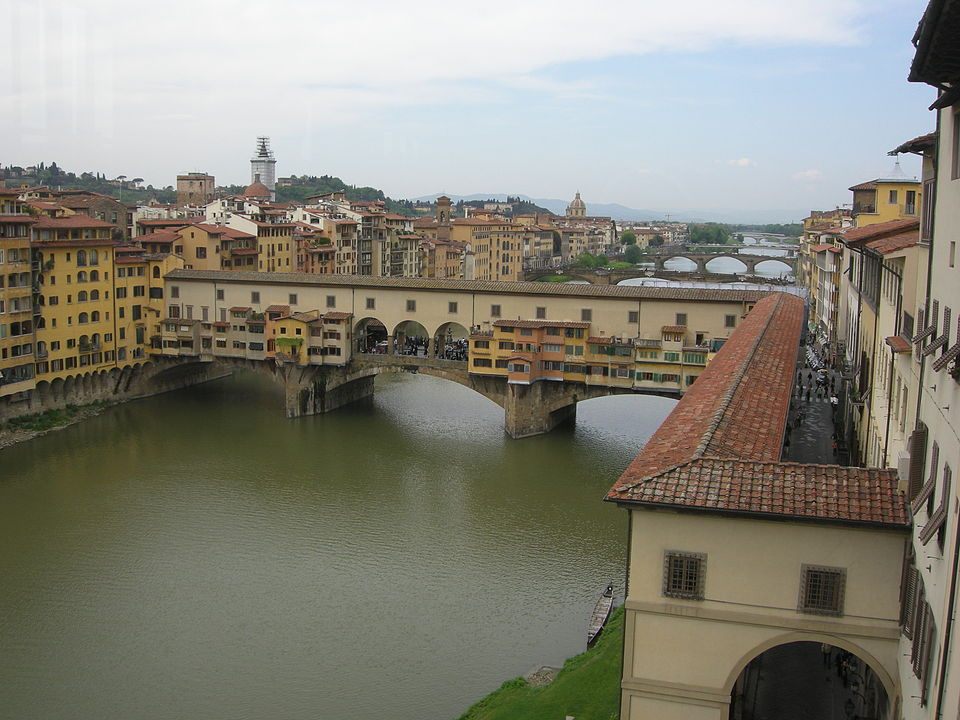
Spanning nearly one kilometre, the elevated walkway connects the seat of city government in Palazzo Vecchio to the Medici’s private residence in Palazzo Pitti, crossing the Uffizi Gallery and the iconic Ponte Vecchio. It took just five months to build, coinciding with the wedding of Cosimo’s son, Francesco I, to Joanna of Austria.
The corridor allowed the Medici family to move freely and discreetly between their residences and workplaces, avoiding the crowded streets of Florence. This strategic privacy also reinforced their authority by physically elevating them above the general populace.
After the fall of the Medici dynasty, the Vasari Corridor remained an intriguing feature of Florence. Under the rule of the Habsburg-Lorraine family, who succeeded the Medicis, the corridor continued to be maintained but gradually lost its original purpose.
In the 20th century, it gained recognition as a cultural and historical treasure. During World War II, the corridor escaped destruction when retreating German forces destroyed all the bridges over the Arno except the Ponte Vecchio, which the corridor traverses.
Architectural Features
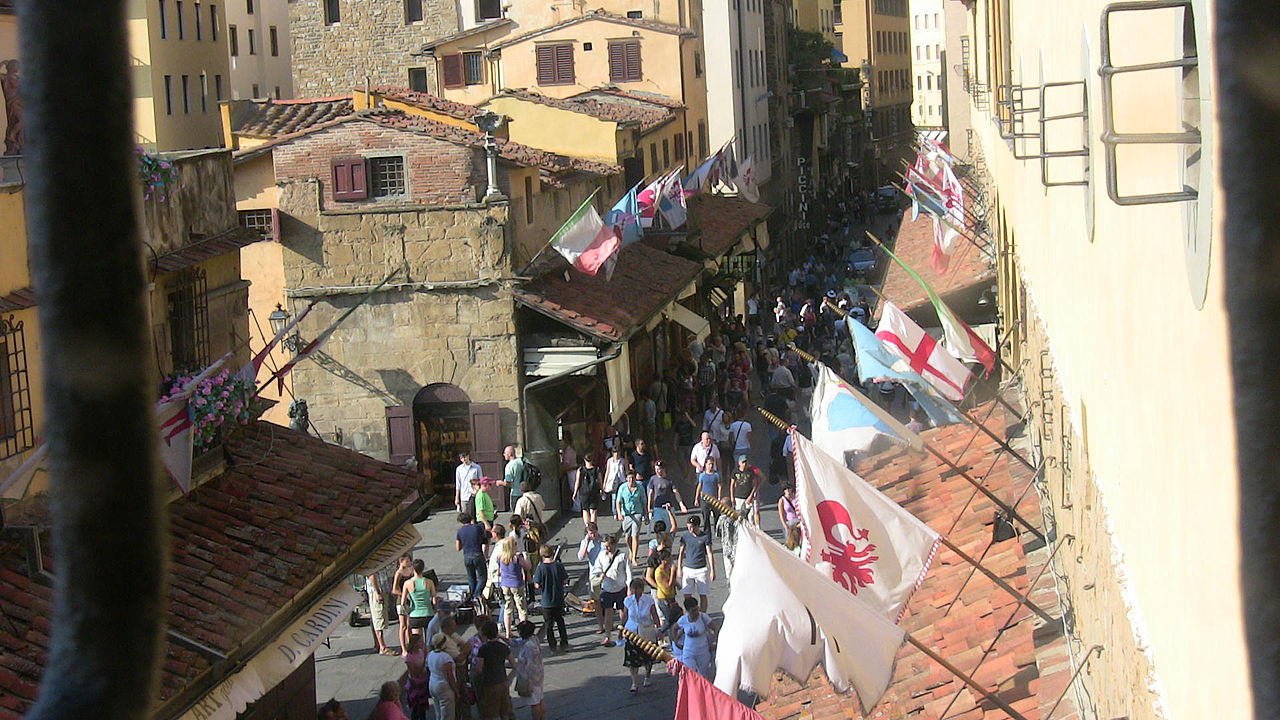
The Vasari Corridor’s narrow passage has windows with striking views of the Arno River, Florence’s rooftops, and landmarks such as Santa Felicita Church. Originally, some windows were small but Benito Mussolini had them expanded in 1939 to impress Adolf Hitler during his visit to Florence.
Inside, the corridor was adapted over time to house a collection of self-portraits by notable artists, transforming it into an extension of the Uffizi Galleries.
However, the corridor has been “restored to its original bareness”, the Uffizi website says. As a result, visitors will see a “simple ‘air tunnel’” with unique views of the city.
Recent Renovations and Reopening
The Vasari Corridor’s reopening has been the result of an extensive renovation project led by the Uffizi Galleries and the Soprintendenza. The initiative, formally presented in February 2019, followed 18 months of meticulous studies, research, and investigations. This preparatory phase involved a wide range of specialists, culminating in over 1,000 pages of documentation, 201 square metres of technical drawings, 23 specialist reports, 2,435 photographs, and numerous material tests and essays.
The renovation work, which cost approximately €10 million, received an additional boost in 2023 with a $1 million donation from U.S. entrepreneur Skip Avansino. The physical construction began in 2022 and finished in recent weeks, marking the most significant update since the corridor’s last restoration in the 1990s.
Key Features of the Renovation
The refurbished Vasari Corridor is fully accessible. An integrated system of ramps, platforms, and lifts now facilitates access throughout the walkway. Additional modern conveniences, such as toilets and low-energy LED lighting, are also in place, alongside a comprehensive video monitoring system for enhanced security.
A significant aspect of the renovation was the addition of new emergency exits to comply with modern safety standards. Five exits, including one ingeniously integrated into a pylon compartment near the Ponte Vecchio in Oltrarno, at Via de’ Bardi, and another at the Cortile delle Cacce in the Boboli Gardens, are now in place. These additions ensure visitors can safely navigate the corridor in case of an emergency.
Structural consolidation was another priority, with measures implemented as part of an earthquake prevention plan. The interior restoration included meticulous work on the plaster, tiles, and terracotta flooring, preserving the historical character of the space while ensuring its durability.
Visiting Times and Tickets
Access to the Vasari Corridor will be available through a Uffizi Gallery ticket, with an additional charge of €43. Reservations are mandatory and available from Tuesday, 10 December. Visitors purchasing the combo ticket will have the opportunity to explore the Uffizi Gallery two hours before their scheduled Corridor tour.
The Vasari Corridor will be open from Tuesday to Sunday, with visits available at pre-booked times for groups of up to 25 people, accompanied by two staff members. Tours will begin from Room D19 on the first floor of the Uffizi, with the first group starting at 10:15 am and the last at 4:35 pm. Visitors will follow a one-way route from the Uffizi to the Boboli Gardens, exiting near the Grotta Buontalenti and continuing to the courtyard of the Pitti Palace.
To ensure fair access, there is a limit of five tickets per person, even across different dates. Each ticket will include a link to a map detailing the route to the Corridor’s entry gate, helping visitors plan their journey to this newly restored historic marvel.
Opening times: Tues – Sun, 10:15 – 16:35
Group sizes: only 5 tickets can be purchased at a time. 25 people will be allowed through the Corridor at any one time.