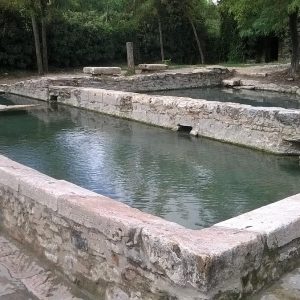
New discoveries from the 2025 excavation campaign at San Casciano dei Bagni are reshaping the history of one of Italy’s most important archaeological sites. Researchers say activity at the Santuario del Bagno Grande began in the late 5th century BC. This is around two centuries earlier than previously believed.
The revised dating points to a large sacred complex already active in the early Etruscan period. Archaeologists believe it stood close to the main thermal spring or in its immediate surroundings. Evidence includes a bronze candelabrum fragment and other objects linked to early ritual practices.
The excavation has also clarified the sanctuary’s final phase of use. Bronze objects such as a lightning bolt and a branch date to the 5th century AD. The site was abandoned after the edicts of Emperor Theodosius, which ordered the closure of pagan cult places across the Roman Empire.
During this phase, several altars were deliberately broken and reused. They formed a platform in front of the temple entrance, between the main spring already excavated and a second spring to the south. Archaeologists believe this second spring marked another sacred area.
From an architectural perspective, the team confirmed the presence of a large Etruscan enclosure. It was active from at least the 3rd century BC but is likely older. Its size matches that of the later Roman imperial temple, and several areas show signs of ritual abandonment marked by scattered architectural terracottas.
While earlier campaigns drew attention for exceptional bronze statues, the 2025 season has highlighted terracotta finds. In the south-western corner of the site, archaeologists have begun excavating a favissa, a sacred votive deposit. Finds include anatomical terracottas of feet, legs, hands, heads and swaddled infants, alongside statue fragments and architectural elements.
Late Roman phase significant
The late Roman phase has proved especially significant. In the 4th century AD, after parts of the imperial temple collapsed, Roman builders constructed a massive retaining wall. This work cut into earlier layers and disturbed older Etruscan deposits.
These overturned layers have produced remarkable votive objects. They include sculpted heads, complete infant figures and a terracotta model of human internal organs. Researchers describe it as the most detailed representation of human viscera known from the ancient world.
The discovery supports the theory that Bagno Grande hosted an Etruscan medical school. The school was likely active from at least the 3rd century BC and linked to healing practices using thermal waters. Excavation of the favissa is still in its early stages.
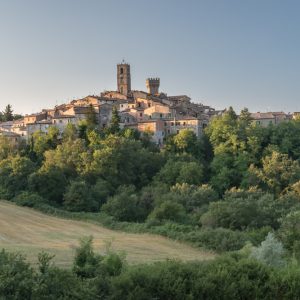
San Casciano dei Bagni is a small hill town in southern Tuscany, in the province of Siena. In recent years, the site has become a key reference point for studying Etruscan and Roman religion, medicine and ritual continuity over more than eight centuries.