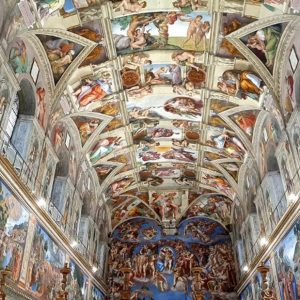
The Vatican has announced a new conservation clean-up of Michelangelo’s Last Judgement in the Sistine Chapel, around 30 years after the previous major restoration was completed.
Scaffolding has been erected inside the chapel to allow restorers to carry out what the Vatican described as “extraordinary maintenance” on the vast fresco. The work is expected to last about three months.
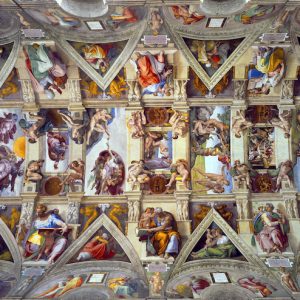
The Sistine Chapel, which is also the venue for papal conclaves and home to Michelangelo’s celebrated ceiling frescoes, will remain open to visitors throughout the operation. To limit disruption, a high-definition reproduction of The Last Judgement will be displayed, allowing visitors to continue admiring the work while the cleaning takes place.
Vatican Museums director Barbara Jatta said the intervention was necessary due to the passage of time since the last restoration.
“Around 30 years after the most recent conservation work on the Last Judgement of the Sistine Chapel, completed in 1994 under the supervision of the Director General Carlo Pietrangeli and carried out by the Chief Restorer of the Vatican Museums’ Paintings and Wood Materials Restoration Laboratory, Gianluigi Colalucci, extraordinary maintenance will be performed on this masterpiece of Michelangelo’s mature period,” Jatta said.
“It will last for around three months, and is supported by the Florida Chapter of the Patrons of the Arts in the Vatican Museums,” she added.
Also read: A glimpse at the Sistine Chapel
Michelangelo’s The Last Judgement

Michelangelo painted The Last Judgement between 1536 and 1541, more than 20 years after completing the Sistine Chapel ceiling. Commissioned by Pope Clement VII and completed under Pope Paul III, the fresco covers the entire altar wall and depicts the Second Coming of Christ and the final judgement of souls.
The work caused controversy almost immediately after its unveiling, particularly because of the extensive nudity of its figures. In the decades following Michelangelo’s death, parts of the fresco were altered, with draperies added to cover some of the exposed bodies. These later additions earned one of the artists involved the nickname “Il Braghettone”, or “the breeches maker”.
Centuries of candle smoke, dust and previous restoration attempts gradually darkened the fresco. A major restoration campaign, carried out between 1980 and 1994, removed much of this grime and revealed brighter colours and sharper details, prompting both praise and criticism from art historians.
Supporters said the work restored Michelangelo’s original vision, while critics argued that some shading and details may have been lost. Since then, the Vatican has monitored the fresco closely, carrying out periodic maintenance rather than large-scale interventions.
Clean-up to remove dust and deposits
The current clean-up is intended to remove surface dust and deposits that have accumulated over time, rather than alter the underlying paint layers. Vatican officials stressed that it is a routine conservation measure aimed at preserving the fresco for future generations.
The Sistine Chapel attracts millions of visitors each year and remains one of the most visited and scrutinised artworks in the world.