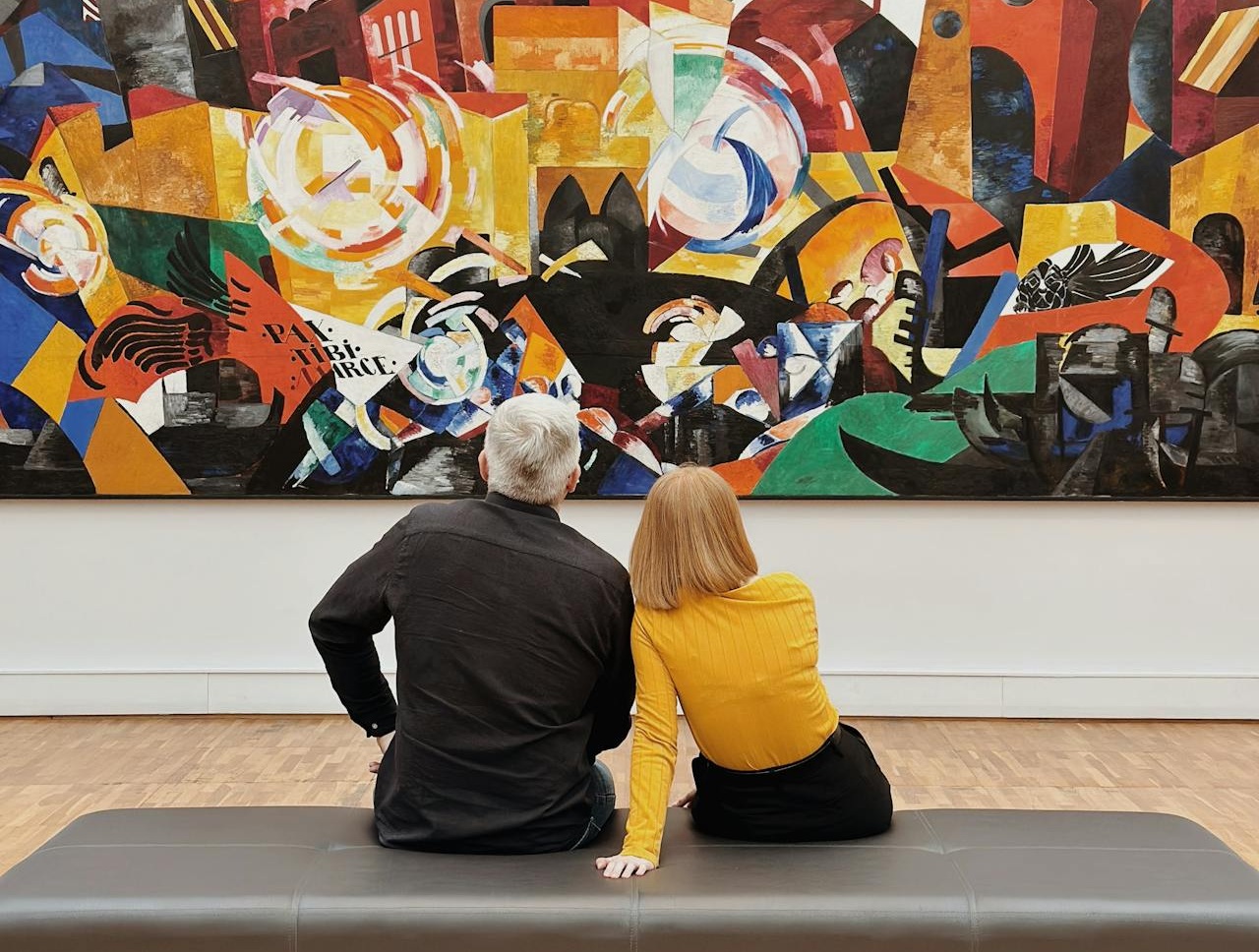
The University of Pisa is recruiting volunteers for a neuroaesthetics study exploring how works of art trigger emotional responses. The only qualification you need is curiosity.
What happens inside us when we stand before a great painting? Why does one image move us while another leaves us cold? These are the questions at the heart of a new scientific study launched by the University of Pisa. The researchers want ordinary members of the public, not art experts, to help them find the answers.
The university’s department of biology has issued an open call for volunteers aged 18 and over to take part in a study on the perception of visual art. No art history knowledge is required, and no prior experience of experimental research. In fact, the broader and more varied the backgrounds of those who participate, the better. The team is explicitly aiming to assemble as diverse a sample as possible, precisely because the mechanisms that connect aesthetic experience and human emotion may transcend education, culture and familiarity with art.
What is Neuroaesthetics?
The project sits within the emerging field of neuroaesthetics, an interdisciplinary area of research that draws on biology, psychology and the arts. It investigates how the brain and body respond to aesthetic stimuli. While philosophers have debated the nature of beauty for millennia, neuroaesthetics brings empirical methods to bear on questions that once seemed purely subjective. Can emotional responses to art be measured? Do certain visual qualities reliably trigger certain feelings? Are there universal patterns in the way human beings perceive and process artistic images?
These are the questions the Pisa team is working to answer and public participation is central to the effort.
Fifteen minutes that could advance science
The study itself is straightforward. Participants are shown a series of images of artworks on a computer screen and asked to describe what strikes them most emotionally, responding to a short sequence of simple questions. The entire session lasts on average between ten and fifteen minutes. It is conducted in a quiet, specially arranged environment designed to minimise distraction and ensure controlled conditions.
The tests are held at the biology department’s ethology unit at 6 Via Alessandro Volta in Pisa. Participation requires only an appointment, made by emailing etoart@unipi.it.
The study is continuing over the coming weeks. Researchers are clear that the value of their findings will depend directly on the size and diversity of the sample they are able to assemble. Every additional participant strengthens the reliability and representativeness of the data.