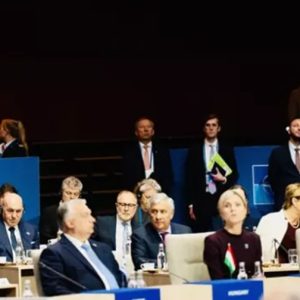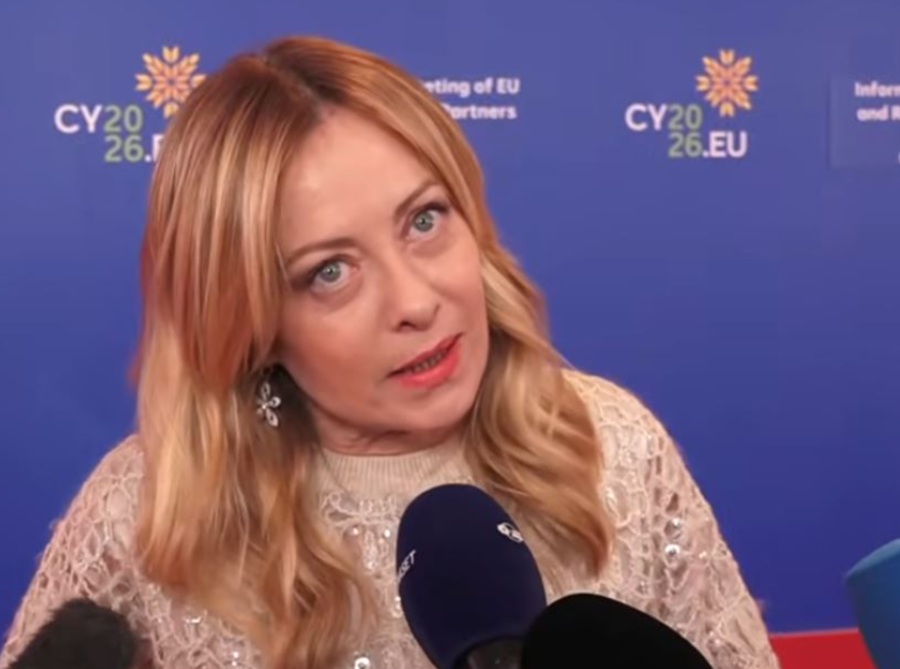
Speaking on the sidelines of an informal EU summit in Nicosia, Italy’s prime minister warned that NATO must be strengthened, even as she acknowledged a silence from Washington following her public rebuke of Trump’s attack on Pope Leo XIV.
Giorgia Meloni declared on Friday that tensions between the United States and Madrid over NATO are unwelcome and that the Atlantic Alliance must be reinforced, not undermined.
Meloni’s remarks came on the sidelines of an informal European Union summit in Nicosia, Cyprus. On the same day, political news was dominated by the revelation of an internal Pentagon email. The missive outlines potential punitive measures against NATO members Washington believes failed to support American operations in the ongoing war with Iran.
The Pentagon email
The leaked document, first reported by Reuters and confirmed by a senior US official speaking anonymously, outlines a range of options for penalising allies perceived to have blocked American access to basing and overflight rights, known as ABO, during the Iran war. Among the options mooted is the suspension of Spain from the alliance.
“a sense of entitlement on the part of Europeans”
The email, which reportedly expresses “a sense of entitlement on the part of the Europeans,” is understood to have been intended as a signal to NATO partners. It also reportedly raises the prospect of Washington reviewing its longstanding position on British sovereignty over the Falkland Islands. This is an option widely seen as leverage against London following Prime Minister Keir Starmer’s refusal to join the US-Israeli military campaign.
The Pentagon declined to deny the email’s existence. Press Secretary Kingsley Wilson said: “As President Trump has said, despite everything that the United States has done for our NATO allies, they were not there for us. The War Department will ensure that the President has credible options to ensure that our allies are no longer a paper tiger and instead do their part.”
Spain has been the most vocal European opponent of the US-Israel war in Iran from the outset, denying Washington access to jointly-operated military bases on Spanish territory and publicly condemning the strikes as “unjustified and dangerous military intervention.” Madrid is also the only NATO member to have declined to raise defence spending to 5% of GDP in line with a commitment made by other allies. This stance prompted Trump to suggest Spain should be expelled from the alliance.
Spanish Prime Minister Pedro Sánchez, also present in Nicosia, was unruffled when asked about the email. “We do not work off emails. We work off official documents and government positions, in this case of the United States,” he told reporters. Sanchez added that Spain remained a “loyal partner” to NATO.
Germany also moved swiftly to contain the diplomatic fallout, with a government spokesperson stating that Spain’s membership of the military alliance was “not in question.”
Meloni’s warning
Italy’s prime minister was equally firm, if more diplomatically calibrated in her language. “NATO must remain united. I believe it is a source of strength,” Meloni told reporters in Nicosia. “We must work to strengthen NATO’s European pillar, which must clearly complement the American one,” she added.
On defence spending, a topic on which Trump has applied sustained pressure across the alliance, Meloni offered nuance rather than capitulation. “I didn’t say that military spending isn’t the priority,” she clarified. “I said that today we have very important priorities. Defence spending remains important, but if we have the energy problem, you understand that there is a priority that unfortunately comes first. We need to adapt our positions to a changing context.”
Italy, like other NATO members, has been increasing its defence budget in response to American demands, though it has historically been among the lower spenders in the alliance.
Silence from Washington
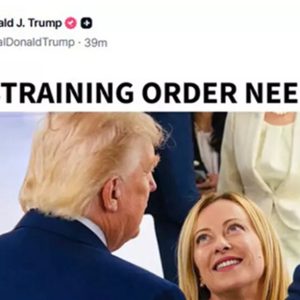
In what will be read as a telling diplomatic signal, Meloni confirmed that she has not spoken with Donald Trump since their public falling-out over the US president’s attacks on Pope Leo XIV. The pontiff has been an outspoken critic of Washington’s military intervention in Iran.
“I haven’t heard from Trump, but relations with the US are still solid,” Meloni told reporters in Nicosia.
The rupture marks a notable shift for a leader who had positioned herself as Europe’s most effective interlocutor with the Trump administration. The two had previously enjoyed a famously warm rapport, though the Iran war has strained relationships across the transatlantic alliance.
Lebanon, the Middle East, Putin and G20
Turning to the Israel-Lebanon border, Meloni underlined Italy’s commitment to maintaining a stabilising international presence in the region. She said Italy’s participation in the United Nations peacekeeping mission UNIFIL could make a tangible difference, and confirmed she had spoken on the matter with Lebanese President Joseph Aoun. “An international presence on the Israel-Lebanon border is necessary,” she said. “The role Italy plays can make a difference. We need to find a legal framework.”
Asked about the prospect of readmitting Russian President Vladimir Putin to G20 summits, Meloni was unambiguous. “I think this is the moment when we are the ones asking him to take steps forward, and not us to do so toward him,” she said. “I think it’s time to demand it from Russia.”