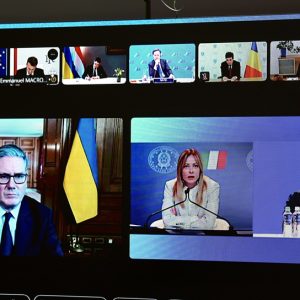
Italy’s Palazzo Chigi has co-signed a joint statement with European partners, Canada and the UK backing the two-week US-Iran ceasefire. They call for a swift diplomatic settlement and pledging to help protect shipping in the Strait of Hormuz.
The Italian government joined a broad coalition of Western leaders on Wednesday in welcoming the fragile ceasefire struck between the United States and Iran. However, it made it clear that the pause in hostilities is only the beginning of what must become a permanent diplomatic resolution.
The statement, published on the Palazzo Chigi website and co-signed by the leaders of France, Germany, Spain, Denmark, the Netherlands, Canada, the United Kingdom and the European Union, praised Pakistan’s role as mediator and called for swift progress toward a negotiated peace. “The goal must now be to negotiate a swift and lasting end to the war within the coming days,” the statement reads. “This can only be achieved through diplomatic means.”
A fragile two-week window
President Trump announced the ceasefire on Tuesday evening, less than two hours before his self-imposed deadline for Iran to reopen the Strait of Hormuz or face wide-scale destruction of its civilian infrastructure. The truce, brokered by Pakistan, follows forty days of US-Israeli strikes on Iran that had pushed the region to the brink of a wider conflict, disrupted global shipping routes and triggered a severe oil price crisis.
Pakistan’s prime minister has invited delegations from both Iran and the United States to Islamabad for talks on Friday, with Vice President JD Vance expected to lead the American delegation.
Iran’s position entering those talks remains combustible. Iran’s Supreme National Security Council declared that the ceasefire represented an acceptance by Washington of the “general framework” of Tehran’s 10-point proposal, framing it as a victory. However, they warned that any deviation from the agreement would be met with full force.
Protecting civilians and averting energy crisis
The Western joint statement makes an explicit link between the human cost of the conflict and the global economic stakes. It describes a negotiated settlement as essential to protect Iran’s civilian population, ensure regional security and avert what it calls “a severe global energy crisis.”
That language reflects the extraordinary economic disruption the war has already caused. The conflict’s economic impact has been described as the world’s largest supply disruption since the 1970s energy crisis. There has been surging oil and gas prices, major disruptions to aviation and tourism, and severe volatility in financial markets.
A key element of the ceasefire deal is Iran’s agreement to reopen the Strait of Hormuz, through which approximately one fifth of the world’s oil supply passes. The joint statement goes further, pledging that the signatory governments “will contribute to ensuring freedom of navigation in the Strait of Hormuz”. This is a commitment with direct implications for Italy’s energy supply and trade routes.
The Lebanon question
The statement explicitly calls upon all sides to implement the ceasefire “including in Lebanon”. However, Israeli Prime Minister Benjamin Netanyahu’s office stated that the ceasefire does not include Lebanon, where Israeli forces have launched a ground invasion against Hezbollah. This is in direct contradiction with Pakistan’s prime minister.
Israel said it would continue its ground operations in Lebanon and would not allow harm to Israeli civilians. The joint Western statement’s insistence on Lebanon’s inclusion signals that European governments, including Rome, regard a two-tier ceasefire as an inadequate and unstable outcome.
Sources: Palazzo Chigi joint statement, 8 April 2026; CNN; Al Jazeera; Axios; NPR; CBC; Wikipedia — 2026 Iran War