
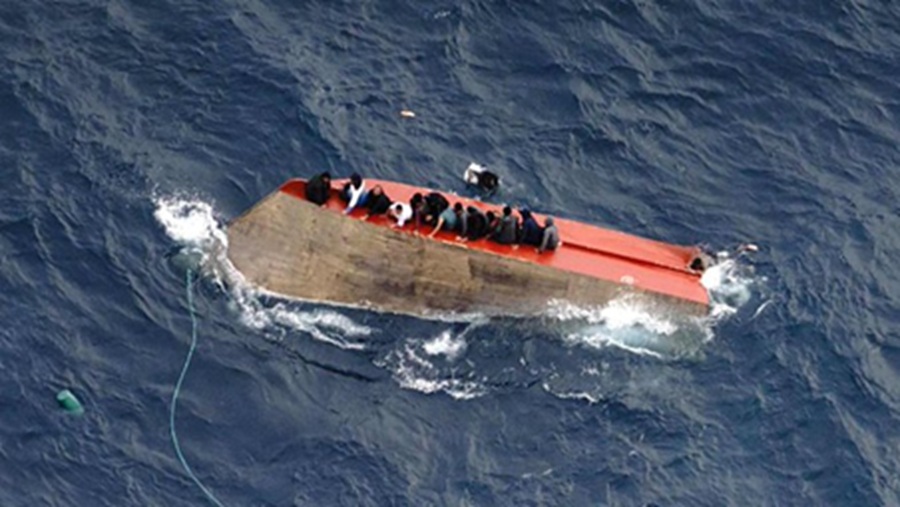
Survivors from a Libya crossing say 105 people were on board. Only 32 migrants were rescued alive as the Mediterranean death toll hits its highest level in over a decade.
At least 71 migrants are feared dead after a boat attempting to cross the Mediterranean from Libya capsized over the Easter weekend, rescue charities Mediterranea Saving Humans and Sea-Watch have reported. Two merchant vessels in the area recovered the bodies of two migrants and rescued 32 survivors. They were subsequently transferred to an Italian coast guard patrol boat and brought to the island of Lampedusa.
According to the survivors, the vessel had originally carried 105 people. The fate of the remaining 71 is unknown.
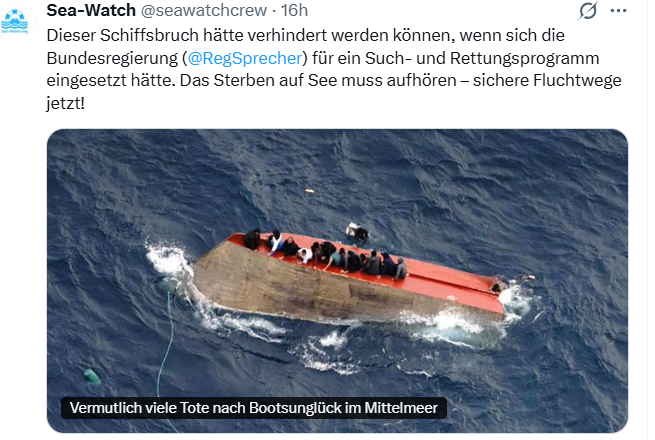
Video footage released by Sea-Watch showed approximately a dozen people clinging to a capsized orange vessel as a merchant ship approached. The images are a stark reminder of the peril that tens of thousands of people face each year in their attempts to reach European shores.
Italy’s interior ministry declined to comment. The Italian Coast Guard did not respond to a request for comment. Sunday marked Easter, one of the most significant public holidays in the Italian calendar.
A deadly year on the central Mediterranean route
The tragedy comes amid one of the most dangerous years for Mediterranean crossings in recent memory. The International Organization for Migration (IOM) estimates that at least 683 people have died in the central Mediterranean so far in 2025, one of the highest tolls recorded since 2014.
Bad weather has severely disrupted crossing patterns this year, reducing the number of departures from the North African coast while dramatically increasing the risks for those who have put to sea regardless. Rough conditions in the Mediterranean have proved fatal for vessels that are typically overloaded, structurally inadequate, and without access to emergency communications or life-saving equipment.
Lampedusa: A frontline in Europe’s migration crisis
The Sicilian island of Lampedusa, geographically closer to Tunisia and Libya than to the Italian mainland, has long been the first point of arrival for migrants crossing the central Mediterranean. Its coastguard, local administration and rescue infrastructure have been under sustained pressure for years, with the island periodically overwhelmed by arrival surges that far exceed its reception capacity.
The Easter weekend tragedy will intensify scrutiny of Italy’s migration policy and the broader European response to search and rescue operations in international waters, particularly as the spring and summer months approach.
Rescue organisations have repeatedly called for state-led search and rescue operations to be expanded in the central Mediterranean. They argue that the burden currently placed on NGO vessels and commercial shipping is inadequate given the scale of the crisis.
Sources: Reuters, Sea-Watch, Mediterranea Saving Humans, International Organization for Migration


