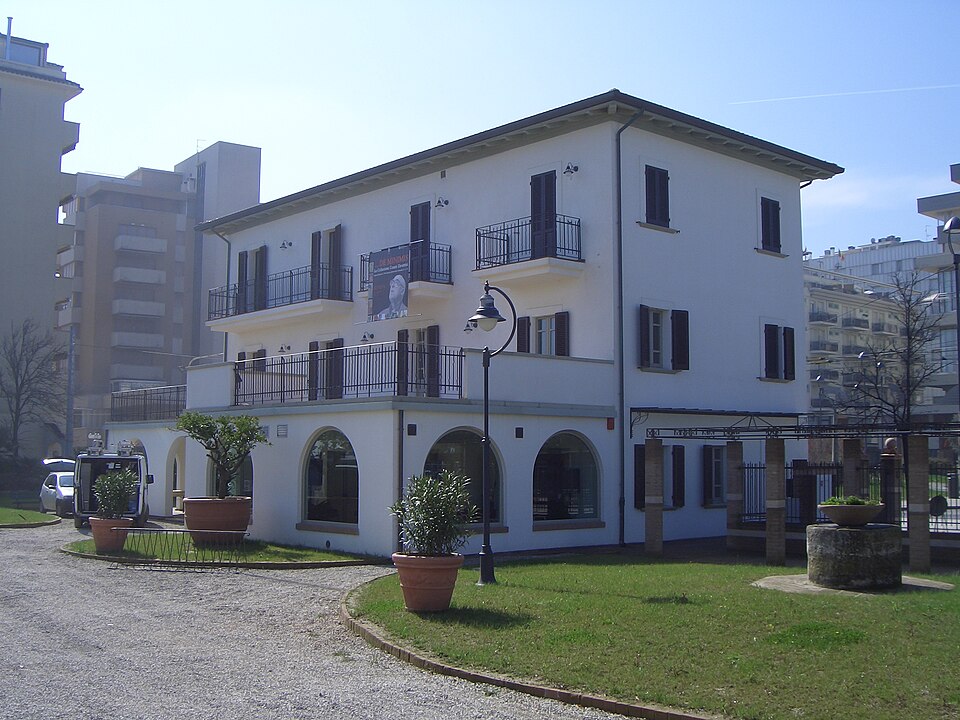
A leftwing Italian mayor has made headlines after her council successfully purchased Benito Mussolini’s former summer home, Villa Mussolini, at auction. The council beat a private buyer with neofascist ties in the process.
Daniela Angelini, mayor of Riccione, a popular Adriatic resort town near Rimini, described the acquisition of Villa Mussolini as “an act of love and vision.” The council had been competing against a former member of the Italian Social Movement , the neofascist party founded in 1946 by die-hard supporters of Mussolini. Angelini made no secret of her relief at the outcome. Allowing the property to fall into the hands of “fascist nostalgics,” she said, was something her administration would never accept.
A villa with a complicated past
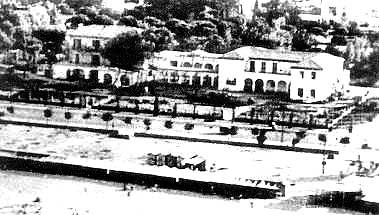
The property itself has had a life as layered and contradictory as Italy’s 20th-century history. Built just steps from the sea in 1893, it was purchased in 1934 by Rachele Mussolini, the dictator’s second wife. Mussolini would arrive by seaplane and regularly conducted government business from the villa during his stays. The family eventually expanded it to include a third floor, 20 rooms and a tennis court.
After the fall of the fascist regime and the end of the Second World War, the villa passed into public ownership and found an unexpectedly mundane second life. During Riccione’s economic boom of the 1950s and 60s, it housed a veterinary clinic for dogs and a restaurant. A communist mayor even tried to have it demolished in the late 1970s.
It was eventually abandoned before being bought in the late 1990s by a local savings bank, the Cassa di Risparmio di Rimini. The bank restored it and reopened it in 2005 as a venue for art exhibitions, civic events and even civil weddings.
To rename or not
When the Cassa di Risparmio foundation decided to put the villa up for auction last year, it reignited a long-running debate in Riccione about what to do with a building so freighted with historical baggage. Councillors from Brothers of Italy, the far-right party led by Prime Minister Giorgia Meloni, argued the property’s name must not be changed, whatever happened to it.
Angelini has agreed to keep the name Villa Mussolini, but for very different reasons. She argues that erasing history is more dangerous than confronting it, and that renaming the villa could paradoxically make it a magnet for exactly the kind of nostalgic reverence she wants to avoid. In other words, confront history, don’t cancel it.
“Yes, the name evokes an ugly story, and that we will tell,” she said. “You can’t erase it, you must tell it in the right way, making sure our democratic values emerge.”
The plan is to continue using the villa as a community space, with exhibitions that recount, in her words, “the good, the bad and the ugly” of 20th-century Italian history, alongside other cultural and social events.
A symbolic moment for Riccione
The purchase carries particular weight given that it was only in 2025 that Riccione’s council formally revoked Mussolini’s honorary citizenship. It was a title that almost every Italian town and city had been compelled to award during the fascist regime.
“This is a man who was stained with crimes, who did not deserve that honour,” Angelini said. But she drew a clear distinction between the man and the building. The villa, she insists, now belongs to the community, and will be used as an expression of its democratic values.