Italy’s national ombudswoman for children has raised concerns about the training of social workers as controversy continues over the case of three children taken into care after living off the grid with their parents in rural Abruzzo.
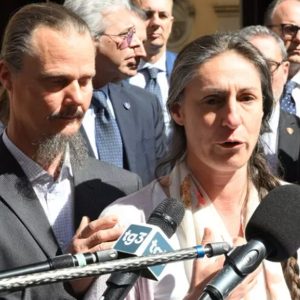
Speaking on Thursday before entering the foster home in Vasto where the children are currently staying, Marina Terragni said social services often face complex situations without sufficient preparation.
“I absolutely don’t want to blame social workers, but there’s definitely a training issue,” she said. “They often find themselves dealing with very delicate situations without the proper tools.”
The ‘family in the woods’ case
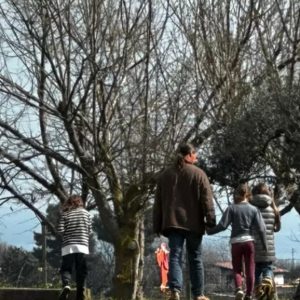
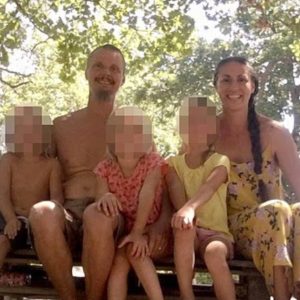
The case involves three children — an eight-year-old girl and two six-year-old twins — whose parents had been raising them in a house without electricity or running water in woodland near the town of Palmoli.
Authorities intervened amid concerns about the children’s safety, education and social development. In December, an appeals court upheld the decision to place them in care after rejecting a challenge by their parents.
The situation escalated last week when the Juvenile Court of L’Aquila ordered that the children’s Australian mother, Catherine Birmingham, be removed from the foster home in Vasto where she had previously been allowed to spend limited time with them each day.
The ruling triggered protests outside the facility and a wave of online criticism directed at the court’s president, Cecilia Angrisano. Authorities reportedly increased security for the judge after she received threats and insults on social media.
The children’s British father, Nathan Trevallion, has appealed for calm. “I want the children to come home, but until that happens, I prefer them to stay here,” he said on Tuesday as he left the foster home. “I thank everyone for their solidarity, but I respectfully ask that no demonstrations or protests be organised in front of the foster home or private residences.”
The court has also ordered that the children be transferred to another care facility, although the move has not yet taken place.
Trevallion and Birmingham had previously agreed to temporarily move into a farmhouse provided by local restaurateur Armando Carusi while renovation work is carried out on their home in an effort to strengthen their case to regain custody.
Linguistic and cultural differences at play
Terragni suggested that cultural and language differences may have complicated communication between the family and social workers.
“In this case there was also a linguistic and cultural gap that may have complicated matters,” she said. “When the state, represented by a social worker, approaches a family, it has to adapt; there must be expertise to understand.”
She added that in difficult situations it might be appropriate to change the social worker involved if communication breaks down. Terragni also expressed concern about the psychological impact of the case on the children.
“How will the children emerge from here?” she asked. “Traumatised, but it’s not just me saying that — leading psychiatrists in this country say that.”
In her view, authorities should try to support entire families rather than focus solely on removing children when possible.
“In my ideal world the state takes charge of the whole family unit and provides not an adversary but a sort of relative, a friend, who accompanies the family and helps correct its course where necessary,” she said.
The case has drawn national attention after Prime Minister Giorgia Meloni said she had ordered inspectors to investigate the circumstances surrounding the separation of the mother from the children.
Meloni said the situation left her “speechless” and described the removal of the mother from the foster home as “another devastating trauma” for the children, adding that “children don’t belong to the state and the judges have exceeded their limits”.