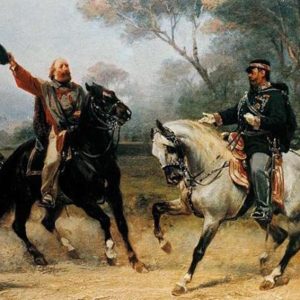
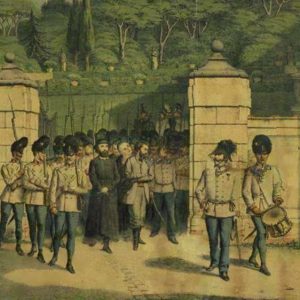
The revolutionary thinker Giuseppe Mazzini, one of the key figures behind the movement for Italian unification, died on 10th March 1872 in Pisa.
A journalist, activist and political theorist, Mazzini was one of the driving forces of the Risorgimento, the 19th-century political and social movement that led to the creation of a unified Italian state. Although he never held the military or political power of some of his contemporaries, he is widely regarded as the ideological inspiration behind the cause.
Also read: What was the Risorgimento?
In the narrative of unification, Giuseppe Garibaldi is remembered as the conquering soldier, Victor Emmanuel II as the monarch who presided over unity, and Camillo Benso, Count of Cavour as the political architect who became Italy’s first prime minister. Mazzini, by contrast, provided the philosophical vision that sustained the movement over decades.
Intellectual promise from an early age
Born in 1807 in Genoa, the son of a university professor, Mazzini showed intellectual promise from an early age. He entered university at just 14 and graduated in law before turning 21. Soon afterwards he became involved in revolutionary politics, joining the secret society known as the Carbonari, which sought independence from foreign domination.
His activities led to his arrest in Genoa, which at the time was part of the French-controlled Ligurian Republic. After six months in prison he was released on condition that he live under close supervision in a remote village. Instead, Mazzini chose exile and left Italy, beginning a life that would take him across Europe.
Exile in Europe
He spent time in Switzerland and later in Marseille, where he met the Modenese widow Giuditta Bellerio Sidoli, with whom he had a son. During this period he founded the secret political movement Young Italy, which aimed to unite the peninsula as a democratic republic. At its peak the movement counted around 60,000 members, among them the future nationalist leader Garibaldi.
Several uprisings inspired by Mazzini’s ideas, including attempts in Savoy and Piedmont, were quickly suppressed. Many participants were executed and Mazzini himself was sentenced to death in absentia by the authorities in Genoa. Undeterred, he continued his work in exile and even promoted the creation of similar revolutionary organisations across Europe, dreaming of a future democratic federation of nations.
Repeated arrests and expulsions followed. After being forced to leave Switzerland he returned briefly to Paris before moving to Britain. From 1837 he lived in London, where he spent many years organising political networks and corresponding with fellow revolutionaries. His activities attracted the attention of the British authorities, who monitored his communications and are believed to have intercepted plans for an uprising in Bologna.
Return to Italy
Mazzini returned to Italy during the revolutions of 1848–49 and played a leading role in the short-lived Roman Republic (1849). The experiment ended when the exiled Pope secured French military intervention, forcing the republic’s leaders into exile once again.
When Italian unification finally took shape in the following decade, Mazzini found himself largely on the sidelines. The new Kingdom of Italy was proclaimed in 1861 under the Savoy monarchy led by Victor Emmanuel II, rather than as the republican state Mazzini had long advocated.
Although he had earlier urged the king to support the national cause, Mazzini remained committed to republican ideals and refused a seat in the new parliament. He continued to take part in political activism and in 1870 attempted to spark a republican uprising in Sicily, an effort that ended with his arrest and imprisonment before an amnesty secured his release.
After further time in London, Mazzini travelled to Pisa, where he fell ill with pleurisy. He died there on 10 March 1872. The house where he spent his final days is now preserved as the Domus Mazziniana, a museum dedicated to his life and work.
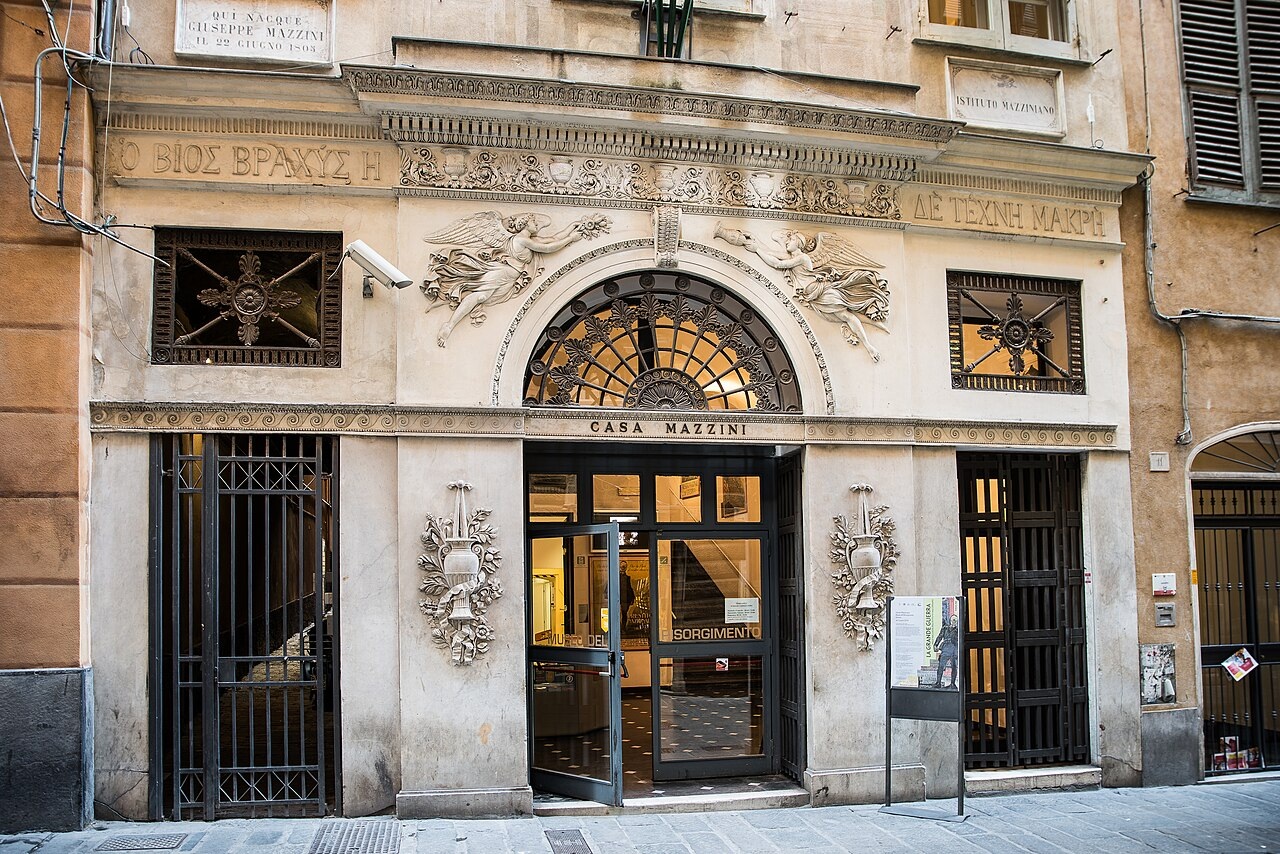
Despite his belief that he had failed to achieve his political aims, Mazzini’s influence on the unification movement proved lasting. Around 100,000 people attended his funeral in Genoa, and today his name is commemorated in streets and squares across Italy as one of the central figures of the Risorgimento.