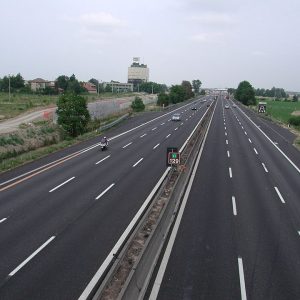
Italian motorways have many tolls, which means you need to pay to drive on them. This guide looks at what you need to drive on the Italian motorways and what the different signs mean.
Visitors to Italy often ask a practical but essential question: how do you pay for motorways in Italy? The answer becomes much clearer once you understand how Italian roads work and which routes require payment.
Italy regulates its road network under the Codice della Strada, or Highway Code. This system divides roads into clear categories, each with different rules. The most important distinction for visitors is between motorways and all other major roads.
Highways, known as autostrade, carry the letter A followed by a number, such as the A1. Road signs use a green background. State roads appear as Strade Statali and use the letters SS followed by a number. Their signs display a blue background. Regional roads, or Strade Regionali, use the letters SR. Provincial roads use SP. Both also appear on blue signs.

Drivers can use state, regional and provincial roads freely. These routes do not require tickets, tolls or special procedures. Motorways operate differently. All autostrade charge a toll, which drivers must pay to enter and use the motorway network.
How to pay the motorways’ tolls
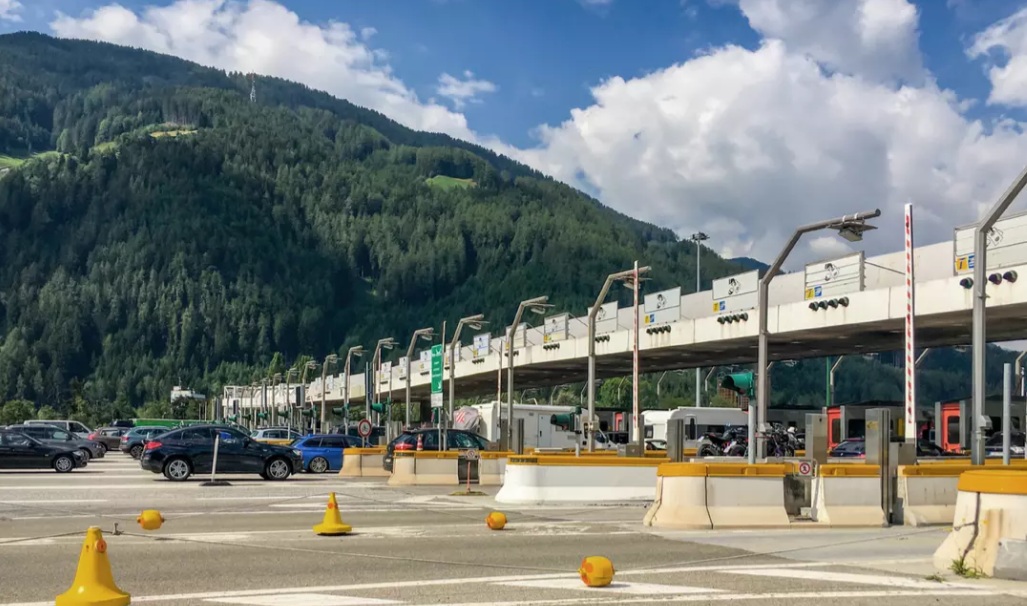
At each motorway entrance, drivers stop briefly to collect a ticket. An automatic machine issues this ticket when you enter. You must keep the ticket safe. It records where you joined the highway and determines how much you pay later.
When you exit the motorway, you encounter toll booths again. You pay by inserting the ticket into a machine or handing it to a cashier.
How much are the tolls?
The toll amount depends on several factors. These include distance travelled, vehicle type and whether the route crosses flat or mountainous terrain.
At exit booths, drivers choose between lanes marked by colour and symbols. Each lane accepts different payment methods.

White lanes serve self-service machines that accept cash and credit or debit cards. These lanes display a coin symbol.
Blue lanes also offer self-service payment. They accept magnetic cards, Viacards, debit cards and credit cards.
Yellow lanes operate exclusively for Telepass users. Telepass is an electronic device installed inside the vehicle. Vehicles equipped with Telepass pass through without stopping. The system automatically registers the toll and charges the linked account.
Telepass lanes only accept vehicles with the device. Drivers without Telepass must never enter these lanes.
Most visitors choose white or blue lanes, depending on whether they prefer cash or card payment.
Cash machines usually accept euro notes and coins. Card machines accept most international credit and debit cards.
Language barriers rarely cause problems. Machines use simple instructions and clear symbols.
Are motorways and tolls worth it?
Motorways offer fast and efficient travel between major cities. However, tolls can add up over long distances.
Some travellers choose state or regional roads instead. These routes cost nothing but often take longer.
Understanding Italy’s toll system removes stress from driving. With basic preparation, paying for highways becomes straightforward. For visitors exploring Italy by car, knowing how tolls work ensures smoother journeys and fewer surprises.