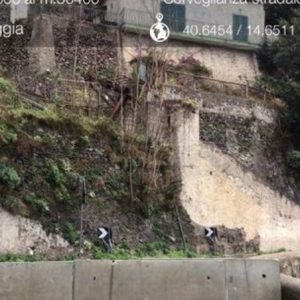
A landslide struck the Amalfi Coast on Friday as central and southern Italy continued to be battered by violent rainstorms. The slide severed the main coastal road between Vietri sul Mare and Cetara, prompting a local mayor to close schools as a precaution.
The weather disruption that hit Sicily also affected Campania. The landslide on the Amalfi Coast occurred as heavy rain persisted, making the narrow coastal road, already subject to destabilisation from slopes above, unsafe for traffic.
The damage comes in the wake of Cyclone Harry, a Mediterranean storm that lashed parts of southern Italy late last month. Harry brought torrential rain, storm surges and flooding to Sicily, Calabria and Sardinia, causing an estimated €2.5 billion in damage and sweeping away infrastructure along coastal and rural areas.
Sicily’s Niscemi: hillside town left teetering
One of the most dramatic consequences of the recent storms has been in Niscemi, a town in the province of Caltanissetta in southern Sicily. On 25 January, heavy rains triggered a massive landslide that saw large sections of hillside collapse, forcing the evacuation of around 1,500 residents and leaving homes and buildings perched dangerously close to a newly formed cliff edge.
The landslide extended about 4 kilometres across the hillside and has continued to shift in the days since, with civil protection authorities warning that the entire slope remains unstable. Although no fatalities have been confirmed, many homes have been badly damaged or are at risk of collapse, and a “red zone” exclusion area has been established around the most affected neighbourhoods.
Drone footage and aerial images show entire buildings now close to the precipice, with cars and infrastructure hanging over the edge. Officials have described the situation as ongoing and worsening, with further ground movement possible as water continues to saturate the soil.
The landslide’s scale has drawn comparisons to other major Italian slope failures. Civil Protection officials noted that the volume of displaced earth, estimated at around 350 million cubic metres, is comparable to that of the 1963 Vajont disaster, though without the catastrophic wave that characterised that event.
No, most of Niscemi has not entirely “disappeared” … yet
Contrary to some dramatic images circulating online, most of Niscemi has not literally disappeared. Rather, significant portions of the hillside on the town’s edge have slipped and remain unstable, forcing evacuations and raising serious concerns about future collapses. The disaster has reshaped parts of the landscape and closed key roads, but large sections of the town remain intact, albeit under close observation.
Officials stress that the priority remains safety and stabilising the hillside where possible, while ensuring residents have access to shelter and essential services.