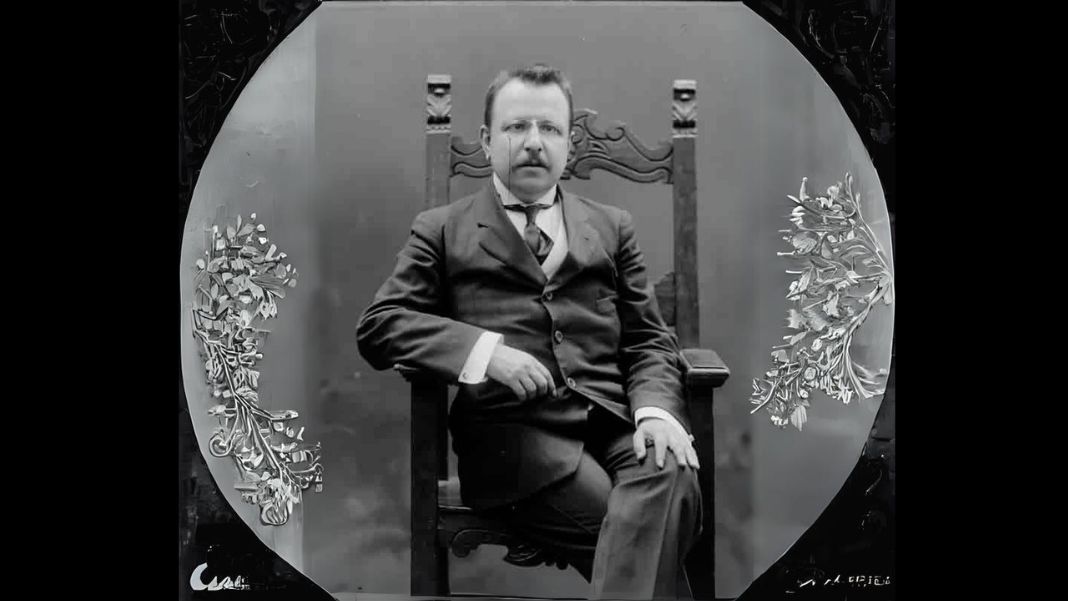
On 25 February 1866, Benedetto Croce was born in Pescasseroli, in the Abruzzo region of central Italy. Over the course of a long intellectual life, Croce became one of the most influential European thinkers of the 20th century, shaping debates on philosophy, aesthetics, historiography and liberal politics.
Croce was born into a wealthy, landowning family. In 1883, while staying on the island of Ischia, he survived a devastating earthquake that killed his parents and sister. The tragedy marked a turning point in his life. Financially independent but personally shaken, he devoted himself to study.
He settled in Naples, where he would spend most of his life, building an extensive private library and establishing himself as a self-taught scholar. Although he briefly engaged with Marxism in his youth, Croce soon developed his own philosophical system, rooted in Italian idealism and influenced by Georg Wilhelm Friedrich Hegel.
The philosophy of spirit
Croce’s thought is often described as a form of “absolute historicism”. He argued that reality is history and that all human knowledge is an expression of the “spirit” unfolding in time. In his major theoretical works, including Aesthetic as Science of Expression (1902) and Logic as the Science of the Pure Concept (1909), he set out a fourfold division of the spirit: aesthetic, logical, economic and ethical.
For Croce, aesthetics was not merely about beauty but about expression. Art, he maintained, is pure intuition and expression, distinct from logical or scientific knowledge. Every genuine work of art embodies an intuition made concrete through form. This theory influenced literary criticism and art history well beyond Italy.
His approach to history was equally distinctive. Croce famously declared that “all history is contemporary history”, meaning that historians inevitably interpret the past through the lens of present concerns. History, in his view, was not a collection of objective facts but a living, interpretative act grounded in human consciousness.
Senator and anti-Fascist intellectual
Croce was appointed a senator in 1910 and served briefly as Minister of Public Instruction between 1920 and 1921. Although initially cautious in his response to the rise of Benito Mussolini, he emerged as one of Fascism’s most prominent liberal critics.
In 1925, he published the “Manifesto of the Anti-Fascist Intellectuals”, a direct response to a pro-Fascist manifesto organised by Giovanni Gentile, once a fellow idealist philosopher but by then aligned with the regime. Croce defended liberal values, freedom of thought and the autonomy of culture from political power.
Although he was not imprisoned, Croce lived under surveillance during the Fascist period. His home in Naples became a discreet meeting point for opposition figures and intellectuals.
Liberalism and post-war Italy
After the fall of Fascism in 1943, Croce returned to active political life. He helped reconstitute the Italian Liberal Party and played a role in the transition to the post-war republic. Though critical of mass politics and ideological extremes, he supported constitutional democracy and civil liberties.
Croce’s liberalism was philosophical rather than party-political. He saw liberty as an ethical principle embedded in history, not as a fixed institutional formula. For him, freedom was inseparable from moral responsibility and cultural development.
Benedetto Croce died in Naples in 1952 at the age of 86. His home and library are now preserved as the Istituto Italiano per gli Studi Storici, which he founded in 1946 to promote historical research.