
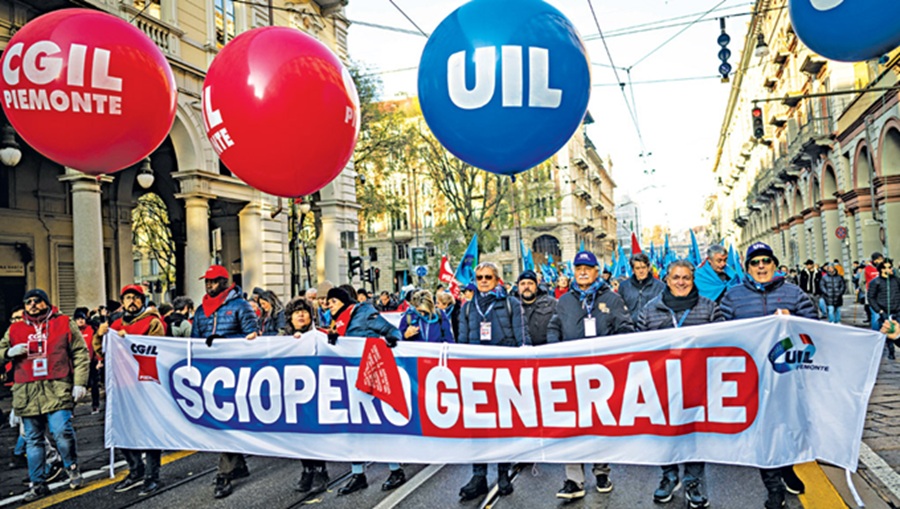
With strikes called seemingly weekly, it is worth understanding how Italy’s sciopero culture works — the rules and the rights you have when your train doesn’t arrive or the school is shut.
Strikes are so common in Italy that one of the first words many newcomers learn after moving there is sciopero. It tends to stick because the consequences of not knowing it are immediate and inconvenient. After a few months, most get used to them as Italians do, and learn another useful word: arrangiarsi — to figure it out.
Italy has one of the most active strike cultures in Europe, rooted in a long tradition of organised labour and protected under Article 40 of the Constitution, which establishes the right to strike as a fundamental freedom. Unions frequently call a sciopero not just for local workplace issues, but for broad social and political change. The USB strike called for Monday 18 May 2026 — citing military spending and solidarity with Gaza — is a textbook example of this tradition: strikes in Italy are as much a political instrument as an industrial one.
Why strikes often fall on Mondays and Fridays
If you have spent any time in Italy, you may have noticed that strikes have a suspiciously convenient tendency to cluster around the edges of weekends. This is not coincidental. A 24-hour walkout on a Monday or Friday allows unions to maximise disruption to employers and commuters while workers sacrifice only a single day’s pay, and gain a long weekend in the process. The tactic is rational, legal, and well understood by all sides.
What Italian law does prohibit is the strike sandwich, in other words, timing a transport strike immediately before or after a public holiday in a way that creates an artificially extended shutdown of essential services. Holiday “black-out” rules can result in transport being excluded from strike action on or around public holidays, as happened on 1 May this year when rail and air services were exempted from a general strike called for Labour Day. The rules apply specifically to transport and essential services; they do not cover every sector.
Timing is also strategic in a broader sense. Strikes are rarely random. They tend to cluster in early autumn and spring, and around major political moments such as budget law discussions or key parliamentary votes.
The summer blackout
The most clear-cut legal restriction on strike timing concerns the summer holiday season. Italian law prohibits strikes by transport workers during the peak summer period, which runs from 27 July to 5 September. This protects the country’s most economically vital tourism months from the kind of transport chaos that would otherwise be devastating for both visitors and the industry.
The result is a familiar pattern: a relatively quiet strike period through August, followed by a surge of industrial action from early September onwards, as unions make up for lost time.
Strikes are regulated
Italy’s strike culture is regulated, not lawless. The key body overseeing it is the Commissione di Garanzia Sciopero (the Commission for Guaranteeing Strikes) which monitors compliance with the law across health, education, transport and public administration. Unions must announce their intention to strike at least ten days in advance, and a Guarantee Commission oversees the legitimacy of the action. Police and armed forces may not strike.
The most important protection for travellers and residents is the guaranteed minimum service. For local transport, essential services are planned for the peak time-bands from 06:00 to 09:00 and from 18:00 to 21:00, Monday to Saturday. Some long-distance trains are also guaranteed on all days, including holidays. Guaranteed trains sell out quickly, so if you have booked a ticket for a “guaranteed” service well in advance, you may be in luck but do not count on finding space at short notice.
Schools and hospitals must also guarantee skeleton staffing. A public museum may close, but key public services will typically run on a reduced schedule.
How to stay informed
The best resource for tracking strikes is the Commissione di Garanzia Sciopero’s website, which is regularly updated with information on strikes across all sectors. It is in Italian, but a browser translation will make it navigable for most readers. The strike calendar can be filtered by region, date and province.
For transport specifically, the Ministry of Infrastructure and Transport maintains a dedicated strike calendar.


