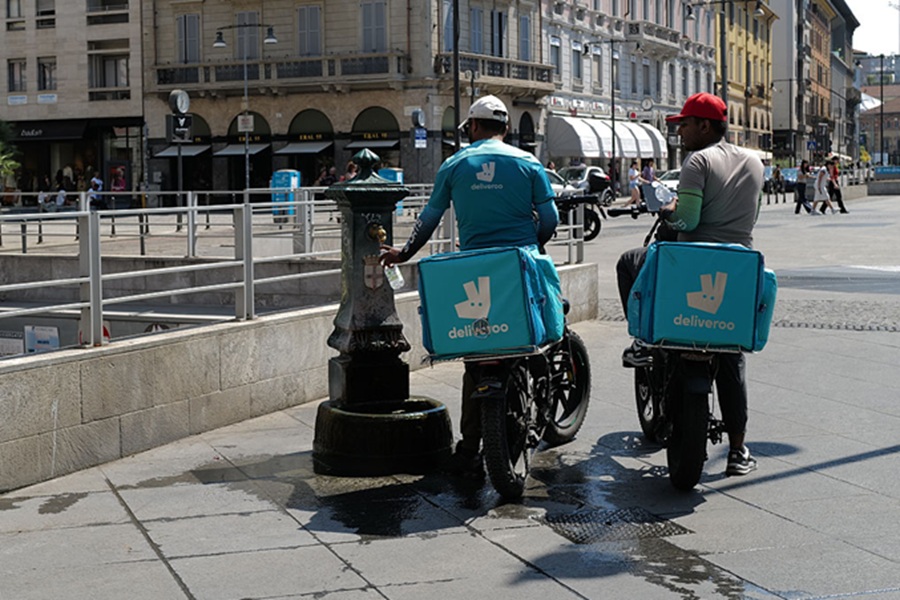
The Italian watchdog is examining whether food delivery platforms Glovo and Deliveroo misled consumers about their treatment of riders. This is the latest regulatory action in a sustained Italian scrutiny of gig economy labour practices.
Italy’s Antitrust Authority announced on Wednesday that it has opened formal investigations into several companies belonging to the Glovo group as well as into Deliveroo Italy.
The cases centre on possible misleading communication regarding the platforms’ corporate social responsibility commitments toward their riders. Investigators are examining claims made by the companies about riders’ working conditions, their legal classification, and the algorithms used to manage and assign them work. The concern is that public-facing commitments to rider welfare may not reflect the reality of how those workers are treated and that consumers may have been misled as a result.
Glovo responded by stating it was “certain to be in full compliance with all the laws and regulations” and said it was cooperating with the authorities. Deliveroo Italy had not issued a public statement at the time of publication.
The next step in an existing investigation
The antitrust investigation does not exist in isolation. Earlier this year, Milan prosecutors placed the Italian branch of Deliveroo and Glovo’s Foodinho subsidiary under the supervision of judicial administrators over allegations of worker exploitation. This significant intervention effectively handed oversight of parts of both companies’ Italian operations to court-appointed figures while proceedings continue.
Those cases are themselves part of a broader and sustained campaign by Milan’s public prosecutors against alleged labour abuses in the delivery, logistics and fashion sectors. Over recent years the office has pursued investigations into some of the most prominent names in Italian fast fashion and international logistics, focusing on the conditions facing workers at the lower end of complex supply chains.
Are the riders treated properly?
The gig economy model pioneered by platforms such as Glovo and Deliveroo has historically classified delivery workers as self-employed contractors rather than employees, exempting the companies from obligations around minimum pay, sick leave, holiday entitlement and social contributions. Italian courts and regulators have repeatedly challenged this classification, and the country has been among the more assertive in the EU in seeking to extend labour protections to platform workers.
The use of algorithms to manage riders — determining who receives work, how performance is rated, and under what circumstances workers are effectively penalised or deactivated — has attracted particular attention. Critics argue that algorithmic management creates a form of control that is functionally indistinguishable from employment, without any of the legal protections that employment status would bring.
Glovo and Deliveroo will have to clarify or amend the situation around employment of their riders.
ItalyNews.Online covers Italian politics, society, and culture for an international readership.