

The Senate has voted unanimously to establish 3 May as an annual day of remembrance in recognition of the journalists – both reporters and camera operators – who paid with their lives to bring the truth to light.
Italy has taken a formal and historic step to honour the memory of the journalists it has lost to mafia violence, terrorism and conflict abroad. On Wednesday, the Senate voted unanimously to approve a bill establishing a national day of remembrance for journalists killed as a result of their work. 3 May was chosen as the annual date of commemoration, the same date as World Press Freedom Day.
The bill was originally introduced by Paolo Emilio Russo, a deputy from the centre-right Forza Italia party. It had already been passed unanimously by the lower house last July.
Premier Giorgia Meloni welcomed the vote. “The Government receives with great satisfaction the unanimous approval in the Senate of the bill establishing the National Day in memory of journalists killed because of their work,” she said. “A recognition that has been owed and awaited for many years.”
“They were men and women who put their passion and professionalism at the service of all of us,” she added, “and who we all have a duty to honour.”
What the law provides
Under the new law, the state, regional authorities, metropolitan cities and municipalities may promote specific initiatives, public events and other activities aimed at upholding press freedom and recognising the role of journalism.
Universities, schools of journalism and educational institutions may promote teaching initiatives to commemorate journalists who were killed as a result of their work, and dedicate specific lessons to their memory.
In her statement, Meloni named the journalists whose stories give the new law its moral weight. It is a roll call that spans decades and methods of killing, from Cosa Nostra assassins to roadside ambushes in Afghanistan.
The names behind the law
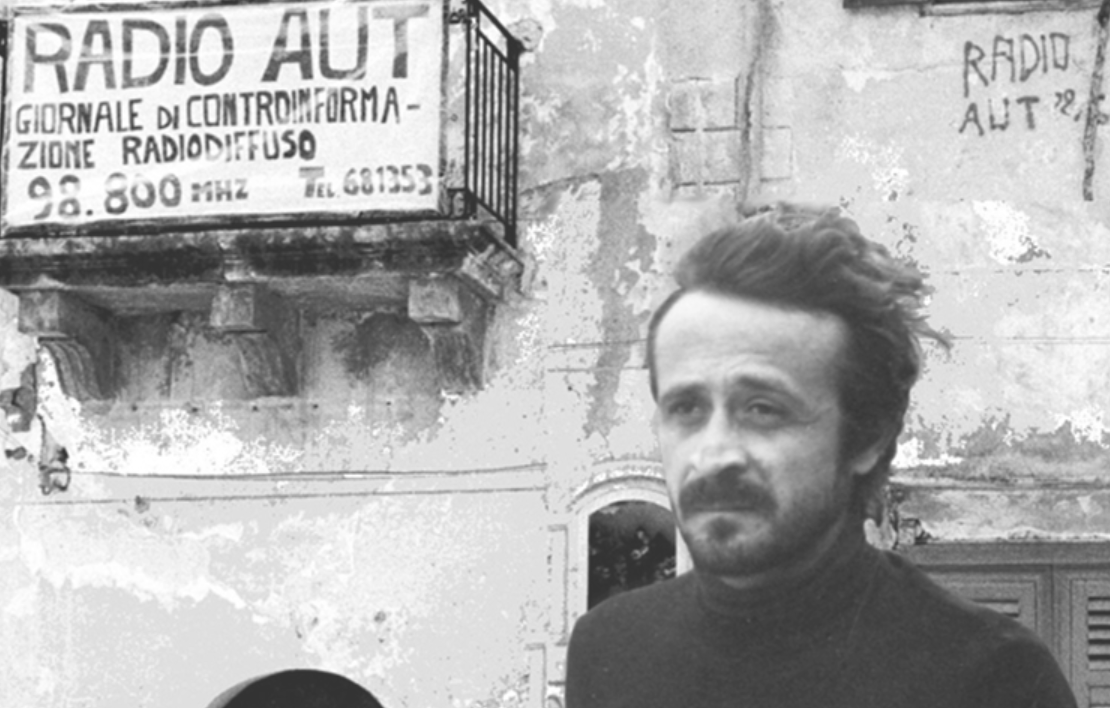
Peppino Impastato was a Sicilian activist and radio journalist who used his broadcasts to mock and denounce the local Mafia boss Gaetano Badalamenti by name. It was an act of almost unimaginable courage in a town where the Mafia’s power was absolute. He was murdered by Cosa Nostra on 9 May 1978, the same night Aldo Moro’s body was discovered in Rome. Badalamenti was eventually convicted of ordering the killing in 2002, more than two decades later.
Giancarlo Siani was a young freelance reporter for Il Mattino in Naples, investigating the intersection of the Camorra and local politics. He was shot dead in his car in September 1985, aged 26.
Ilaria Alpi was a RAI television journalist whose fearless reporting took her into Somalia at one of its most dangerous moments. On 20 March 1994, Alpi and her camera operator Miran Hrovatin were gunned down in an ambush on their jeep in Mogadishu by a seven-man commando unit, after returning from Bosaso. At the time of her murder, she was following a case of weapons and illegal toxic waste trafficking in which she believed the Italian Army and other institutions were involved.
Maria Grazia Cutuli was a foreign correspondent for Corriere della Sera known for her reporting from Asia and the Middle East. She was killed in Afghanistan in November 2001, ambushed on the road between Jalalabad and Kabul alongside colleagues from other international outlets, just weeks after the fall of the Taliban.
Meloni’s full list also included Cosimo Cristina, Mauro De Mauro, Giovanni Spampinato, Mario Francese, Giuseppe Fava, Mauro Rostagno, Beppe Alfano, Walter Tobagi, Marco Luchetta, Alessandro Saša Ota, Dario D’Angelo, Antonio Russo, Enzo Baldoni, Andrea Rocchelli and Almerigo Grilz.
A duty long overdue
The unanimity of the vote speaks to the rare nature of this consensus. Journalism, and the protection of those who practise it in dangerous conditions, is one of the few causes that unites left and right, government and opposition, without reservation.
Italy ranks among the countries with the highest number of journalists killed since the 1960s. The new national day does not change that history, but it ensures that every year on 3 May, the country is required to remember it, and to ask whether it is doing enough to prevent it.
3 maggio — National Day in Memory of Journalists Killed for Their Work — will be observed for the first time on Sunday, 3 May 2026.


