
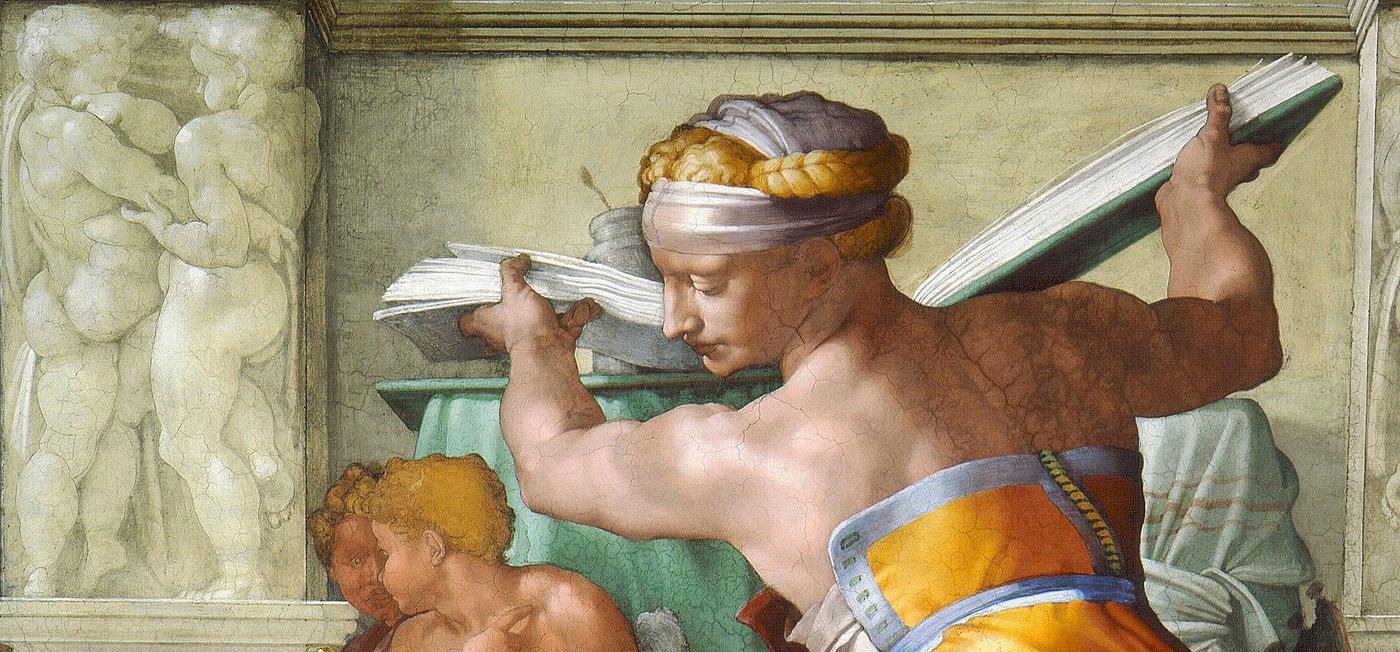
A newly identified Michelangelo study has come to light, linked directly to the Sistine Chapel ceiling. It is the only known preparatory study for the ceiling ever to appear at auction.
The red-chalk drawing, a Michelangelo study for the right foot of the Libyan Sibyl, dates from about 1511–12. Christie’s will offer it in New York on 5 February 2026, with an estimate of $1.5–2 million. Until now, the sheet remained unpublished and unknown to scholars.
Michelangelo and his drawings
Michelangelo Buonarroti was born in 1475 in Caprese, near Florence. He died in Rome in 1564, aged eighty-eight, having achieved extraordinary fame and wealth. Throughout his life, drawing formed the foundation of his artistic practice.
He drew constantly to plan compositions, test ideas, and resolve anatomical problems. Around six hundred drawings survive today, but this represents only a fraction of his output. Thousands of sheets have been lost.
Very few new drawings by Michelangelo have emerged in recent decades. Almost all known figure studies now belong to public collections. Only about ten sheets remain in private hands, including this newly discovered work. No recorded drawing for the Sistine Chapel ceiling has ever come to auction before.
The Sistine Chapel commission
Michelangelo worked on the Sistine Chapel ceiling between 1508 and 1512, during the peak of his physical and creative powers. Pope Julius II commissioned him to paint the vast vault of the chapel in Vatican City.
Also read: A glimpse at the Sistine Chapel
The project covered around 530 square metres. Michelangelo devised an ambitious decorative scheme with painted architectural frameworks that simulate white marble. At the centre, nine scenes from the Book of Genesis run along the vault.
Twenty ignudi flank the biblical narratives, seated beside fictive bronze medallions. Below them sit seven Hebrew Prophets and five classical Sibyls, each placed on a monumental throne. The scale and complexity of the programme had no precedent.
Preparing the figures
Michelangelo began preparatory studies immediately after receiving the commission. He worked progressively, completing one section of the ceiling at a time. Drawings allowed him to refine each figure before transferring it to plaster.
He initially favoured pen, ink, and black chalk. Over time, he increasingly turned to red chalk, especially for studies after live models. Red chalk posed greater technical challenges but offered precision and tonal range suited to the human body.
The newly identified sheet belongs to a small group of red-chalk figure studies made from life. Scholars widely regard these drawings as Michelangelo’s finest works in the medium.
The Libyan Sibyl and the study of the foot
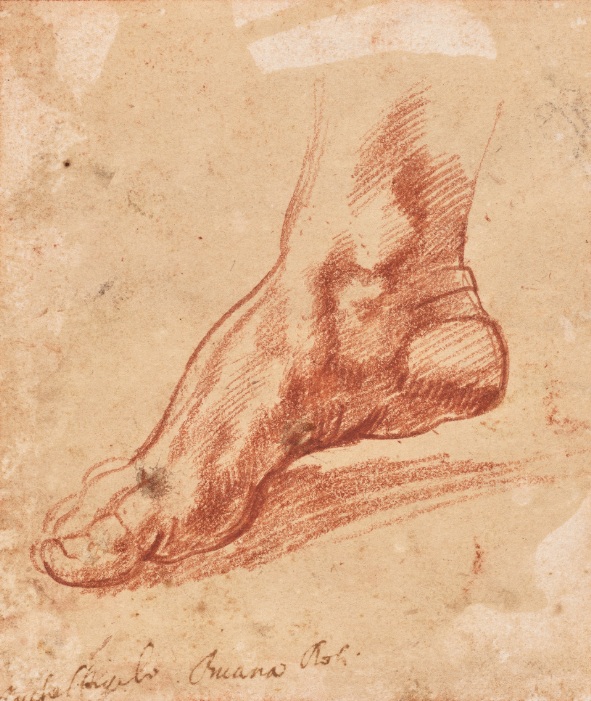
The drawing depicts the right foot of the Libyan Sibyl, one of the most striking figures on the ceiling. Michelangelo painted her in the final bay at the chapel’s east end.
The Sibyl appears in motion, stepping down from her throne while holding a large book of prophecy. Her figure measures roughly three times life size. The weight of her body rests almost entirely on the tips of her toes.
The drawing focuses on the pressure of the toes against the ground. Michelangelo carefully observed how the foot bears weight and creates tension. The study reveals his precise understanding of anatomy and balance.
Specialist analysis
Christie’s specialists note Michelangelo’s exploratory method in the drawing. He first outlined the heel with a light chalk line, then reinforced it with stronger strokes. These adjustments, known as pentimenti, show him refining the pose while drawing. The marks suggest active problem-solving rather than a fixed design.
The final fresco differs slightly from the study. Michelangelo altered the foot’s position on the ceiling so the toes carry more of the figure’s weight. This change reflects his constant pursuit of visual accuracy.
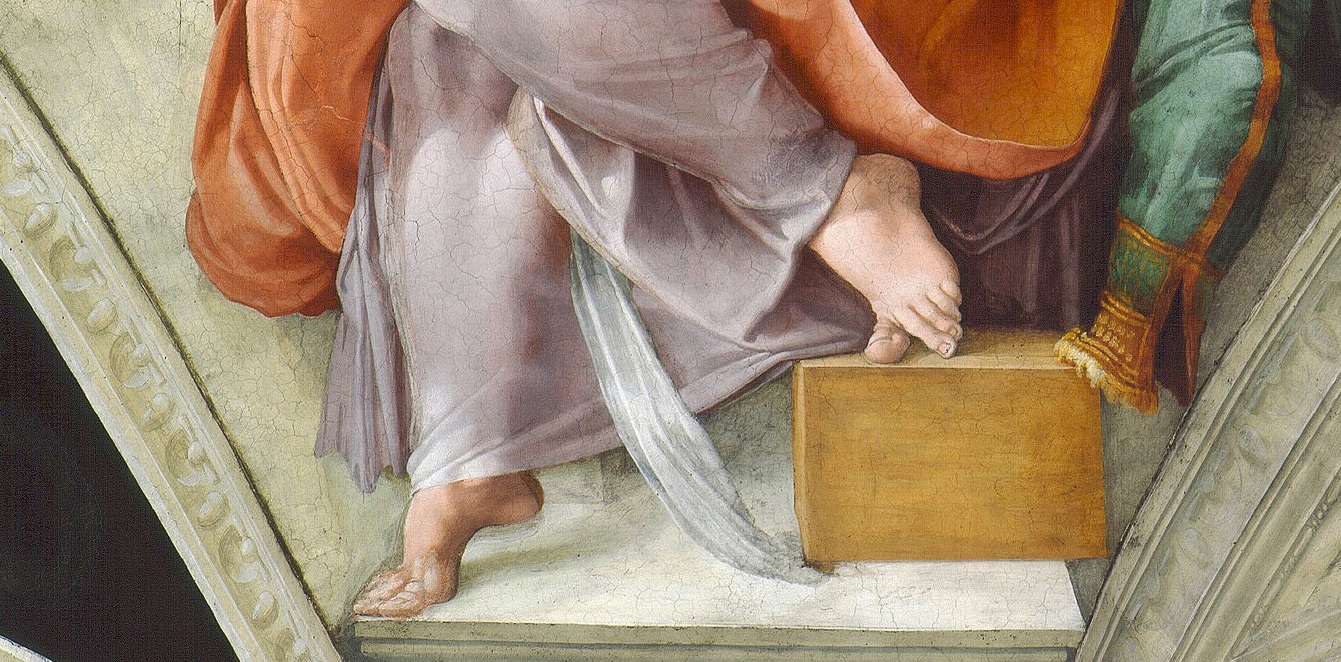
Giada Damen of Christie’s describes the drawing as a direct expression of Michelangelo’s physical and creative energy. The pressure of the chalk remains visible on the paper.
A major rediscovery
The drawing has never appeared on the market and remained unrecorded for centuries. Since its emergence earlier this year, Christie’s researchers and external scholars have examined it closely.
Experts unanimously attribute the work to Michelangelo on both recto and verso. The discovery adds a significant sheet to his known graphic corpus.
Art historian Carmen Bambach has noted that Michelangelo’s drawings offer the most direct insight into his creative process. They collapse centuries and reveal the artist thinking on paper.
Public viewings
Christie’s will display the drawing in Dubai from 12 to 15 January. It will then be shown in New York from 29 January to 4 February.
The work will appear in the Old Master and British Drawings sale on 5 February 2026.


