The American pontiff brushed off a stinging broadside from the US president as he departed Rome for a landmark 11-day, four-nation tour of Africa, the most ambitious trip of his papacy to date. “I am not afraid of the Trump administration,” he said.
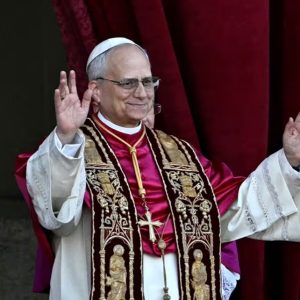
Pope Leo XIV declared on Monday that he has no fear of the Trump administration and will continue to speak out against war. He delivered his most direct response yet to an escalating feud with the US president that threatened to overshadow the start of a historic African tour.
Speaking to reporters aboard the papal flight to Algiers, where he is beginning an 11-day tour of four African countries covering nearly 18,000 kilometres across 18 flights, Leo was unequivocal. “I am not afraid of the Trump administration,” he said. “I speak about the Gospel; I am not a politician. I do not think the message of the Gospel should be misused in the way some people are doing.”
Asked directly about Trump’s social media attack, Leo declined to enter into a political dispute. “I think people who read it will be able to draw their own conclusions. I am not a politician, and I have no intention of entering into a debate with him,” he said. “Rather, let us always seek peace and put an end to wars.”
Trump’s extraordinary verbal tirade
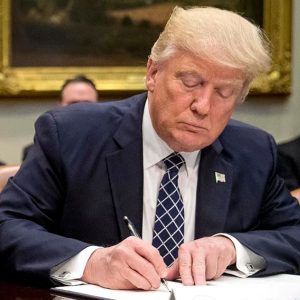
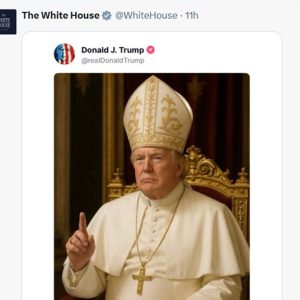
Trump had delivered the extraordinary attack on Sunday night via his (somewhat ironically named) Truth Social. He wrote, “Pope Leo is WEAK on Crime, and terrible for Foreign Policy.” He added, “I don’t want a Pope who thinks it’s OK for Iran to have a Nuclear Weapon.” Trump also questioned the legitimacy of Leo’s election, suggesting the cardinals had only chosen the American-born pontiff “because he was an American, and they thought that would be the best way to deal with President Donald J. Trump.” “If I wasn’t in the White House, Leo wouldn’t be in the Vatican,” Trump wrote.
Speaking separately to reporters, Trump remained highly critical, saying of Leo, “I don’t think he’s doing a very good job. He likes crime I guess,” and describing him as “a very liberal person.”
Trump’s outburst appeared to be triggered by Leo’s increasingly forceful condemnation of the US-Israeli war against Iran. Leo had previously said that God “does not listen to the prayers of those who wage war, but rejects them,” invoking an Old Testament passage from Isaiah. Those words were widely read as a direct rebuttal to both Trump and Defence Secretary Pete Hegseth, who have invoked God in public messaging during the conflict and framed the war effort as divinely supported.
In remarks to a group of bishops from Baghdad that also drew attention, Leo said: “A Christian never sides with those who yesterday wielded the sword and today throw bombs.” He told the bishops they were “signs of hope in a world marked by absurd and inhuman violence,” and declared that “no interest can be worth the lives of the weakest” and that “God does not bless any conflict.”
Salvini doesn’t think Trump is wise to attack Pope
The attack drew a notable rebuke from within Italy’s own government. Deputy Premier and Transport Minister Matteo Salvini. Leader of the right-wing League party and a habitual admirer of Trump, Salvini defended the pontiff. “If anyone is working hard for peace and conflict resolution, it’s Pope Leo,” Salvini told broadcaster Telelombardia. “Attacking the Pope, a symbol of peace and a spiritual guide for billions of Catholics, doesn’t seem like a useful or intelligent thing to do.”
A landmark African tour
Africa is a continent where the Catholic Church is growing rapidly and frequently plays an influential role in civil society through education, healthcare, and conflict mediation. According to Vatican statistics, Catholics on the continent now make up around 20% of believers worldwide.
Algeria
Leo’s first stop is the Algerian capital Algiers, where he will meet with President Abdelmadjid Tebboune, address diplomats, and pay tribute to the victims of Algeria’s 1954–1962 war of independence against France. He will also visit the Great Mosque of Algiers, and attend a gathering at the Basilica of Our Lady of Africa overlooking the Bay of Algiers. Additionally, he will pray privately at a chapel dedicated to 19 priests and nuns murdered during Algeria’s 1992–2002 civil war, among them seven Trappist monks from the Tibhirine monastery kidnapped and killed in 1996, as well as two nuns from Leo’s own Augustinian religious family.
The visit to Algeria carries deep personal significance for Leo, who has proclaimed himself a “son of Saint Augustine” from his first public words as pope. The fifth-century theologian and bishop, whose see was at Hippo, modern-day Annaba, is the inspiration of the Augustinian order to which Leo belongs, and his shadow permeates the pontiff’s speeches and writings.
In Algeria, a tiny Catholic community of around 9,000, made up mostly of foreigners, exists alongside a Sunni Muslim majority of some 47 million. The Archbishop of Algiers, French Cardinal Jean-Paul Vesco, noted that on any given day, nine out of ten visitors to the Basilica of Our Lady of Africa are Muslim, a measure, he said, of the genuine spirit of coexistence the visit aims to celebrate.
Cameroon, Angola and Equatorial Guinea
From Algeria, Leo will proceed to Cameroon before continuing to Angola and Equatorial Guinea. The biggest event of the tour is expected in Douala, Cameroon, where some 600,000 people are anticipated at a papal mass.
Leo described his Africa journey in terms consonant with both his papacy’s central themes and his response to the current global turbulence. “Today is truly a blessing for me personally, but I believe also for the Church and for the world,” he said. “We must always seek bridges in order to build peace and reconciliation.”