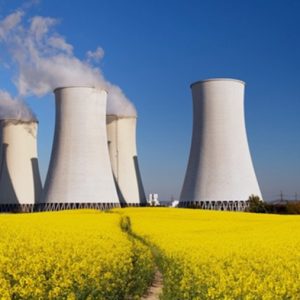
Italy’s government will approve the framework for a return to nuclear power this summer, Prime Minister Giorgia Meloni told parliament on Wednesday. There was also discussion over housing, employment and healthcare in the Lower House.
Italy abandoned nuclear energy following a referendum held after the 1986 Chernobyl disaster, but the government is now looking at using latest-generation small nuclear reactors operated by the private sector.
An enabling law paving the way for the sector’s return will be approved this summer, Meloni said.
The government argues that nuclear power would strengthen Italy’s energy independence and reduce costs, particularly following geopolitical tensions linked to the conflict involving Iran.
National Priorities – “my door is always open”
Speaking during Premier Time in the Senate, Meloni also appealed to opposition parties to cooperate on what she described as national priorities, including employment, healthcare, declining birth rates and electoral reform.
“My door is always open,” she said. “Wages, business incentives, and birth rates are always our priorities.”
Meloni said the number of precarious workers had fallen while stable employment had increased under her government. She added that remaining in Italy should become “a competitive choice and not an act of courage” for young people amid concerns over continuing brain drain.
The prime minister said wages should rise through stronger collective bargaining agreements.
She also defended the government’s handling of the EU-funded National Recovery and Resilience Plan (NRRP), saying 76% of allocated funds had been spent by the end of March.
However, Meloni clashed in the Senate with former prime minister Matteo Renzi, leader of the centrist Italia Viva party, over the government’s housing plan.
She said only “high priests of opposition for the sake of opposition” could fail to recognise the usefulness of the programme. The housing plan aims to create 100,000 new homes over the next decade through social housing and subsidised schemes.
“Homes are not a luxury but a fundamental good,” Meloni said.
Criticism of the EU
The prime minister also criticised the European Union, saying “faceless bureaucrats” were obstructing political decision-making over proposals to reduce member states’ veto powers. She warned that geopolitical tensions would affect Italian economic growth
Meloni, however, claimed public support for the government remained strong.
“I went to the supermarket last Saturday and registered a lot of affection still for this government,” she said.
Meloni added that her administration had only raised taxes on banks, insurance companies and energy firms, and pledged further tax cuts next year.
Opposition parties, citing data from Italy’s national statistics agency Istat, argue that Italy is currently experiencing record levels of taxation.