The Swiss Guards, the world’s smallest army, will swear in its latest recruits today (6th May). The ceremony marks one of the most dramatic episodes in the history of the papacy.
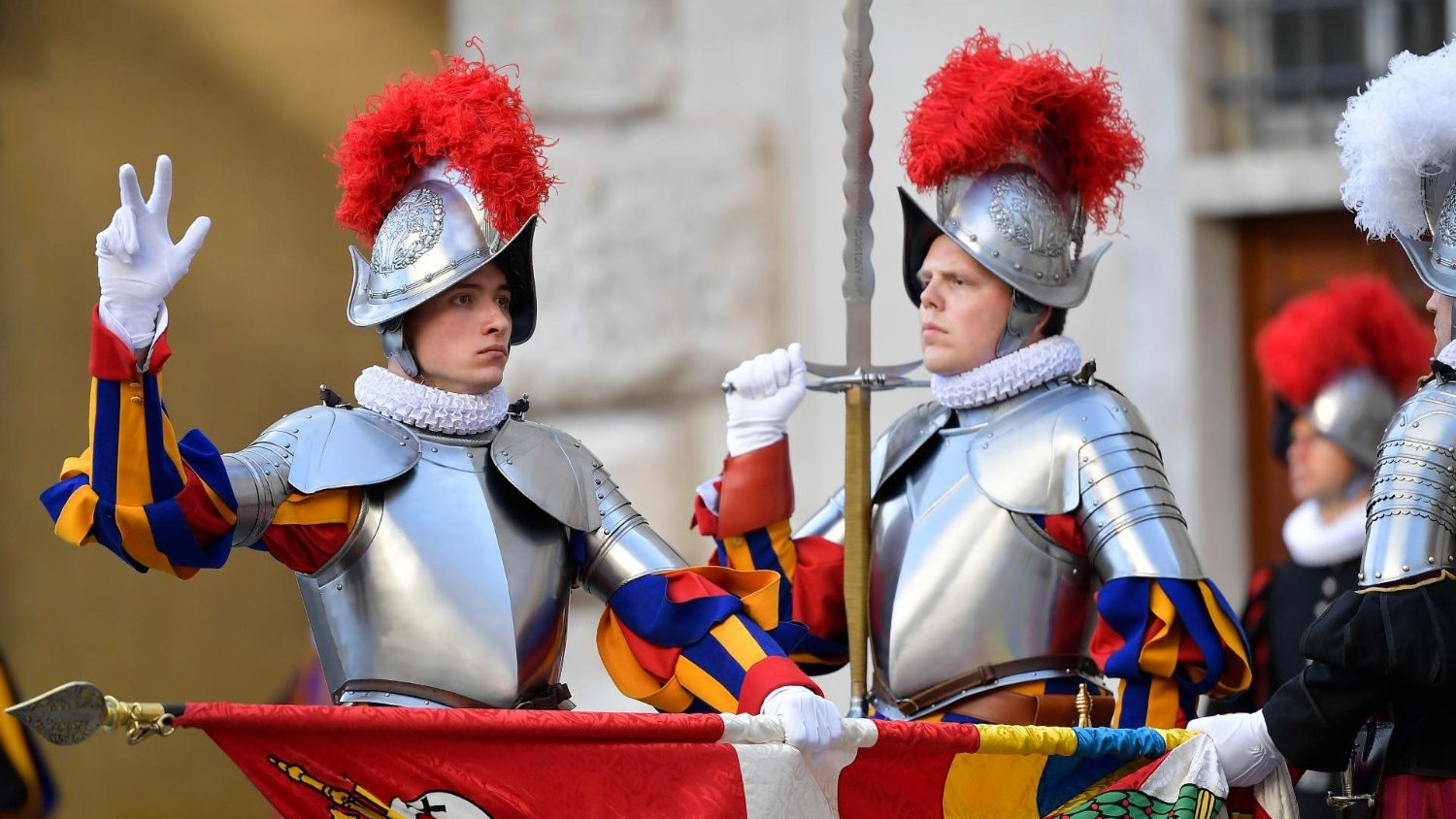
Twenty-eight new recruits will be sworn into the Pontifical Swiss Guards at a ceremony in the San Damaso courtyard of the Apostolic Palace today, Wednesday 6 May. The oath of allegiance is in Latin, with one hand raised and the other gripping the unit’s ceremonial colours.
A high-level Swiss delegation will attend, headed by Swiss President Guy Parmelin alongside army and church representatives. The guards’ current commander, Christoph Graf, will lead the corps at the ceremony.
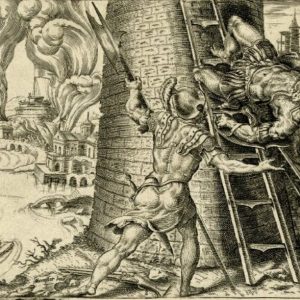
The date marks the anniversary of 6 May 1527, when the armies of Holy Roman Emperor Charles V sacked Rome in one of the most catastrophic episodes of the Italian Renaissance. As imperial forces poured into the city, 147 Swiss Guards died fighting a rearguard action that allowed Pope Clement VII to escape along the Passetto di Borgo, an 800-metre elevated corridor connecting the Vatican to the fortress of Castel Sant’Angelo.
The Swiss Guards celebrated their 520th anniversary on 22 January this year, making them not only the world’s smallest army but arguably its oldest continuously serving one.
Who are the Swiss Guards?
Entry into the Swiss Guards is subject to requirements that have changed little over the centuries. Recruits must be male Swiss nationals, Catholic, unmarried, aged between 19 and 30, and at least 174 centimetres tall. They must also have completed intensive Swiss military training before presenting themselves for selection.
Once admitted, guards may serve for between two and 25 years. Their duties range from protecting the pope and securing Vatican City to performing the ceremonial functions. They are one of the most photographed institutions in Rome.
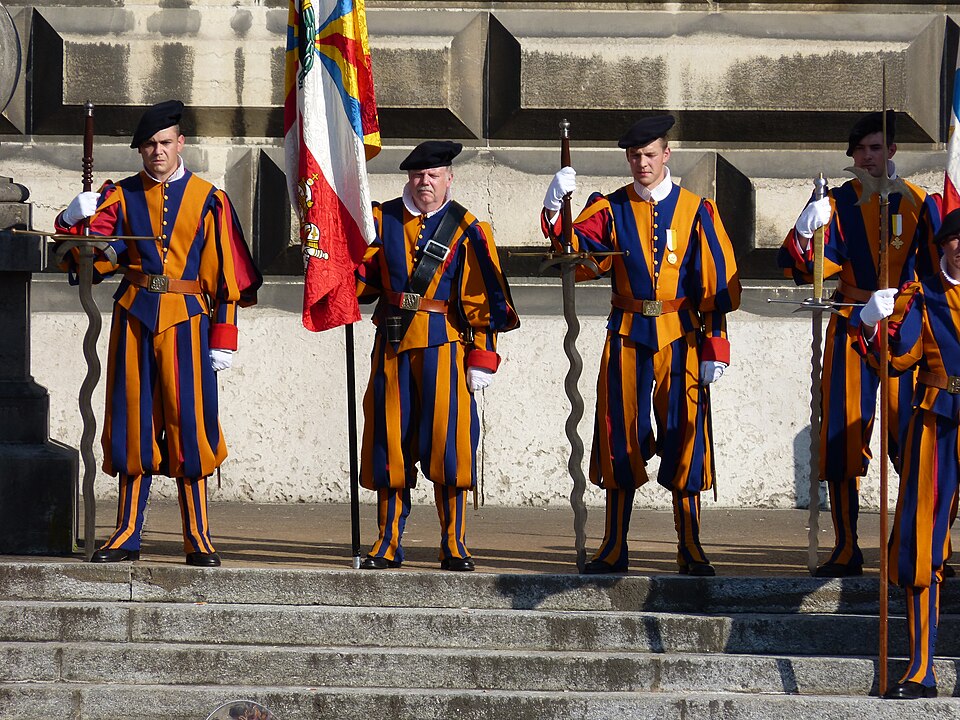
The uniform, with its distinctive blue, gold and red colouring and its medieval halberd, has become as recognisable as the Vatican itself. Its design is often attributed — incorrectly, as historians note — to Michelangelo. The current version was introduced in the early twentieth century, though its aesthetic references are firmly Renaissance in spirit.
For the 28 young men taking the oath today, the ceremony marks the beginning of a posting unlike any other in the world.
ItalyNews.Online covers Italian politics, society, and culture for an international readership.