Launched on the eve of Liberation Day, the Cammino ’44 traces the Gothic Line through Tuscany and Emilia-Romagna. It connects Sant’Anna di Stazzema and Marzabotto in a secular pilgrimage through the darkest chapter of Italy’s wartime history
A new long-distance walking route connecting two of the most harrowing sites of Nazi-fascist atrocity on Italian soil officially launched to coincide with this year’s Festa della Liberazione.
The Cammino ’44 stretches approximately 180 kilometres through the mountainous heart of wartime Italy. It links the village of Sant’Anna di Stazzema in the Tuscan Apuane Alps with Monte Sole, above Marzabotto, in the Bolognese Apennines. Both sites were the scenes of mass killings of Italian civilians by Waffen-SS troops and their fascist collaborators, both occurring within the space of two months in the autumn of 1944.
Conceived as a secular pilgrimage for walkers from Italy and abroad, the route is intended to promote the values of liberty, tolerance and peace. At the same time, it preserves the memory of one of the darkest passages of twentieth-century European history.
The Massacres
The two sites that anchor the route are among the most significant in Italy’s collective historical memory.
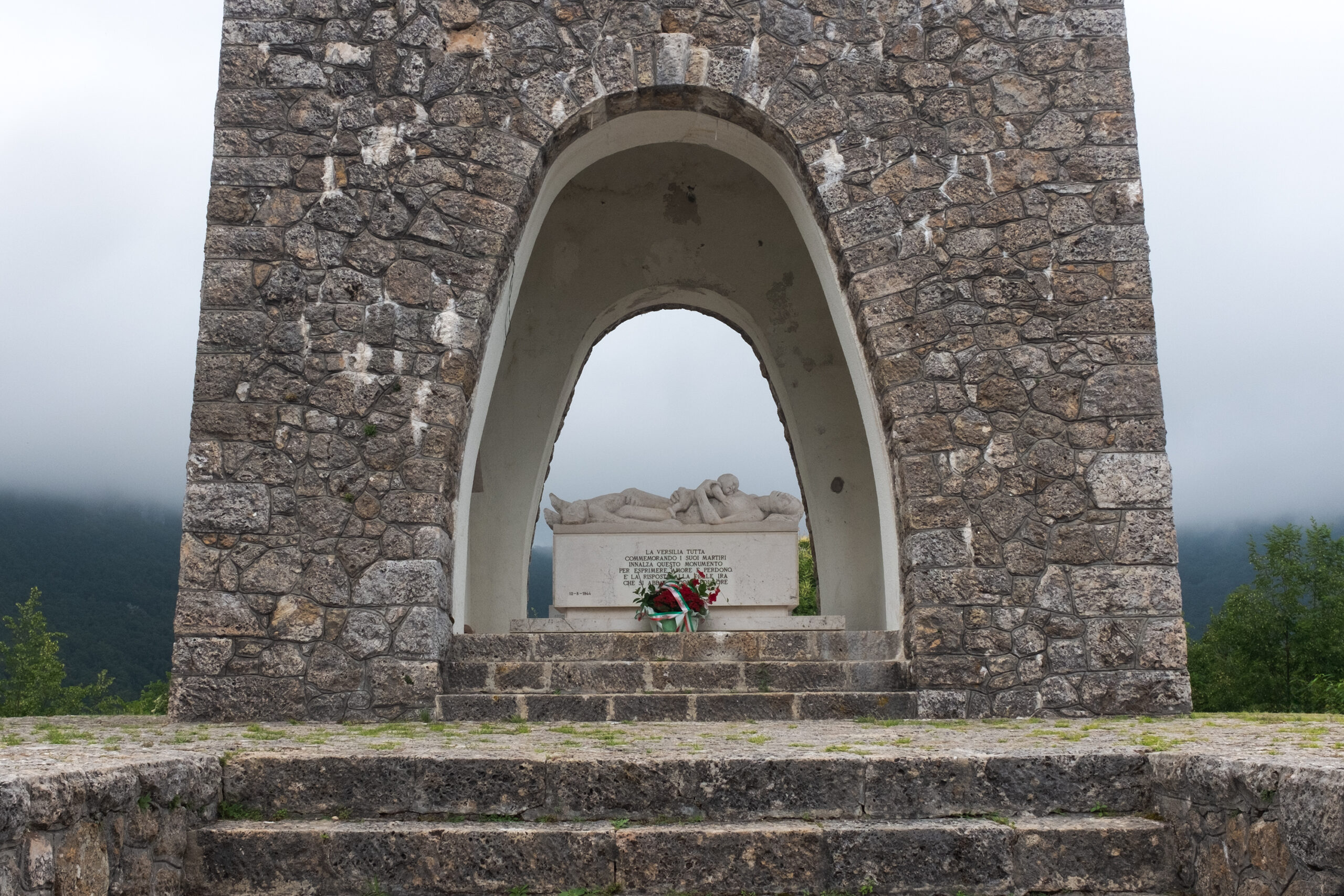
Image credit: www.cammino.it
On 12 August 1944, Waffen-SS troops, assisted by Italian fascists disguised in German uniforms, descended on the mountain village of Sant’Anna di Stazzema and systematically murdered 560 unarmed civilians, among them approximately 130 children. Villagers and refugees had been rounded up and herded into barns, stables and cellars, where they were executed by machine gun fire or killed with hand grenades, before the entire village was set alight. The atrocity remained largely suppressed for decades. It was not until 1994 that almost 700 documents relating to the massacre were discovered hidden in a cabinet in the basement of Rome’s military court. The scandal became known in Italy as the armadio della vergogna, the cupboard of shame.
The second massacre, carried out between 29 September and 5 October 1944 in the Monte Sole area near Marzabotto, is the largest single killing of civilians by Nazi forces in western Europe during the entire war. Retreating Waffen-SS units and their Italian fascist auxiliaries slaughtered at least 770 people, predominantly women, children and the elderly. The massacre was in reprisal for the active support that local communities had given to partisan resistance fighters operating in the Apennines.
The Cammino ’44 route
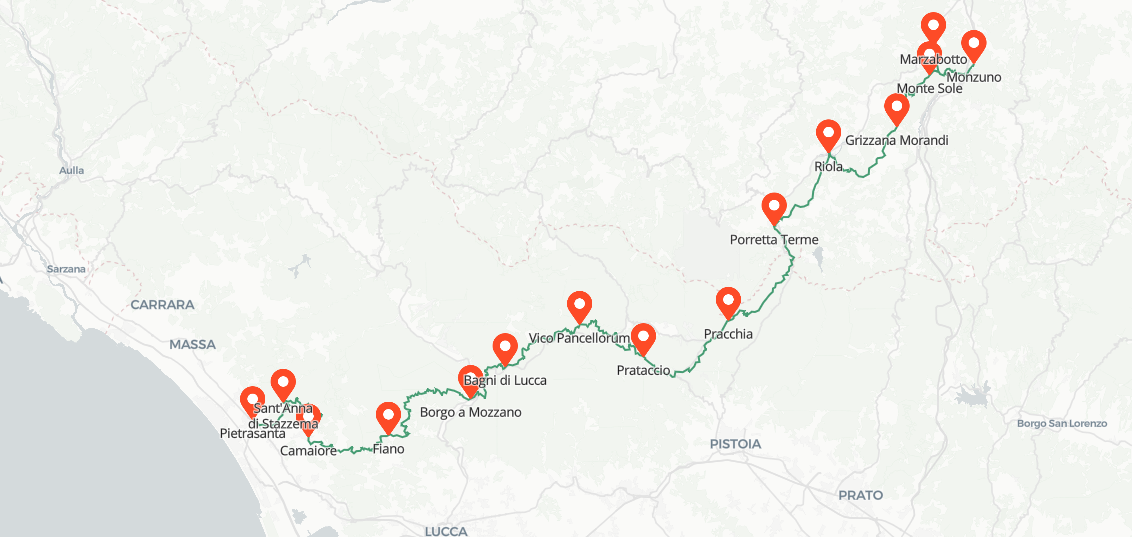
The Cammino ’44 broadly follows the line of the Gothic Line, the heavily fortified military front that split Italy in two during the final phase of the war. It runs from the Tyrrhenian to the Adriatic coast, passing through the provinces of Lucca, Pistoia and Bologna. The path takes in numerous sites and memorials of historical and symbolic significance, offering walkers an immersive encounter with the landscape in which these events unfolded.
Liberation Route Italia, funded by the regional governments of Tuscany and Emilia-Romagna, promotes the project. Rather than building a new infrastructure from scratch, the organisation has connected a network of existing trails bringing them to a consistent standard where required.
How to walk the route
The dedicated website, www.cammino44.it, goes live on 25 April, allowing walkers to explore the route and plan their journey in full. A formal inaugural ceremony will take place on 20 June in Pietrasanta, from which the first official organised walk will depart.
The choice of Liberation Day as the launch date is explicitly symbolic. 25 April is a national public holiday in Italy, and remains one of the most politically resonant dates in the country’s civic calendarce.
The Cammino ’44 joins a growing number of memorial walking routes across Europe that seek to engage new generations with the landscapes and legacies of the Second World War, among them the broader Liberation Route Europe network, of which the Italian route forms a part.