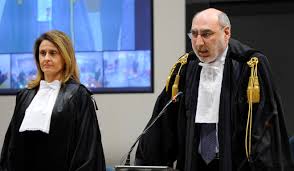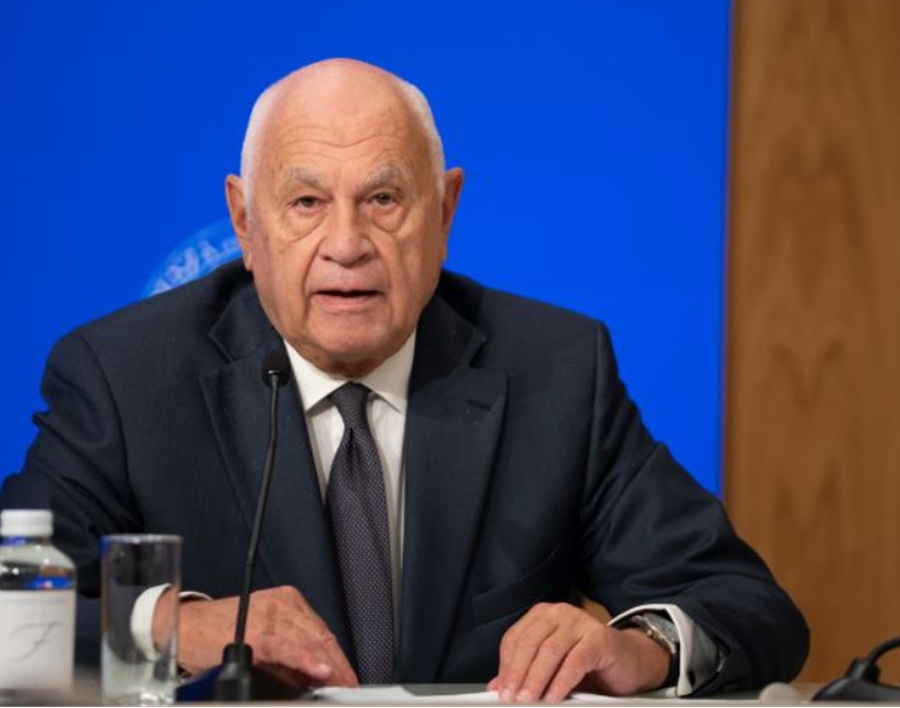
Justice Minister Carlo Nordio has said that both supporters and opponents of the government’s proposed judicial reform have at times gone too far in their rhetoric ahead of next month’s judiciary referendum.
Italy will vote on 22–23 March on a constitutional reform that would separate the career paths of judges and prosecutors, ending the current system under which magistrates belong to the same professional body and may switch roles during their careers.
Speaking at an ANSA Forum on Monday, Nordio acknowledged that the tone of the debate had become overheated. “We all overdid our tone,” he said. “I must say that some of the tones were particularly unpleasant, especially when they came from magistrates. From now on, let’s talk only about the substance.”
The minister last week said he would comply with an extraordinary appeal from President Sergio Mattarella to show respect for the Consiglio Superiore della Magistratura (CSM), the judiciary’s self-governing body, after he described it as featuring a “para-mafioso system”. The remark drew criticism from opposition parties and sections of the judiciary.
What is the proposed Italian judiciary reform?
The reform is a central plank of the government’s justice agenda under Prime Minister Giorgia Meloni. Meloni and Nordio argue that splitting the careers of judges and prosecutors will make the system fairer and more efficient, reduce the influence of internal factions and strengthen the perception of impartiality in criminal trials.
Under the current system, magistrates enter the judiciary through a single competitive examination and may, in theory, move between judging and prosecuting roles. In practice, only a small minority do so. However, the government maintains that the shared career structure risks creating overly close professional ties that could undermine defendants’ confidence in impartial proceedings.
The proposed reform would formally divide judges and prosecutors into separate professional tracks, establish a new high court to discipline members of the judiciary and change the way members of the CSM are selected, introducing a draw mechanism for part of its composition.
Changes do not address backlog says opposition
Opposition parties and leading figures in the “No” campaign argue that the changes will not speed up trials or address Italy’s chronic backlog of cases. They say the real problem lies in underfunding and understaffing, calling instead for large-scale recruitment of magistrates and administrative staff.
Naples Chief Prosecutor Nicola Gratteri, a prominent voice in the “No” camp, recently warned that in Calabria, a region long plagued by the ’Ndrangheta mafia, criminal and shadowy interests would favour the reform. Meloni criticised what she described as attempts to “drag the referendum into the mud”.
Nordio insisted that the reform is not an attack on judicial independence but a structural change aimed at improving balance within the system. “With a ‘yes’ vote, things would change for the better with the judiciary,” he said. “If the ‘no’ vote were to win, it would be a victory for the extreme judiciary, which would mortgage politics.”
He warned that if the referendum became overly politicised, especially through what he described as strong intervention by parts of the judiciary, it could tilt the balance between political and judicial power. “The judiciary, strengthened by a victory to which it has given strong political significance, would feel empowered to continue its mortgage on politics,” he said.
Recent polling suggests a tight race. Surveys indicate that the “No” side could prevail if turnout is low, while a higher turnout may favour the “Yes” campaign. With less than a month to go, the debate over the future structure of Italy’s justice system remains one of the most contentious political issues facing the country.