New IMF data presented to the Eurogroup lays bare the cost of the Iran war for ordinary households. Meanwhile, while Ferrari – Italy’s most celebrated luxury brand – reports another quarter of robust growth, undimmed by geopolitical turbulence.
The energy-price shock triggered by the Iran war will cost the average Italian family around €450 this year under the baseline scenario, and as much as €2,270 if the crisis deepens and current pricing gives way to prolonged disruption. The figures were presented by Oya Celasun, Deputy Director of the IMF‘s European Department, at Monday’s Eurogroup meeting, and they place Italy among the hardest-hit countries in the European Union.
The typical European household stands to lose approximately €375 in 2026 — around 0.7% of average annual consumption — under current pricing conditions, rising to €1,750 in a severe scenario. That Italy’s figures sit meaningfully above both benchmarks reflects the country’s particular exposure to energy import costs, its industrial structure, and the limited insulation its households have from wholesale price volatility.
For a family already navigating the residual pressures of post-pandemic inflation, stagnant wage growth and the creeping cost of basic goods, an additional outlay of several hundred euros — or potentially several thousand — is not an abstraction. It is a heating bill unpaid, a grocery budget recalculated, a summer holiday cancelled.
Ferrari posts record quarterly profits
On the same day the IMF was presenting its household cost projections to European finance ministers, Ferrari announced its preliminary results for the first quarter of 2026. Net revenues reached €1,848 million, up 3% on the same period last year — or 6% at constant exchange rates. Operating profit came in at €548 million. Net profit was €413 million. EBITDA rose 4% to €722 million.
Chief Executive Benedetto Vigna attributed the performance to what he described as an enriched product mix and sustained demand for personalisation. “With such performance and an order book that extends further towards the end of 2027, we confirm our guidance for 2026,” he said. A Ferrari spokesperson noted that the company had “continued to deliver solid growth in the first quarter of 2026, in line with the trajectory outlined in the 2026 guidance and supported by all business areas, despite the geopolitical context.”
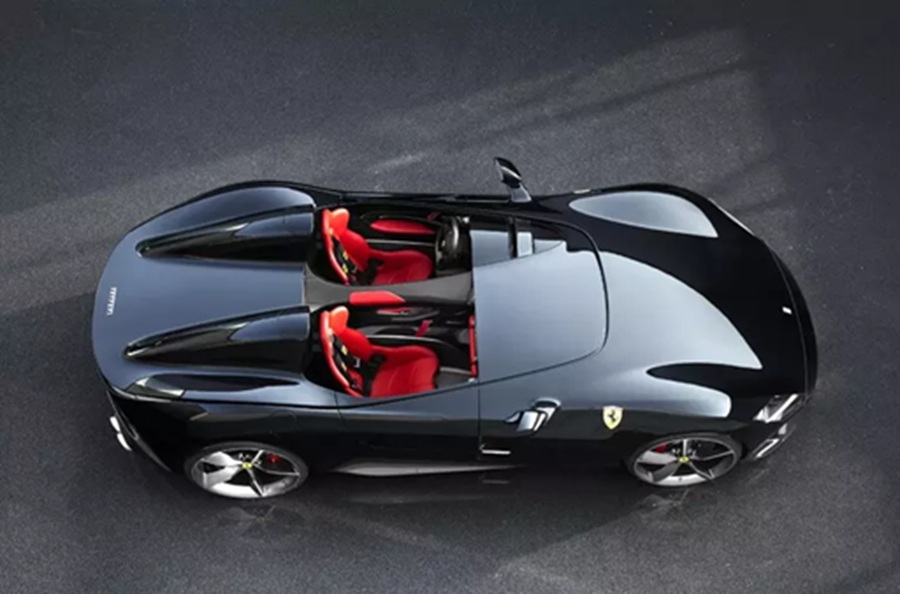
That final phrase — despite the geopolitical context — carries considerable weight when read alongside the IMF’s findings. For Ferrari’s clientele, the Iran war and its attendant energy shock appear, by the evidence of the order book, to register as little more than background noise. Demand for bespoke, six-figure automobiles has not faltered. Waiting lists stretch well into 2027. The company is weeks away from unveiling its next model, the Ferrari Luce, with Vigna describing anticipation as being “higher than ever.”
One positive out of this is that with Ferrari seemingly unaffected by wars and rising fuel prices, it is at least providing work for those in the supply chain and who work for the company in Maranello.