Andrea Sacchi, one of the key figures of 17th-century Italian art, was born on 30th November 1599, Saint Andrew’s Day, in or near Rome. He became a leading advocate of High Baroque Classicism, drawing lifelong inspiration from Raphael’s work.
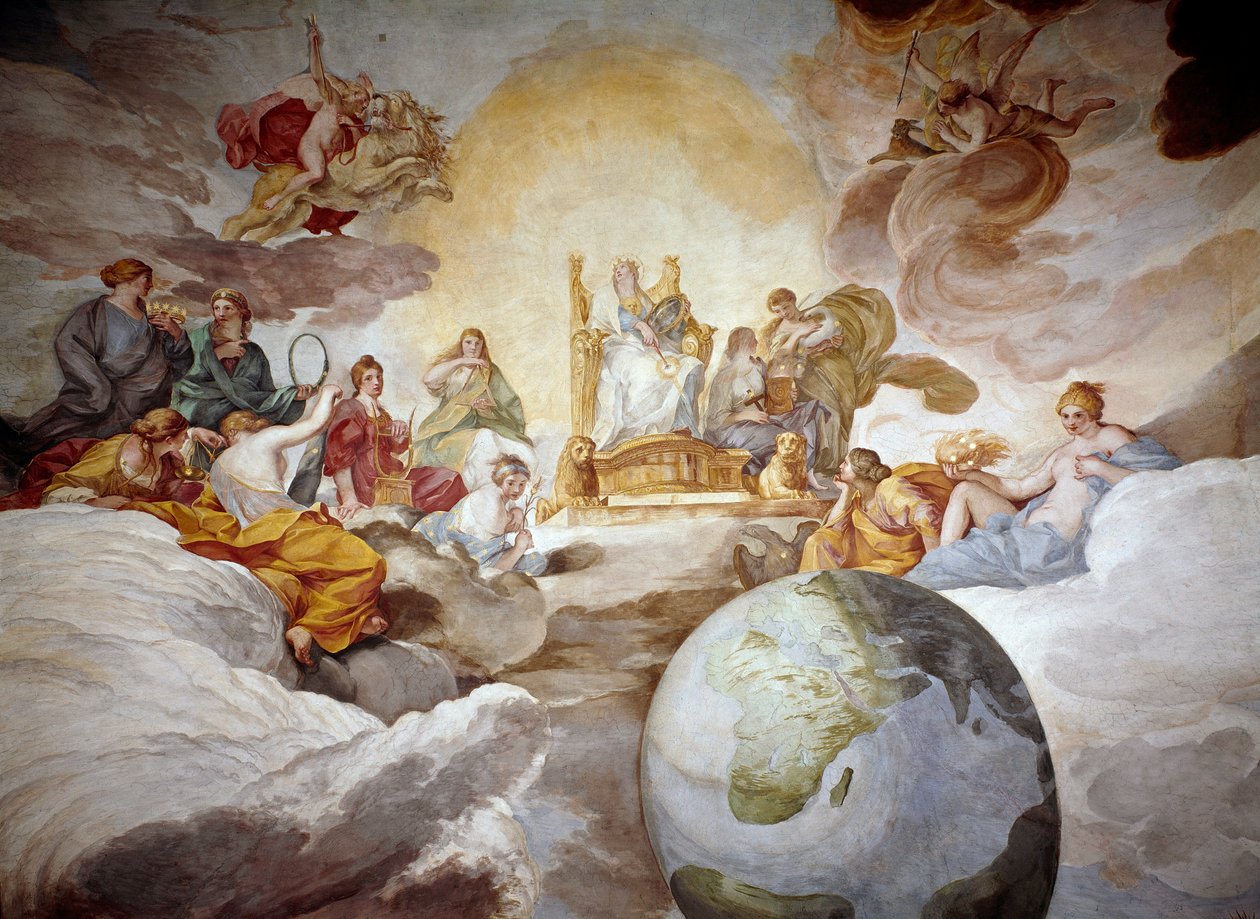
Sacchi’s most celebrated masterpiece is the Allegory of Divine Wisdom, a fresco in Rome’s Palazzo Barberini created as an homage to Pope Urban VIII. The work reflects both Raphael’s influence and the pope’s wish to compare himself to King Solomon, guided by divine wisdom.

Early training and patronage
Sacchi’s father Benedetto, also a painter, recognised his son’s talent early. According to biographer Giovanni Pietro Bellori, Benedetto sought a better teacher once he realised Andrea had already surpassed him. The young artist was placed under Giuseppe Cesari, known as Cavaliere d’Arpino, whose workshop had previously trained Caravaggio.
Sacchi later studied with Francesco Albani in Bologna. Albani’s emphasis on Classicism and colour left a lasting mark and shaped Sacchi’s mature style.
Sacchi benefited from the support of Cardinal Antonio Barberini, who commissioned works for Santa Maria della Concezione dei Cappuccini and Palazzo Barberini. Between 1627 and 1629 he contributed frescoes to Villa Sacchetti near Ostia Antica, working under the direction of Pietro da Cortona.
A defining artistic debate

In 1636 Sacchi and Cortona became central figures in a major artistic debate at the Academy of St Luke in Rome. Sacchi argued that paintings should contain only a few carefully defined figures, warning that crowded compositions weakened meaning and individuality. Cortona defended more elaborate scenes, likening them to epics with multiple themes.
Sacchi’s view was supported by sculptor Alessandro Algardi and the French painter Nicolas Poussin. His approach went on to shape Roman artistic circles for decades.
Major works by Sacchi include St Gregory and the Corporal and Vision of St Romuald, both housed in the Pinacoteca Vaticana. His paintings can also be seen in San Carlo ai Catinari, Palazzo Quirinale and Palazzo Barberini in Rome. More works are also in Perugia, Foligno, Camerino and Madrid’s Prado Museum.
Sacchi died in Rome in 1661 aged 61.

![Annibale Carracci (cropped) By Annibale Carracci - [2], Public Domain, https://commons.wikimedia.org/w/index.php?curid=35333992](https://italynews.online/wp-content/uploads/2025/11/Annibale_Carracci_Autoritratto_-300x300.jpg "On this day in history: Baroque artist Annibale Carracci born")